


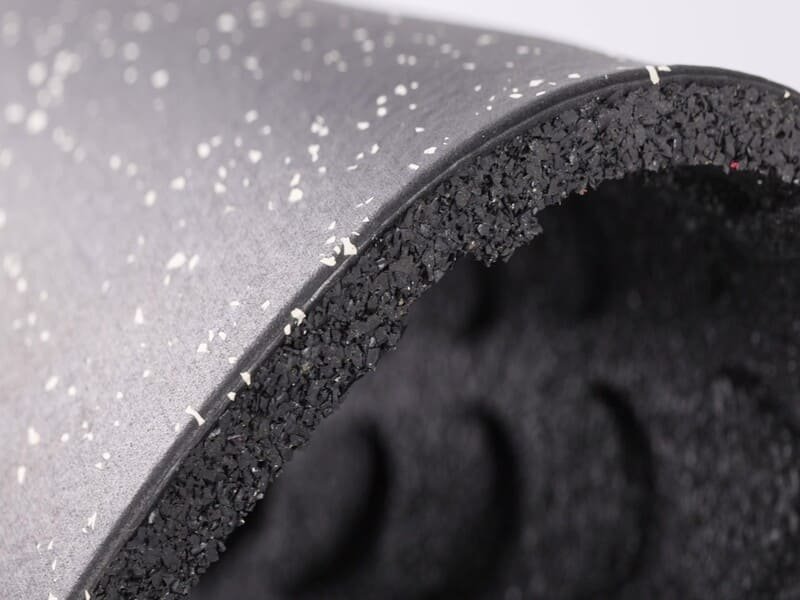
To verify rubber flooring quality, check for a neutral scent, high density (min. 1000 kg/m³), and dimensional precision. Perform a "Bend Test" to ensure no cracking and a "Water Drop Test" to confirm the surface is non-porous. Always demand current REACH and ASTM E648 fire safety certifications.
Tiefes Eintauchen:
From my perspective on the production floor, rubber flooring is all about the "binder-to-crumb" ratio. Cheap manufacturers cut costs by using less polyurethane binder or low-grade recycled tires that haven’t been cleaned of metal and fiber. This results in a floor that feels brittle and smells like a chemical factory. When you hold a sample, you are looking for structural integrity. A quality mat should feel heavy for its size—this is the "density factor." If the mat feels airy or lightweight, it lacks the material density required to protect your subfloor from high-impact drops. In my years of manufacturing, the most expensive floor is always the one you have to replace twice. Use the following guide to vet your supplier like an industry professional.
The Professional’s Quick Inspection Checklist:
- Der Schnuppertest: Neutral odor? (Yes = High quality; No = Excessive VOCs)
- The Bend Test: Fold it 180 degrees. Does it crack? (No = High binder content)
- The Nail Test: Scratch the surface. Does it shed crumbs? (No = Good bonding)
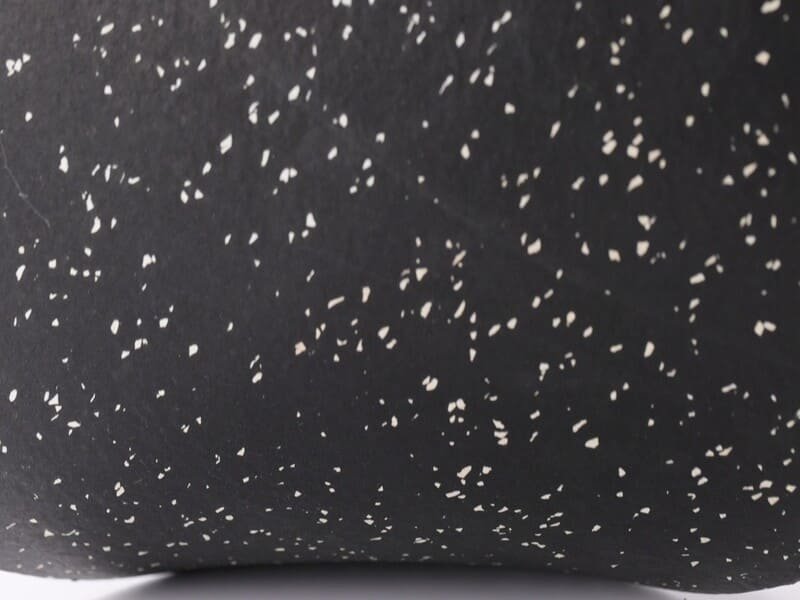
- The Water Test: Pour water on top. Does it soak in? (No = Hygienic closed-pore surface)
- The Squareness Test: Align two tiles. Is the seam invisible? (Yes = Precision CNC cutting)
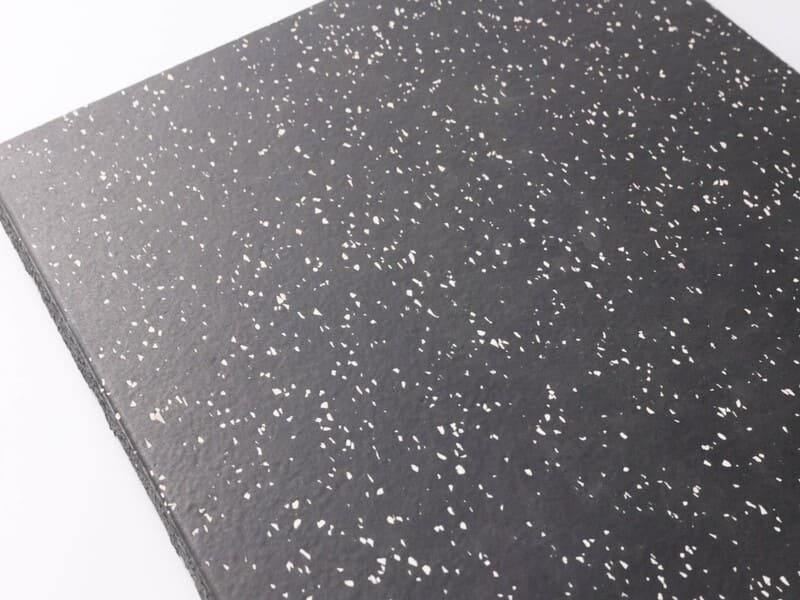
To get 100% certainty, you need to move beyond a quick glance and follow a structured testing process.
What are the 5 simple tests to check rubber flooring quality?
You can determine quality through the "Sunlight Test" for off-gassing, the "180-degree Bend Test" for flexibility, the "Fingernail Scratch Test" for surface bonding, the "Water Bead Test" for porosity, and a "Seam Alignment Test" for cutting precision.
Tiefes Eintauchen:
In our facility, we don’t just ship products; we stress-test them. If you are a buyer, you should do the same. Start with the Bend Test: High-quality rubber uses high-tensile binders that allow the mat to flex without snapping. If you see white "stress marks" or surface tearing, the rubber is brittle and will crumble under heavy weights. Next, use the Water Drop Test. In a commercial gym, sweat and cleaning chemicals are constant. If water beads up on the sample, it’s a "closed-pore" product that won’t absorb bacteria. If the water vanishes into the rubber, it will eventually rot and smell. Lastly, check the Edge Precision. Poorly manufactured mats have "wavy" edges that create gaps. These gaps are not just ugly; they are tripping hazards that can lead to injury and liability.
Technical Quality Standards Matrix
| Prüfverfahren | Production Standard | Warum es wichtig ist |
|---|---|---|
| Shore A Härte | 60 – 70 Range | Balances shock absorption with durability. |
| Dichte (kg/m³) | 1000 – 1200 | Critical for protecting concrete subfloors. |
| Zugfestigkeit | > 2.0 MPa | Prevents tearing during high-intensity use. |
| Thickness Tolerance | +/- 0.5 mm | Ensures a level floor without "stumbling" edges. |
The "Fingernail" Reality Check
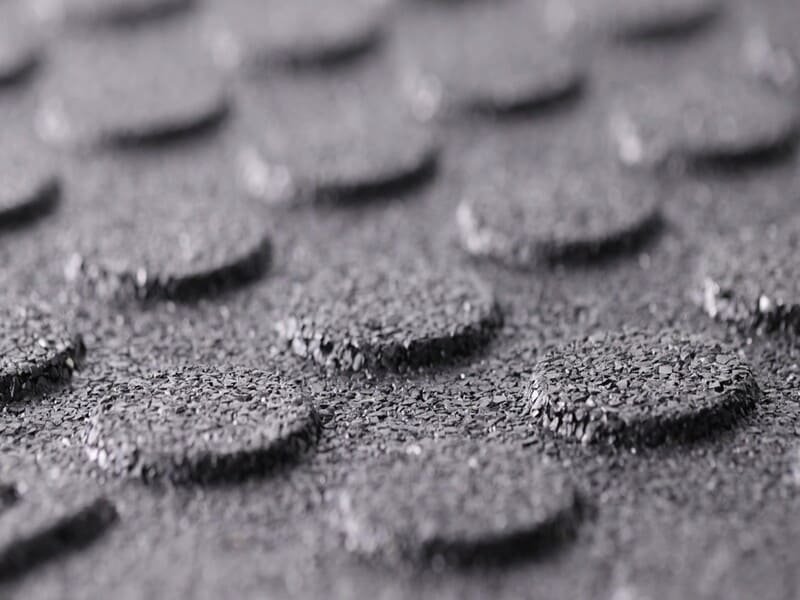
Try to pick at the corner of the sample with your fingernail. In a low-quality "cold-press" mat, you will be able to peel away black rubber crumbs easily. In a high-quality "hot-press" or high-binder product, the granules are fused together so tightly that they will not shed. Shedding rubber is a nightmare for maintenance and air quality.
Physical testing is your first line of defense, but professional-grade flooring must also meet international safety laws.
Why are REACH and ASTM E648 certifications non-negotiable?
Safety certifications are the only proof that the rubber is non-toxic and fire-resistant. REACH ensures no harmful chemicals like lead or phthalates are present, while ASTM E648 proves the floor won’t facilitate the rapid spread of fire in a commercial building.
Tiefes Eintauchen:
Many buyers overlook the "chemical footprint" of rubber. Since most rubber flooring comes from recycled tires, it can contain heavy metals or toxic oils if not properly sourced. REACH certification is a European standard that we use to guarantee our mats are safe for skin contact and indoor air. If a supplier can’t provide this, you are effectively putting industrial waste in your facility. Fire safety is equally critical. In many jurisdictions, installing non-ASTM E648 rated flooring in a commercial space is illegal. If a fire occurs, uncertified rubber acts as an accelerant and produces thick, toxic smoke. As a production manager, I always provide these reports upfront because they prove the integrity of our chemical formula and our commitment to user safety.
Essential Compliance Checklist
| Zertifizierung | Area of Protection | Industry Expectation |
|---|---|---|
| REACH / RoHS | Menschliche Gesundheit | Zero hazardous substances/VOCs. |
| ASTM E648 | Brandsicherheit | Class 1 rating for high-occupancy areas. |
| IIC (Sound) | Lärmschutz | Proven decibel reduction between floors. |
| ISO 9001 | Konsistenz | Ensuring every batch is the same quality. |
Identifying "Fake" Specs
I’ve seen suppliers provide 10-year-old test reports or reports that belong to a different factory. Always check that the company name on the test report matches the manufacturer you are buying from. A true technical partner will have no problem providing verifiable, up-to-date documentation.
Buying the right floor isn’t about finding the lowest price; it’s about finding the highest value per year of use.
Schlussfolgerung
To secure the best rubber flooring, prioritize high density, zero crumb shedding, and verified fire/chemical certifications. Never buy without testing a physical sample using the bend and water-drop methods to ensure long-term hygiene and durability.
Need a technical second opinion on a sample you’ve received? Send me a private message. I can help you decode technical spec sheets or provide a professional sample kit from our production line to show you what "A-Grade" rubber actually looks and feels like.