


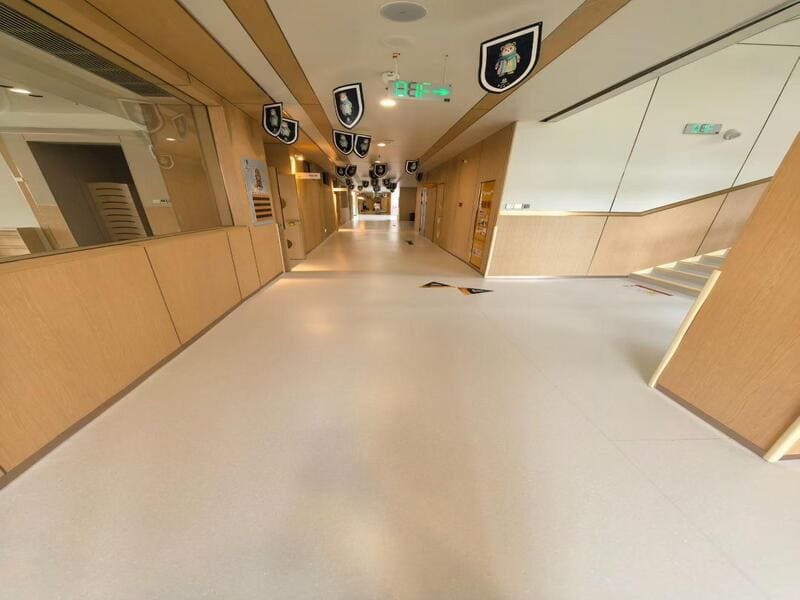
Homogene Vinylböden verziehen sich nach dem Ausrollen häufig aufgrund der Rollenspannung, niedriger Lagertemperaturen oder unzureichender Akklimatisierung. In den meisten Fällen handelt es sich bei dieser vorübergehenden Wölbung um ein Materialverhalten und nicht um einen Herstellungsfehler.
Es kann frustrierend sein, wenn man eine neue Rolle eines hochwertigen homogenen Vinylbodens öffnet und dabei gewellte Kanten, abstehende Enden oder sichtbare Wellen feststellt. Ich beobachte oft, dass Verleger davon ausgehen, dass das Material fehlerhaft ist, bevor sie die Lager- und Baustellenbedingungen überprüft haben. In vielen Fällen hat der Bodenbelag lediglich die gekrümmte Form beibehalten, die beim Aufwickeln im Werk, beim Transport und bei der Lagerung entstanden ist.
Homogenes Vinyl ist ein dichtes und flexibles thermoplastisches Material. Temperaturschwankungen wirken sich auf seine Steifigkeit und seine Abmessungen aus. Außerdem unterscheidet es sich in seinem Aufbau von vielen heterogenen Vinylplatten und glasfaserverstärkten Produkten. Aufgrund dieser Unterschiede ist eine korrekte Konditionierung von großer Bedeutung.
Als Spezialist für die Qualitätskontrolle von homogenen Vinylbodenbelägen unterscheide ich zwischen vorübergehendem Aufrollen der Rolle und dauerhaften Maßabweichungen, indem ich die Oberflächenbeschaffenheit der Rolle, den Zustand der Kanten, die Temperaturverläufe, die Lagerungsbedingungen, die Chargendaten und die Maßstabilität überprüfe. In diesem Leitfaden wird erläutert, warum sich der Bodenbelag aufrollt, wie man ihn sicher glättet und wie man Blasen oder Wellen nach der Verlegung verhindert.
Eine gewellte Rolle ist nicht immer gleichbedeutend mit einem fehlerhaften Produkt. Entscheidend ist, festzustellen, ob die Verformung auf das normale Rollengedächtnis, unsachgemäße Handhabung, Feuchtigkeitsdruck, Klebstoffversagen oder eine tatsächliche Materialverformung zurückzuführen ist.
Was führt dazu, dass sich homogene Vinylböden anders verhalten?
Homogene Vinylböden weisen über ihre gesamte Dicke hinweg eine einheitliche Struktur auf PVC-Basis auf. Dank ihrer dichten thermoplastischen Beschaffenheit zeichnen sie sich durch eine hohe Verschleißfestigkeit aus, können jedoch auch die Rollspannung beibehalten und auf Temperaturänderungen während der Lagerung und Verlegung reagieren.
Einschichtige Bauweise und Materialgedächtnis
Homogene Vinylbodenbeläge werden aus einem Material hergestellt, dessen Zusammensetzung von der Oberfläche bis zum Untergrund im Wesentlichen einheitlich ist. Die Norm ISO 10581 regelt die Eigenschaften von homogenen PVC-Bodenbelägen, die in Rollen- oder Fliesenform geliefert werden. Im Gegensatz zu bedruckten heterogenen Bodenbelägen mit mehreren getrennten Funktionsschichten besteht ein homogener Bodenbelag in der Regel über den größten Teil oder die gesamte Dicke hinweg aus demselben farbigen Material.
Diese Struktur eignet sich besonders für den Einsatz in Krankenhäusern, Schulen, Labors, Fabriken und anderen gewerblichen Bereichen, da das optische Design durch Oberflächenabnutzung nicht so schnell verloren geht. Allerdings wird bei vielen homogenen Vinylrollen nicht dieselbe Art von Glasfaserträger verwendet, wie sie in einigen heterogenen Plattenprodukten zu finden ist. Das Material kann daher nach der Herstellung einer höheren Wickelspannung standhalten.
Während der Herstellung durchläuft die heiße Vinylbahn Walzen, Kühlsysteme, Prüfstationen und Aufwickelvorrichtungen. Die fertige Bahn wird für den Versand fest um einen Kern gewickelt. Die inneren Lagen unterliegen dabei einem kleineren Biegeradius als die äußeren Lagen. Nach dem Abwickeln der Rolle benötigt das Material Zeit, um diese gespeicherte Spannung abzubauen.
| Material Eigenschaft | Praktische Auswirkung nach dem Ausrollen |
|---|---|
| Dichte PVC-Zusammensetzung | In einem kalten Raum kann sich das Laken etwas steif anfühlen |
| Feste Werkswicklung | Die Enden können sich in Richtung der früheren Rollenform wellen |
| Einheitliche Struktur | Oberfläche und Trägermaterial reagieren gemeinsam auf Temperaturänderungen |
| Lange Lagerzeit | Der Roll-Effekt könnte stärker wahrnehmbar werden |
| Kein starrer Plankenkern | Die Platte muss sich vor dem Einbau und der Verklebung ausdehnen. |
Bei der Qualitätskontrolle achte ich auf eine gleichmäßige und einheitliche Wölbung. Eine sanfte Wölbung bessert sich in der Regel nach der Konditionierung. Scharfe Falten, gedehnte Kanten, tiefe Knicke, Weißfärbungen an der Oberfläche oder bleibende Wellen sind schwerwiegendere Anzeichen.
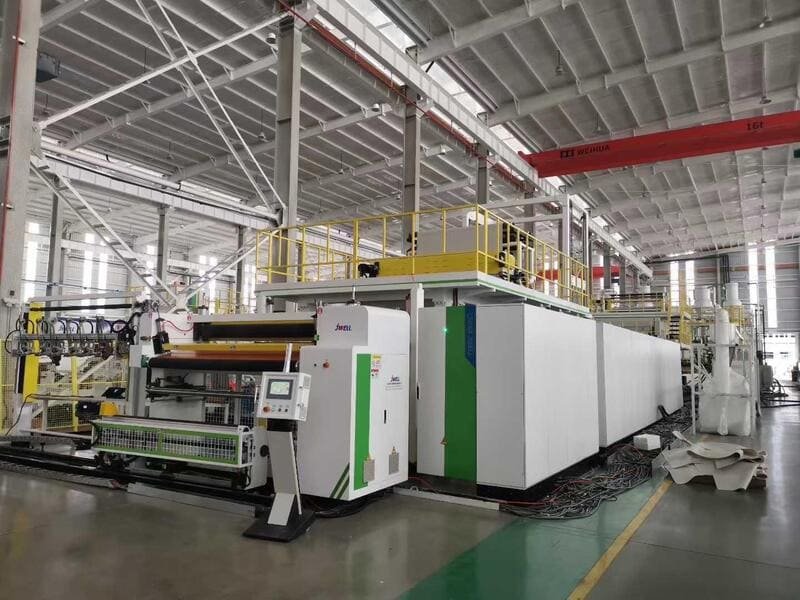
Sobald ich die Art der Verformung verstanden habe, kann ich die richtige Korrekturmethode wählen, anstatt zu versuchen, das Blech mit Klebstoff gewaltsam zu glätten.
Warum verzieht sich homogener Vinylboden nach dem Ausrollen?
Die Hauptursachen sind Rollgedächtnis, Thermoschock, unzureichende Akklimatisierung, unsachgemäße Lagerung und Feuchtigkeit unter dem verlegten Bodenbelag. Der Zeitpunkt, zu dem die Verformung auftritt, hilft mir dabei, die wahrscheinlichste Ursache zu ermitteln.
1. Roll-Speicher
Der „Roll-Effekt“ ist der häufigste Grund für ein sofortiges Aufrollen. Das Vinyl wird während der Produktion fest aufgerollt und bleibt auch während der Lagerung und des Transports in dieser gerollten Form. Die Polymerstruktur passt sich nach und nach dieser gekrümmten Position an. Wenn die Verpackung entfernt wird, glättet sich die Folie nicht sofort.
Dieser Effekt ist in der Regel am inneren Ende der Rolle am stärksten, da diese um den kleinsten Radius gewickelt wurde. Oft stelle ich fest, dass die letzten Meter in der Nähe des Kerns stärker gewellt sind als am äußeren Ende. Dieser Unterschied allein ist jedoch kein Beweis dafür, dass das Produkt fehlerhaft ist.
2. Thermoschock
Kälte führt dazu, dass Vinyl weniger flexibel wird. Eine Rolle, die in einem kalten Lager oder Lieferwagen gelagert wurde, lässt sich möglicherweise nur schwer glatt ausrollen, wenn sie in einem wärmeren Raum ausgepackt wird. Die Oberseite erwärmt sich dabei möglicherweise schneller als die Unterseite. Dieser Temperaturunterschied kann vorübergehend zu Wellenbildung oder zum Abheben der Kanten führen.
Der Verleger sollte die Rolle nicht beurteilen, solange sie noch kalt ist. Ich warte zunächst, bis das gesamte Material eine gleichmäßige Temperatur erreicht hat.
3. Unsachgemäße Akklimatisierung
Das direkte Verlegen der Rolle vom LKW auf den Verlegeort ist einer der häufigsten Fehler auf der Baustelle. Der Bodenbelag, der Klebstoff, der Unterboden und der Raum können unterschiedliche Temperaturen aufweisen. Die Bahn kann sich auch nach dem Zuschneiden oder Verkleben noch weiter verziehen.
Gemäß einer gängigen Verlegeanleitung muss die Temperatur im Verlegebereich vor der Verlegung, während der Verlegung und mindestens 24 Stunden danach zwischen 18 °C und 27 °C liegen. Der Bodenbelag und der Klebstoff sollten normalerweise mindestens 24 Stunden lang in derselben Umgebung verbleiben. Wenn die Rolle bei Temperaturen unter 10 °C gelagert wurde, muss die Akklimatisierungszeit möglicherweise auf 48 Stunden verlängert werden.
4. Unsachgemäße Lagerung
Rollen sollten grundsätzlich aufrecht gelagert werden, sofern der Hersteller keine anderslautenden Anweisungen gibt. Bei langen Rollen, die liegend und ohne vollständige Abstützung gelagert werden, können Abflachungen, eingedrückte Kanten oder Verformungen des Kerns auftreten. Auch schwere Gegenstände, die auf die Rolle gelegt werden, können Druckstellen verursachen.
5. Feuchtigkeit im Unterboden und Dampfdruck
Sollten nach dem Verkleben Blasen oder Wellen auftreten, liegt das Problem möglicherweise nicht am Rollengedächtnis. Überschüssige Feuchtigkeit im Beton kann den Klebstoff beeinträchtigen und Druck unter der porenfreien Folie erzeugen. Dies kann zu Ablösungen, Blasenbildung, Wölbungen oder erhabenen Stellen führen.
| Wenn das Problem auftritt | Wahrscheinliche Ursache | Qualitätskontrolle |
|---|---|---|
| Unmittelbar nach dem Ausrollen | Coil oder kaltes Material | Rollen und Raumtemperatur prüfen |
| Vor allem in der Nähe des inneren Kerns | Hohe Wickelspannung | Auf gleichmäßige Locken oder Falten prüfen |
| Während der Anprobe | Unvollständige Akklimatisierung | Lager- und Reifungszeit überprüfen |
| Innerhalb einer Stunde nach dem Ausrollen | Klebstoff wurde zu früh aufgetragen | Offene Verarbeitungszeit des Klebstoffs prüfen |
| Einige Tage nach der Installation | Feuchtigkeit oder unzureichende Klebstoffübertragung | Feuchtigkeit der Probeplatte prüfen und die Haftung überprüfen |
| Entlang der Dehnungsfugen | Bewegung der Deckenplatte | Lage der Fugen und Grundriss bestätigen |
Der Zeitpunkt und die Art der Verformung sagen mir in der Regel mehr als der Begriff „Verziehen“. Ich überprüfe immer zuerst das Verlegesystem, bevor ich die Vinylrolle dafür verantwortlich mache.
Wie kann ich verzogenes Vinyl vor der Verlegung glätten?
Ich glätte homogenes Vinyl, indem ich die Raumtemperatur stabil halte, die zugeschnittenen Bahnen flach auslege, sie vorsichtig mit einer Walze glätte und bei Bedarf gleichmäßigen Druck ausübe. Ich verlasse mich niemals auf Klebstoff, um starkes Aufrollen oder dauerhafte Falten zu korrigieren.
Schritt 1: Befolgen Sie ein Protokoll zur kontrollierten Akklimatisierung
Ich lege die Rolle vor dem Zuschneiden oder Verkleben im Verlegebereich aus. Ein praktischer Temperaturbereich liegt zwischen 65 °F und 85 °F (etwa 18 °C bis 29 °C), wobei jedoch stets die genauen Produkt- und Klebstoffanweisungen Vorrang haben. Für die Verlegung von homogenen Bodenbelägen im gewerblichen Bereich wird üblicherweise ein engerer Bereich von 18 °C bis 27 °C vorgeschrieben.
Der Raum, der Unterboden, der Bodenbelag und der Klebstoff sollten eine konstante Temperatur erreichen. Es reicht nicht aus, die Luft nur einige Stunden lang zu beheizen, wenn die Betonplatte kalt bleibt. Die Heizungs-, Lüftungs- und Klimaanlage sollte vor, während und nach der Verlegung in Betrieb sein.
Normalerweise warte ich bei der Standardkonditionierung mindestens 24 Stunden. Diese Zeitspanne verlängere ich auf 48 Stunden, wenn die Rolle bei Temperaturen unter 10 °C transportiert oder gelagert wurde oder wenn sich das Material noch steif anfühlt.
Schritt 2: Die Bahnen zuschneiden und flach auslegen
Ich schneide die benötigten Plattenlängen mit etwas Spielraum für die endgültige Anpassung zu. Anschließend lege ich die Platten flach im Verlegebereich aus. Die Oberfläche muss sauber sein, damit kein Sand die Unterseite zerkratzt oder Druckstellen verursacht.
Die Folie sollte sich vor dem endgültigen Zuschneiden auf natürliche Weise entspannen. Das Zuschneiden einer kalten Rolle auf exakte Maße kann zu Passungsfehlern führen, da sich das Vinyl beim Abbau der Herstellungsspannung leicht zusammenziehen kann.
Schritt 3: Wenden Sie die Back-Rolling-Technik an
Unter „Back-Rolling“ versteht man das Aufwickeln des zugeschnittenen Bogens in die entgegengesetzte Richtung seiner ursprünglichen Wicklung. Ich verwende dabei einen großen und lockeren Durchmesser. Ich erzeuge niemals eine enge Gegenbiegung.
In einer professionellen Verlegeanleitung wird empfohlen, die zugeschnittenen Bahnen wieder aufzurollen und etwa 15 Minuten ruhen zu lassen, bevor man sie wieder ausrollt. Dies hilft, die Wickelspannung zu lösen und verringert das Risiko von Maßänderungen während der Verlegung.
Schritt 4: Gleichmäßigen Druck ausüben
Bei hartnäckigen Kanten lege ich sauberes Sperrholz oder eine andere glatte, ebene Platte über die betroffene Stelle. Das Gewicht verteile ich gleichmäßig auf der Platte. Ich stelle keine kleinen Metallgegenstände, Werkzeugkästen oder scharfen Gegenstände direkt auf den Bodenbelag, da diese bleibende Eindrücke hinterlassen können.
Schritt 5: Gehen Sie beim Umgang mit Hitze äußerst vorsichtig vor
Eine geregelte Raumheizung ist sicherer als direkte Wärme. Ich bevorzuge eine fest installierte oder temporäre Heizungsanlage, die den Raum und den Unterboden gleichmäßig erwärmt. Ich verwende weder offene Flammen noch Kerosinheizgeräte.
Eine Heißluftpistole ist nicht meine erste Wahl. Wenn ein erfahrener Verleger sie für eine kleine, hartnäckige Stelle einsetzt, muss die Hitze niedrig gehalten werden, die Pistole muss ständig bewegt werden und einen ausreichenden Abstand zur Oberfläche einhalten. Der Verleger sollte zunächst an einem Reststück testen. Eine Veränderung des Glanzes, Erweichung, Verfärbung, Geruch oder Verformung der Oberfläche deuten darauf hin, dass das Vinyl überhitzt ist.
| Abflachungsmethode | Empfohlene Verwendung | Hauptrisiko |
|---|---|---|
| Raumakklimatisierung | Ganze Rolle | Zu wenig Zeit |
| Bettlaken flach auslegen | Schnittlängen | Verschmutzte oder unebene Oberfläche |
| Lockeres Zurückrollen | Ausgeprägtes Rollengedächtnis | Faltenbildung bei einem engen Radius |
| Flache Platten und Gewichte | Erhöhte Enden und Kanten | Punktlast-Eindrückung |
| Kontrollierte direkte Hitze | Nur kleine, hartnäckige Stellen | Verbrennungen oder bleibende Verformungen |
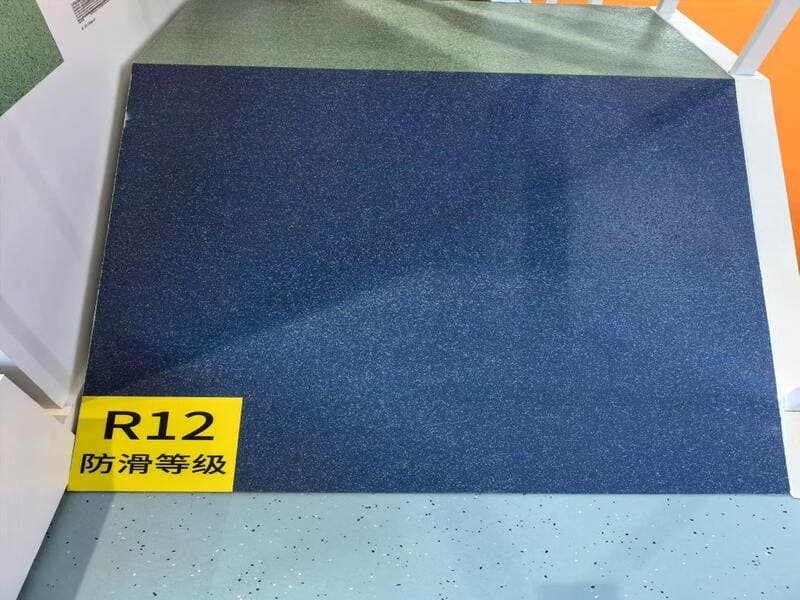
Geduld gehört zum Verlegeprozess dazu. Eine richtig entspannte Bahn lässt sich leichter schneiden, vernähen, verkleben und aufrollen.
Wie verhindern professionelle Verleger Verformungen nach dem Verkleben?
Professionelle Verleger verhindern ein Verziehen nach dem Verlegen, indem sie einen trockenen und ebenen Untergrund vorbereiten, die Betonfeuchte prüfen, einen geeigneten Klebstoff auswählen, dessen Verarbeitungszeit einhalten und die Bahn in zwei Richtungen andrücken, um eine vollständige Klebstoffübertragung zu gewährleisten.
Den Unterboden vorbereiten
Der Unterboden muss eben, glatt, fest, sauber, tragfähig und dauerhaft trocken sein. Staub, Fett, Farbe, Aushärtungsmittel, Kleberrückstände, Permanentmarker und loses Ausbesserungsmaterial können die Haftung beeinträchtigen oder durch den fertigen Bodenbelag hindurchscheinen.
Homogenes Vinyl ist relativ dünn, sodass kleine Mängel im Untergrund nach der Verlegung sichtbar werden können. Mit Klebstoff lassen sich Löcher, Unebenheiten, Risse oder instabile Spachtelmassen nicht ausgleichen.
Prüfung der Betonfeuchte
Ich genehmige eine Betonverlegung nicht allein aufgrund des äußeren Erscheinungsbildes. Eine Betonplatte kann trocken aussehen, obwohl sie im Inneren noch einen hohen Feuchtigkeitsgehalt aufweist. Die Norm ASTM F2170 beschreibt ein Verfahren zur Messung der relativen Feuchte im Inneren mit In-situ-Sonden. Die Norm ASTM F710 regelt die Vorbereitung des Betons für elastische Bodenbeläge.
Der zulässige Grenzwert für die relative Luftfeuchtigkeit ist nicht allgemeingültig. Er hängt vom Bodenbelag, dem Klebstoff, der Grundierung, dem Ausbesserungssystem, der Neigung der Betonplatte und den Garantiebedingungen ab. Einige Klebstoffsysteme für den gewerblichen Bereich lassen hohe Werte der relativen Luftfeuchtigkeit zu, doch sollten Verleger niemals den Feuchtigkeitsgrenzwert eines anderen, nicht vergleichbaren Produkts übernehmen.
Wählen Sie den richtigen Klebstoff aus
Druckempfindliche, berührungstrockene und nassverlegbare Klebstoffe verhalten sich unterschiedlich. Die richtige Wahl hängt vom Produkt, dem Untergrund, den Rollbelastungen, der Temperatur, der Feuchtigkeit und dem Verlegeort ab.
Bei vielen homogenen Vinylbahnen sorgt ein nassverarbeiteter Acrylklebstoff für eine starke Anfangshaftung und eine langfristige Maßhaltigkeit. Wird der Bodenbelag jedoch zu früh verlegt, kann Feuchtigkeit aus dem Klebstoff eingeschlossen werden. Ein zu langes Warten kann die Haftkraft beeinträchtigen. Der Verleger muss die angegebenen Offen- und Verarbeitungszeiten einhalten.
Den Boden richtig ausrollen
Nachdem ich die Bahn verlegt habe, drücke ich von der Mitte zu den Rändern hin, um eingeschlossene Luft zu entfernen. Anschließend verwende ich die vom Bodenbelagshersteller empfohlene Walze.
In nordamerikanischen Anleitungen wird häufig eine 100-lb-Bodenwalze angegeben. In einigen europäischen Systemen wird eine 68-kg-Walze vorgeschrieben. Der Verleger sollte zunächst quer zur Breite und anschließend längs zur Länge walzen. Für Ecken, Wände, Türrahmen und andere Bereiche, die mit der großen Walze nicht erreicht werden können, ist eine Handwalze oder ein Reibwerkzeug erforderlich.
| Installationssteuerung | Qualitätsanforderung | Ausfälle, denen dadurch vorgebeugt wird |
|---|---|---|
| Vorbereitung der Oberfläche | Glatt, sauber, intakt und trocken | Telegrafieren und schwache Bindungen |
| Prüfung nach ASTM F2170 | Ergebnisse innerhalb der Haftungsgrenzen | Durch Feuchtigkeit verursachte Blasen |
| Haftfestigkeitsprüfung | Kompatibilität und Zeitablauf überprüfen | Ablösung |
| Richtige Kellenrille | Die angegebene Ausbringmenge einhalten | Geringe Klebstoffübertragung |
| Steuerung der Öffnungszeiten | Beachten Sie die anwendungsspezifischen Angaben zum Klebstoff | Blasen oder schwacher Griff |
| Rollbewegung über die gesamte Etage | In zwei Richtungen rollen | Luftblasen und Erhebungen |
| Verkehrsbeschränkung | Halten Sie den Aushärtungsplan ein | Blechbewegung und Einpressung |
Eine gute Verlegung ist ein Gesamtkonzept. Bodenbelag, Estrich, Ausgleichsmasse, Grundierung, Klebstoff, Temperatur und Verlegemethode müssen aufeinander abgestimmt sein.
Kann ich homogenes Vinyl verlegen, wenn es noch leichte Wellen aufweist?
Ich verlege die Bahn nur, wenn kleinere Wellen glatt und vorübergehend sind und sich unter stabilen Bedingungen weiter glätten. Ich verlege kein Material mit scharfen Falten, starker Kantenwölbung, gedehnten Stellen oder Wellen, die sich nicht ordnungsgemäß glätten lassen.
Wie ich entscheide, ob die Platte verlegbar ist
Eine kleine, glatte Welle kann verschwinden, nachdem die Folie Raumtemperatur erreicht hat und ordnungsgemäß zurückgerollt wurde. Der Klebstoff sollte jedoch nicht als Halterung für starke Verformungen betrachtet werden. Eine starke Wölbung kann vor dem Aushärten des Klebstoffs an diesem ziehen. Dies kann zu hochstehenden Kanten, offenen Nähten, einer schwachen Randverklebung oder sichtbaren Spannungslinien führen.
Bevor ich die Rolle freigebe, lege ich den betreffenden Abschnitt auf eine ebene Prüfoberfläche. Ich prüfe, ob er sich von selbst ausrichtet. Außerdem untersuche ich die Unterseite und die Oberfläche bei guter Beleuchtung.
Ich sortiere den betroffenen Abschnitt aus oder isoliere ihn, wenn ich dauerhafte Falten, eine weißliche Verfärbung der Oberfläche, Risse, gedehnte Kanten, eine beschädigte Rückseite, eine Zerdrückung des Kerns, eine ungewöhnliche Dicke oder Verformungen feststelle, die auch nach Ablauf der gesamten Konditionierungsphase bestehen bleiben.
Leitfaden zur Qualitätskontrolle und Abnahme
| Zustand | Entscheidung zur Installation |
|---|---|
| Eine sanfte Kräuselung, die sich während der Eingewöhnungsphase verringert | In der Regel akzeptabel |
| Kleine Wellen, die sich nach dem Zurückrollen abflachen | In der Regel akzeptabel |
| Kräftige Locken, die auch nach 48 Stunden noch an Volumen gewinnen | Anhalten und nachsehen |
| Scharfe Falz oder gefaltete Kante | Herausschneiden oder ersetzen |
| Oberflächenverfärbungen oder Risse | Nicht installieren |
| Ungleiche Breite oder gedehnte Kante | Maßhaltigkeit messen |
| Beschädigter Rollenkern mit Druckstellen | Den gesamten Innenbereich überprüfen |
Wenn mir ein Kunde ein Foto zur Reklamation schickt, frage ich nach der Rollen- und Chargennummer, der Lagerposition, der Lagertemperatur, dem Lieferdatum, der Raumtemperatur, der Art des Unterbodens und der Klebstoffsorte. Anhand dieser Angaben kann ich Produktschäden von baustellenspezifischen Bewegungen unterscheiden.
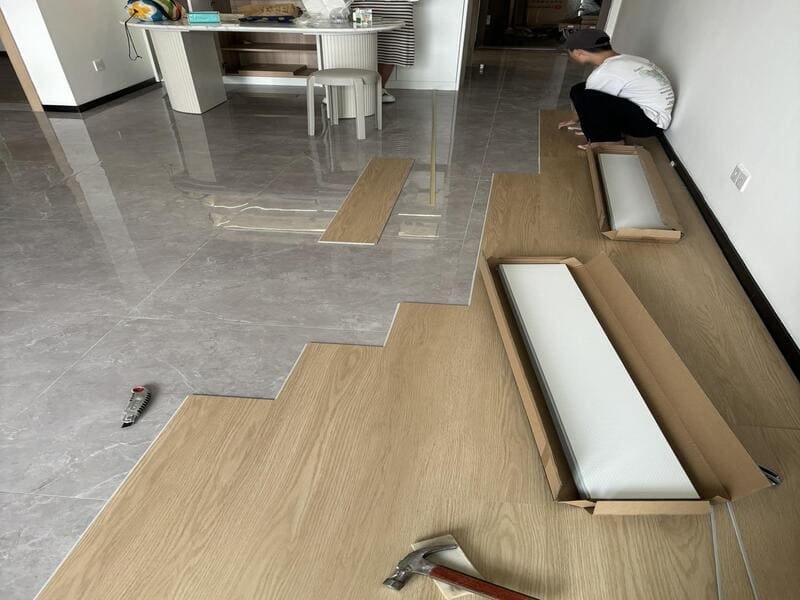
Die Verwendung von Material zweifelhafter Qualität erschwert in der Regel die Fehlersuche. Ich ziehe es vor, die Ursache zu ermitteln, bevor der Klebstoff aufgetragen wird.
Wie behebe ich Blasen, die nach der Installation auftreten?
Blasen, die nach der Verlegung auftreten, deuten in der Regel auf eingeschlossene Luft, eine unzureichende Klebstoffübertragung, eine falsche Verarbeitungszeit, übermäßige Feuchtigkeit im Estrich oder Verunreinigungen hin. Die richtige Behebung hängt davon ab, ob der Klebstoff noch aktiv ist und ob Feuchtigkeit vorhanden ist.
Erst diagnostizieren, dann reparieren
Zunächst markiere ich den Rand der Blase und drücke mit der Hand auf die Stelle. Ein hohler Klang kann auf einen fehlenden Klebeverbund hinweisen. Eine weiche Blase kann eingeschlossene Luft oder Feuchtigkeit enthalten. Eine harte, erhabene Stelle kann durch Fremdkörper, eine defekte Ausbesserung oder eine Bewegung der Betonplatte verursacht sein.
Wenn innerhalb einer Stunde nach dem Ausrollen Blasen auftreten, wurde die Bahn möglicherweise vor Ablauf der erforderlichen Wartezeit in feuchten Kleber eingelegt. Treten sie erst mehrere Tage später auf, untersuche ich die Feuchtigkeit der Platte, den pH-Wert, die Dampfregulierung, die Verträglichkeit des Klebers sowie Temperaturschwankungen.
Kleine, vereinzelte Blasen lassen sich manchmal beheben, indem man die eingeschlossene Luft entweichen lässt, den zugelassenen Klebstoff aufträgt, das Material vorsichtig erwärmt und den Bereich glattrollt. Diese Arbeiten sollten erst durchgeführt werden, nachdem die Reparaturmethode des Bodenbelags- und Klebstoffherstellers überprüft wurde. Das willkürliche Einspritzen von Klebstoff kann Feuchtigkeit einschließen, Flecken auf dem Material hinterlassen oder eine sichtbare Verhärtung verursachen.
Große oder wiederholt auftretende Blasen erfordern eine eingehendere Untersuchung. Der Verleger muss möglicherweise einen Testabschnitt anheben, um die Klebstoffübertragung und den Zustand des Untergrunds zu überprüfen. Wenn die Feuchtigkeit den für den Klebstoff zulässigen Grenzwert überschreitet, können lokale Reparaturen erneut versagen. Die richtige Lösung kann darin bestehen, den betroffenen Bodenbelag zu entfernen, die Betonplatte trocknen zu lassen oder ein zugelassenes System zur Feuchtigkeitsbekämpfung zu installieren.
| Blasenmuster | Mögliche Ursache | Empfohlene Maßnahmen |
|---|---|---|
| Eine kleine Vertiefung | Eingeschlossene Luft oder fehlender Klebstoff | Professionelle Reparatur vor Ort |
| Viele Blasen in einem Bereich | Falsche Öffnungszeit oder Überweisung | Klebstoffmuster prüfen |
| Blasen in der Nähe einer Wand | Schwache Randverklebung | Handwalzen oder Reparatur des Umfangs |
| Blasen über Betonrissen | Plattenbewegung | Bauzustand prüfen |
| Überall im Raum tauchen immer wieder Blasen auf | Übermäßige Feuchtigkeit oder Verunreinigungen | Lokale Reparaturen einstellen und die Ursache untersuchen |
| Erhöhte Nähte | Folienspannung oder Klebstoffversagen | Akklimatisierung und Nahtverklebung prüfen |
Eine Blase ist ein Symptom. Eine Reparatur der Oberfläche ohne Beseitigung der Ursache kann dazu führen, dass derselbe Defekt erneut auftritt.
Kann extreme Kälte homogene Vinylrollen dauerhaft beschädigen?
Die Lagerung bei niedrigen Temperaturen führt nicht immer zu dauerhaften Schäden, doch gefrorenes oder sehr kaltes Vinyl wird steif und neigt bei der Handhabung leichter zu Rissen, Knicken oder Verformungen. Die Rolle sollte sich allmählich erwärmen, bevor sie geöffnet, gebogen, geschnitten oder verlegt wird.
Kaltes Material benötigt eine längere Aufwärmzeit
PVC ist ein Thermoplast, daher ändert sich seine Flexibilität mit der Temperatur. Eine kalte Rolle kann sich hart anfühlen und sich nur schwer abrollen lassen. Wenn Mitarbeiter sie gewaltsam öffnen, fallen lassen oder stark in die entgegengesetzte Richtung biegen, kann es zu Spannungsweißfärbung, Kantenrissen oder bleibenden Knicken kommen.
Ich bewerte eine Kaltwalzrolle niemals unmittelbar nach der Anlieferung. Ich lasse die Verpackung intakt, während sich die Rolle in einer kontrollierten Innenraumumgebung erwärmt. Ich vermeide es, sie direkt neben eine starke Heizung zu stellen, da eine schnelle und ungleichmäßige Erwärmung zu Temperaturunterschieden zwischen der Außenseite und der Mitte der Rolle führen kann.
Nachdem sich das Material akklimatisiert hat, öffne ich die Verpackung und prüfe die Außenfläche, die Rollenenden, den Kern und die Kanten. Anschließend schneide ich ein Teststück ab oder rolle einen bestimmten Abschnitt ab. Wenn das Vinyl geschmeidig wird und sich die Wölbung allmählich glättet, war die Kälteeinwirkung wahrscheinlich nur vorübergehend.
Eine dauerhafte Beschädigung ist wahrscheinlicher, wenn die Rolle geknickt, gequetscht, im spröden Zustand fallen gelassen, auf einer unebenen Oberfläche gelagert oder wiederholten Temperaturwechseln ausgesetzt wurde. Ein verformter Kern kann zudem Druck auf die inneren Schichten übertragen.
| Beobachtung im Kühlhaus | Bedeutung von „QC“ |
|---|---|
| Die Rolle ist steif, weist jedoch keine Risse auf | Die Akklimatisierung verlängern |
| Die Glätte der Locken nimmt mit steigender Temperatur ab | Temporäres Materialgedächtnis |
| Beim Biegen treten weiße Spannungsrisse auf | Nicht anfassen |
| Beim Abrollen entstehen Risse an den Kanten | Mögliche dauerhafte Kälteschäden |
| Die inneren Schichten weisen Druckstellen auf | Kern und Speichermethode prüfen |
| Die Locken bleiben nach der Pflege unverändert. | Auf Maßabweichungen prüfen |
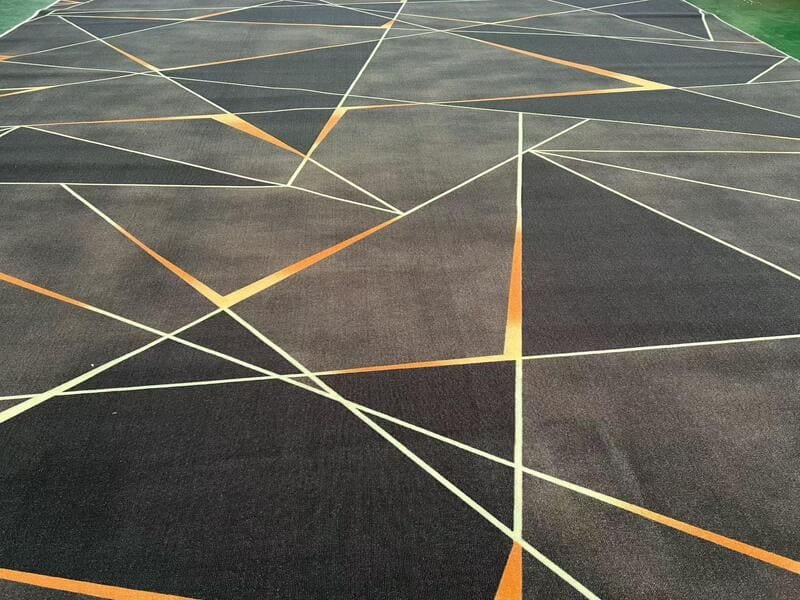
Eine langsame Konditionierung schützt das Produkt. Das gewaltsame Ausrollen eines kalten, flachen Stücks kann ein vorübergehendes Installationsproblem in einen dauerhaften Schaden verwandeln.
Schlussfolgerung
Durch richtige Akklimatisierung, Feuchtigkeitsprüfung, Klebstoffkontrolle und vollständiges Ausrollen lassen sich die meisten Probleme mit Verformungen bei homogenem Vinyl vermeiden.
Checkliste für die Baustelle
- Lassen Sie den Bodenbelag und den Klebstoff mindestens 24 Stunden lang aushärten.
- Die Konditionierung auf 48 Stunden nach der Kühllagerung verlängern.
- Die Back-Roll-Bögen locker zuschneiden und ruhen lassen.
- Prüfen Sie die Feuchtigkeit des Betons, bevor Sie den Klebstoff auswählen.
- Rollen Sie den verlegten Bodenbelag mit der angegebenen Walze in zwei Richtungen ab.
Meine Rolle
Ich bin Qualitätssicherungsspezialist mit praktischer Erfahrung in den Bereichen Herstellung homogener Vinylbodenbeläge, Maßprüfung, Rollenkonditionierung, Oberflächenqualitätskontrolle und Analyse von Verlegefehlern. Ich arbeite an maßgeschneiderten und Serienprojekten für homogene Vinylbodenbeläge für Gewerbe-, Gesundheits-, Bildungs-, Industrie- und öffentliche Einrichtungen.
Meine Aufgabe beschränkt sich nicht nur auf die Prüfung der fertigen Rollen. Ich stelle auch einen Zusammenhang zwischen den Fertigungsdaten und der tatsächlichen Leistung im Einsatz her. Dabei überprüfe ich die Rohstoffmischung, die Dicke, Oberflächenfehler, die Rollenspannung, die Maßhaltigkeit, die Verpackung, die Lagerung, die Klebstoffverträglichkeit sowie das Kundenfeedback.
Durch frühzeitige technische Beratung und Zusammenarbeit unterstütze ich Einkäufer und Projektteams dabei, mögliche Risiken bei der Konstruktion oder Installation zu erkennen, bevor die Serienfertigung oder die Montage vor Ort beginnt.
Brauchen Sie Hilfe bei einer verzogenen Rolle?
Falls sich Ihr homogener Vinylboden wellt, wölbt oder Blasen bildet, senden Sie mir bitte eine Nachricht mit aussagekräftigen Fotos, der Rollennummer, der Lagertemperatur, den Raumbedingungen, der Art des Unterbodens, dem Klebstofftyp und den Ergebnissen der Feuchtigkeitsmessung. Ich werde Ihnen helfen, die wahrscheinliche Ursache zu ermitteln, bevor Sie mit der Verlegung fortfahren.