


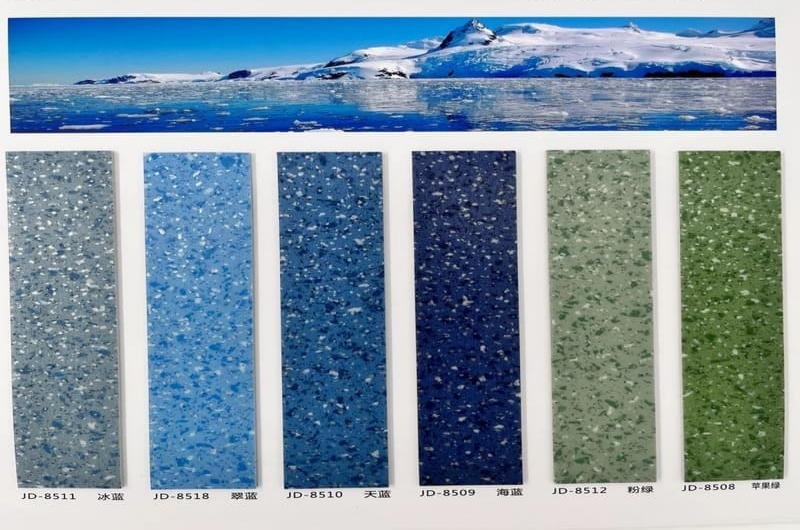
Hochwertige, homogene PVC-Bodenbeläge erkennen Sie an der europäischen Abriebklasse (Gruppe T), dem geringen Füllstoffanteil und der fleckenabweisenden Oberfläche.
Als Leiter der Qualitätskontrolle stelle ich fest, dass viele Käufer das falsche Material wählen. Homogene PVC-Bodenbeläge bestehen von oben bis unten aus einer einzigen Schicht aus massivem Vinyl. Sie bieten eine hervorragende Verschleißfestigkeit und Lebensdauer für stark frequentierte Räume. Allerdings sehen minderwertige Varianten oberflächlich betrachtet genauso aus wie hochwertige. Hersteller fügen der Mischung oft zu viel billigen Kalziumkarbonat-Füllstoff hinzu, um Kosten zu sparen. Dadurch wird das Material spröde, fleckanfällig und nutzt sich schnell ab. Sie müssen über das äußere Erscheinungsbild hinausblicken, um Ihre Investition zu schützen. Mein Ingenieurteam testet diese Materialien täglich, um die tatsächlichen Qualitätsunterschiede aufzudecken. Ich möchte Ihnen unsere bewährten physikalischen Tests und technischen Messwerte vorstellen, damit Sie mit vollstem Vertrauen einkaufen können.
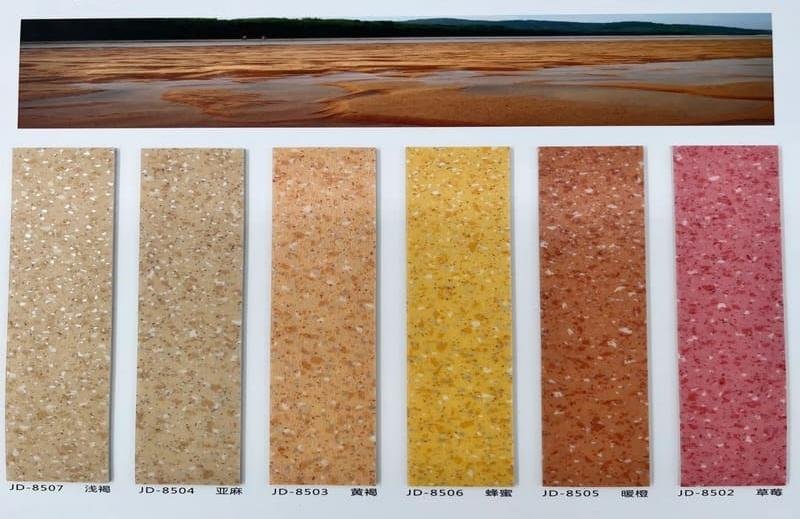
In den folgenden Abschnitten erfahren Sie, wie Sie minderwertige Materialien vermeiden und den besten Bodenbelag für Ihr Projekt auswählen können.
Was sind die größten Probleme bei der Verwendung von minderwertigen, homogenen PVC-Bodenbelägen?
Minderwertige, homogene PVC-Bodenbeläge führen zu vorzeitigem Verschleiß, tiefen Flecken durch Chemikalien, hohen Pflegekosten und aufspringenden Nähten, da ihnen ausreichend reines Vinyl fehlt.
| Großes Problem mit dem Fußboden | Grundursache in der Fertigung | Tatsächliche Auswirkungen auf das Projekt |
|---|---|---|
| Frühe Kratzer | Beschichtungen mit geringer Verschleißfestigkeit und zu niedrigen Kosten | Stumpfes und altes Aussehen innerhalb von 6 Monaten |
| Dauerhafte Flecken | Hoher Füllstoffanteil, der Flüssigkeiten aufnimmt | Medizinische Flüssigkeiten wie Jod beschädigen den Boden |
| Umfangreiche Wartungsarbeiten | Kostengünstige Oberflächenbehandlungen | Hohe Kosten für ständiges Wachsen und Polieren |
| Aufreißende Nähte | Geringe Maßhaltigkeit | Es entstehen Lücken, in denen sich Schmutz oder Bakterien festsetzen |
Bei vielen Projekten entstehen hohe Reparaturkosten, weil die Käufer die Materialeigenschaften vor dem Kauf nicht prüfen. Ein Krankenhausflur benötigt beispielsweise einen Bodenbelag, der den ständigen Rollbelastungen durch Betten standhält. Verwendet der Hersteller zu viel Füllstoff, entsteht bei starker Beanspruchung leicht Kratzer im Bodenbelag. Chemikalien wie Blut und Jod dringen zudem in die poröse Oberfläche ein und hinterlassen unschöne Flecken. Dies zwingt die Teams dazu, viel Geld für Spezialwachs und Arbeitsaufwand auszugeben. Mit der Zeit schrumpfen und verziehen sich billige Bodenbeläge zudem, wodurch die heißverschweißten Nähte aufreißen.
Warum die Materialchemie ausschlaggebend für die langfristige Leistungsfähigkeit von Bodenbelägen ist
Hochwertige Bodenbeläge werden aus erstklassigen Weichmachern und reinen Harzen hergestellt. Billige Alternativen bestehen aus Abfallstoffen, die unangenehme Gerüche abgeben und unter Druck Risse bilden. Die Tests in unserem Werkslabor zeigen, dass Platten mit hoher Dichte eine deutlich bessere Druckfestigkeit gegenüber schweren Tischen und Stühlen aufweisen.
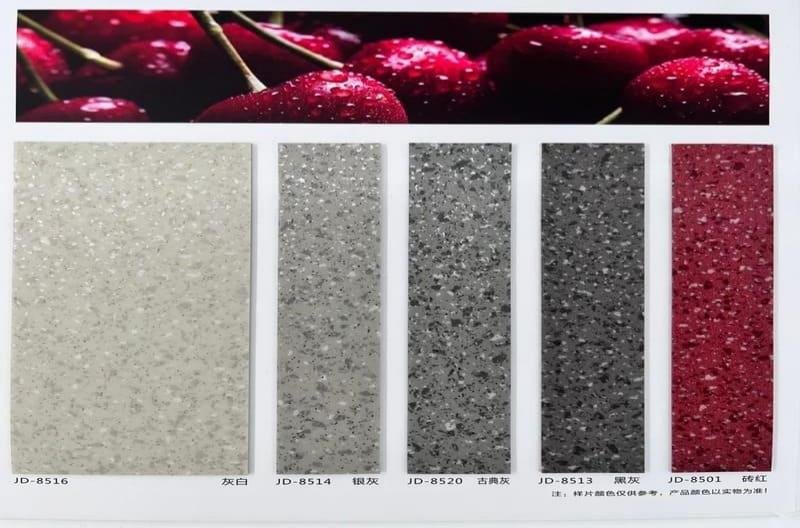
Werfen wir nun einen Blick auf die offiziellen technischen Kennzahlen, nach denen Sie als Nächstes bei Ihrem Lieferanten nachfragen sollten.
Auf welche technischen Kernqualitätsindikatoren sollten Sie achten?
Die besten Qualitätsindikatoren für den Kern sind die Verschleißklasse der Gruppe T gemäß EN 660-2, der Bindemittelgehalt gemäß ISO 10581 Typ I sowie die langlebigen PUR-Oberflächenbehandlungen.
| Technischer Standard | Anforderungen an Qualitätskennzahlen | Leistung Nutzen |
|---|---|---|
| EN 660-2 | Gruppe T (Höchste Bewertung) | Höchste Verschleißfestigkeit, geringer Volumenverlust |
| ISO 10581 | Inhalt des Bindemittels Typ I | Hoher PVC-Anteil, geringer Füllstoffanteil, nicht spröde |
| Oberflächentechnik | Vernetztes PUR oder iQ | Kein Wachsen erforderlich, einfache Entfernung von Abriebspuren |
| Dicke | Volle Dicke von 2,0 mm | Hohe Dichte, hervorragende Eindrückfestigkeit |
Um einen Lieferanten beurteilen zu können, müssen Sie die offiziellen Branchenstandards kennen. Der wichtigste Maßstab ist die Verschleißfestigkeitsprüfung nach EN 660-2. Bei dieser Prüfung wird das Material mit Schleifpapier abgerieben, um den Volumenverlust zu messen. Die Gruppe T ist die Premiumklasse mit dem geringsten Verschleiß, während die Gruppen M und F auf eine geringe Lebensdauer hinweisen. Eine weitere wichtige Regel ist die Norm ISO 10581 für den Bindemittelgehalt. Typ I bedeutet, dass der Bodenbelag einen hohen Anteil an reinem PVC aufweist. Typ II bedeutet, dass er mit billigem Kalkfüllstoff versetzt ist, was ihn anfällig macht. Außerdem müssen Sie die Oberflächenbehandlung prüfen. Standardmäßige PUR-Beschichtungen nutzen sich mit der Zeit ab. Bei Premium-Böden kommt vernetztes PUR oder iQ-Tech zum Einsatz, das lebenslang hält und das Wachsen überflüssig macht.
Der Einfluss von Dicke und tatsächlicher Dichte auf den täglichen Gebrauch
Eine handelsübliche Platte hat eine Dicke von 2,0 mm. Allerdings können zwei Platten gleicher Dicke ein unterschiedliches Gewicht haben. Ein hohes Gewicht bedeutet eine hohe Dichte, wodurch verhindert wird, dass schwere Möbel tiefe Dellen im Boden hinterlassen.
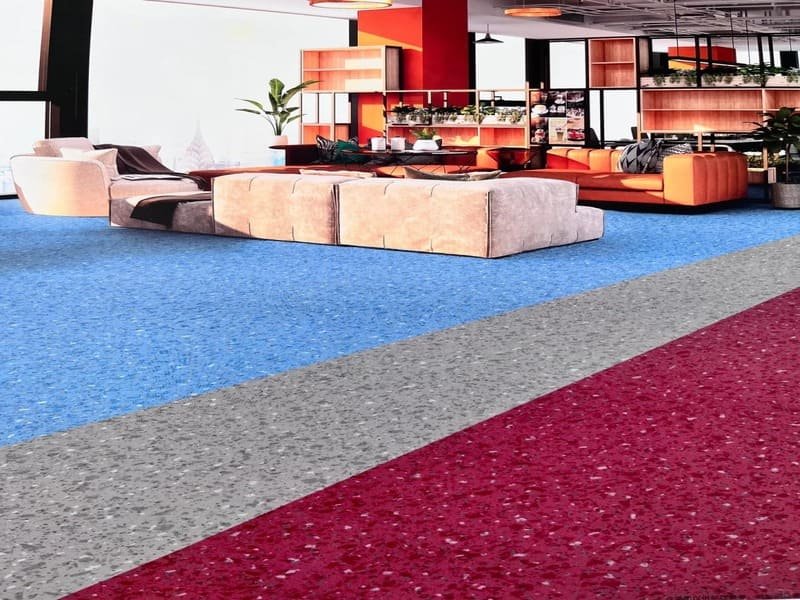
Nun möchte ich Ihnen einige einfache Tests vorstellen, die Sie ganz ohne Labor selbst durchführen können.
Wie führt man 5 einfache körperliche Tests vor Ort durch?
Sie können einfache Tests durchführen, wie zum Beispiel das Falten des Musters, um es auf Risse zu prüfen, das Zerkratzen mit einem Schlüssel und das Auftragen von Jod, um die Fleckenbeständigkeit zu überprüfen.
| Einfacher Praxistest | Wie man es macht | Hochwertiges Ergebnis |
|---|---|---|
| Der Biegetest | Falten Sie das Musterstück in der Mitte. | Gleichmäßige Biegung, keine weißen Linien oder Risse |
| Der Kratztest | Kratze mit einem Schlüssel an der Oberfläche | Oberflächliche Spuren, die sich leicht wegreiben lassen |
| Der Fleckentest | Tragen Sie Jod oder einen Permanentmarker auf | Lässt sich mit einem feuchten Tuch vollständig abwischen |
| Der Geruchstest | Riechen Sie genau an der Rohprobe | Geruchsneutral, VOC-arm, kein chemischer Geruch |
Man braucht nicht immer große Laborgeräte, um minderwertige Bodenbeläge zu erkennen. Mit einfachen Hilfsmitteln können Sie Proben direkt an Ihrem Schreibtisch testen. Führen Sie zunächst den Biegetest durch, indem Sie die Platte in der Mitte falten. Wenn die Falzstelle hellweiß wird oder reißt, enthält der Bodenbelag zu viel billigen Kalkfüllstoff. Nehmen Sie als Nächstes eine Münze oder einen Schlüssel und kratzen Sie kräftig an der Oberseite. Hochwertiges PVC widersteht tiefen Rillen, während minderwertige Bahnen tiefe weiße Kratzspuren zeigen. Als Drittes tropfen Sie etwas Jod oder Filzstift-Tinte auf die Oberfläche und warten Sie ab. Hochwertige PUR-Beschichtungen blockieren die Flüssigkeit, sodass Sie sie mit einem Tuch abwischen können. Zuletzt riechen Sie an der Probe. Bei minderwertigen Bodenbelägen werden giftige Recyclingabfälle verwendet, die einen starken chemischen Geruch verströmen.
Bewertung von Rohstoffen zur Vermeidung von Projektfehlschlägen
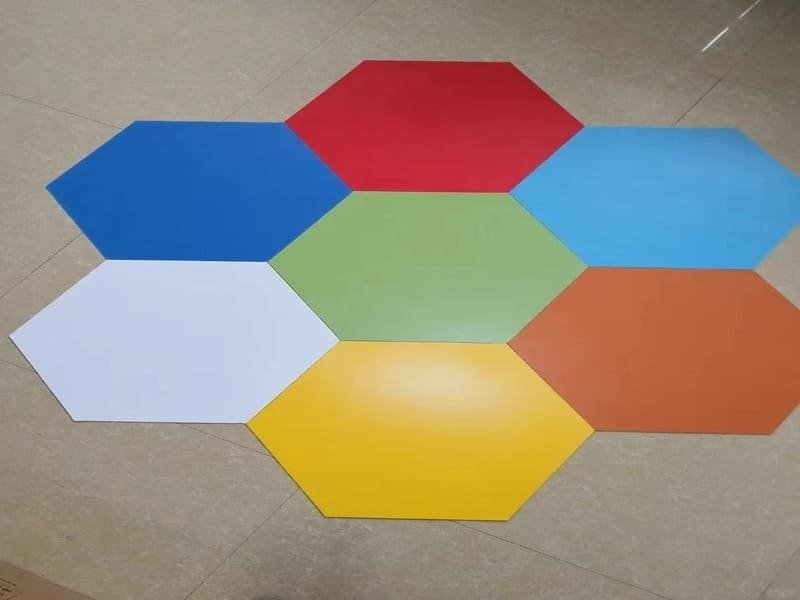
Billige Weichmacher führen dazu, dass der Boden bei kaltem Wetter steif und bei heißem Wetter weich wird. Unsere Erfahrung in der Herstellung zeigt, dass saubere Rohstoffe mit geringem VOC-Gehalt den Boden stabil halten und die Raumluftqualität gewährleisten.
Als Nächstes wollen wir uns mit den konkreten Zertifikaten befassen, die Sie vom Hersteller verlangen sollten.
Welche wichtigen Zertifizierungen müssen Sie vom Hersteller einfordern?
Sie müssen FloorScore für die Luftqualität, EN 13501-1 Klasse $B_{fl}$-s1 für den Brandschutz und DIN 51130 R9/R10 für die Rutschfestigkeit verlangen.
| Zertifizierungstyp | Standardcode | Sollwert für die Sicherheit |
|---|---|---|
| Luftqualität | FloorScore / LEED / AgBB | Extrem geringe Formaldehyd- und TVOC-Emissionen |
| Brandsicherheit | EN 13501-1 | Klasse $B_{fl}$-s1 (flammhemmend, raucharm) |
| Rutschfestigkeit | DIN 51130 | R9 oder R10 (verhindert Ausrutschen in öffentlichen Bereichen) |
Als Ingenieur weiß ich, dass Prüfberichte genauso wichtig sind wie physische Proben. Öffentliche Räume wie Schulen und Kliniken unterliegen strengen Sicherheitsvorschriften. Sie sollten immer nach einem FloorScore- oder AgBB-Zertifikat fragen. Diese Unterlagen belegen, dass das Material keine giftigen Chemikalien an die Luft abgibt. Der Brandschutz ist ein weiterer entscheidender Punkt. Die Norm EN 13501-1 misst, wie schnell sich ein Feuer ausbreitet. Ein hochwertiger Bodenbelag muss die Klasse $B_{fl}$-s1 erfüllen, um die Sicherheit der Gebäudenutzer zu gewährleisten. Für die Rutschsicherheit sollten Sie die Einstufung nach DIN 51130 prüfen. Eine Einstufung von R9 oder R10 bietet ausreichend Rutschfestigkeit, um ein Ausrutschen auf nassen Böden zu verhindern.
Warum beglaubigte Prüfberichte Sie vor rechtlichen Risiken schützen
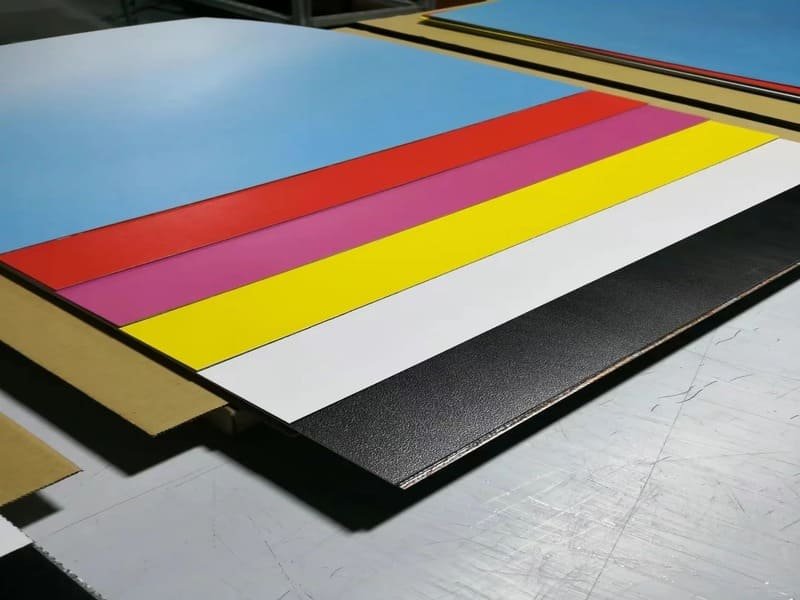
Manche Lieferanten verwenden veraltete oder gefälschte Prüfzertifikate anderer Fabriken. Überprüfen Sie stets, ob der Name der Fabrik auf dem FloorScore-Zertifikat oder dem Brandschutzgutachten mit dem Namen in Ihrem Kaufvertrag übereinstimmt.
Schauen wir uns einmal an, wie Sie diese Materialeigenschaften auf Ihre jeweiligen Raumtypen abstimmen können.
Wie wählt man den richtigen Bodenbelag für den jeweiligen Raum aus?
Wählen Sie den passenden Bodenbelag aus der Gruppe T aus: jodbeständig für Krankenhäuser, mit hoher Dichte für Schulen und mit antistatischen Eigenschaften für Labore.
| Spezifische Anwendung | Wichtige Materialanforderungen | Technik Grund |
|---|---|---|
| Krankenhäuser und Kliniken | Gruppe T, Typ I, Jod-PUR | Ist beständig gegen starke Verschmutzungen, Blut und medizinische Flecken |
| Schulen und Klassenzimmer | Hohe Dichte, hohe Eindrückfestigkeit | Geeignet für schwere Schreibtische und ständigen Schülerverkehr |
| Industrie & Labore | Antistatisch (ESD), hohe chemische Beständigkeit | Schützt Elektronik und ist beständig gegen verschüttete Säure |
Verschiedene Räume stellen unterschiedliche Anforderungen, daher müssen Sie die Qualität Ihres Bodenbelags entsprechend dem jeweiligen Einsatzzweck auswählen. Für Operationssäle in Krankenhäusern ist homogenes Vinyl der absolut höchsten Qualitätsstufe erforderlich. Sie müssen eine Abriebfestigkeit der Gruppe T sowie spezielle jodbeständige Beschichtungen festlegen, damit medizinische Flüssigkeiten keine Flecken auf dem Boden hinterlassen. In Klassenzimmern ist eine hohe Druckfestigkeit erforderlich, da Kinder täglich schwere Tische und Stühle verschieben. Außerdem muss sich die Oberfläche leicht von Schuhabdrücken reinigen lassen. Für Elektroniklabore oder Reinräume reicht Standardvinyl nicht aus. Sie müssen auf integrierte antistatische Eigenschaften achten, um empfindliche elektronische Bauteile vor elektrostatischen Entladungen zu schützen.
Anpassung der Fertigungsspezifikationen an Ihr Budget
Man braucht nicht immer High-End-Technologie für jeden einzelnen Raum. In einem kleinen Lagerraum mit geringer Begehfrequenz kann beispielsweise ein Standardbodenbelag der Gruppe P verwendet werden, um Kosten zu sparen.
Lassen Sie uns die typischen Warnzeichen für einen schlechten Lieferanten durchgehen, damit Sie Ihr Budget schützen können.
Was sind die Warnzeichen für einen minderwertigen Bodenbelagsanbieter?
Zu den wichtigsten Warnsignalen zählen zu günstige Preise, die Weigerung, Verschleißberichte gemäß EN 660-2 offenzulegen, sowie nicht nachgewiesene Recyclinganteile.
| Warnsignal beim Lieferanten | Was das insgeheim bedeutet | Risiken für Ihr Unternehmen |
|---|---|---|
| Extrem günstiger Preis | Die Mischung enthält zu viel billigen Kreidefüllstoff. | Der Boden wird leicht Risse bekommen und Flecken ansetzen |
| Kein Bericht gemäß EN 660-2 | Das Material hat den offiziellen Verschleißtest nicht bestanden | Kurze Lebensdauer und schneller Verschleiß |
| Versteckter Inhalt im „Scrap“-Bereich | Verwendet verschmutzte Abfälle aus dem Endverbraucherbereich | Unangenehmer chemischer Geruch und giftige Luftemissionen |
Man kann einen schlechten Lieferanten frühzeitig erkennen, wenn man weiß, worauf man achten muss. Das größte Warnsignal ist ein Preis, der weit unter dem Marktdurchschnitt liegt. PVC-Granulat kostet Geld, daher bedeutet ein sehr günstiger Preis, dass die Fabrik reines Vinyl durch billigen Kalkfüller ersetzt hat. Ein weiteres Warnzeichen ist, wenn ein Lieferant Ausreden bezüglich Prüfberichte vorbringt. Wenn er Ihnen keinen offiziellen EN 660-2-Prüfbericht eines echten Labors vorlegen kann, wird das Produkt den Test wahrscheinlich nicht bestehen. Achten Sie schließlich auf Hersteller, die ihre Rohstoffquellen verschleiern. Billighersteller verwenden oft verschmutzten Kunststoffabfall, der Schwermetalle und giftige Chemikalien enthält.
Zusammenarbeit mit einem direkten Engineering-Partner
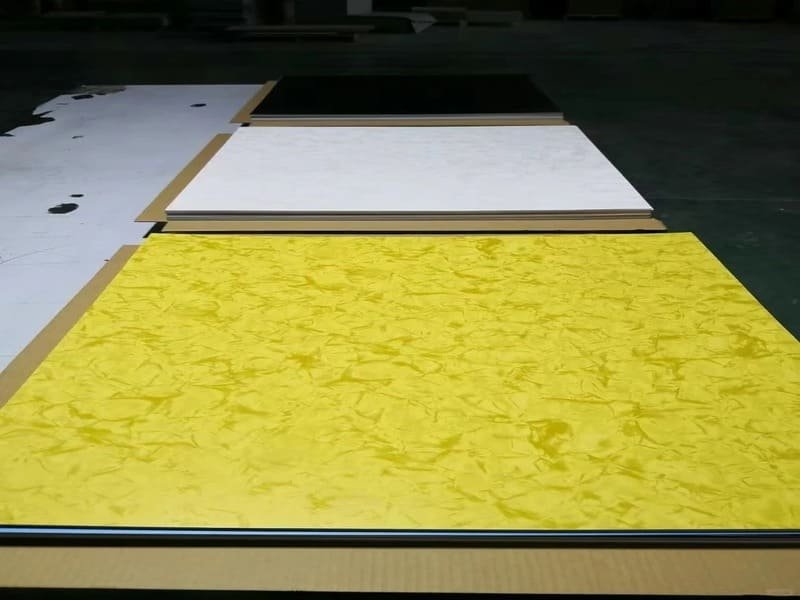
Ein echter Produktionspartner bietet vollständige Transparenz. Er stellt Ihnen gerne Testdaten zur Verfügung, zeigt Ihnen die Rohstoffprotokolle und erläutert Ihnen die genaue Zusammensetzung aus Vinyl und Füllstoff, die bei der Produktion verwendet wird.
Zum Abschluss noch eine kurze Checkliste, die Sie bei Ihrer nächsten Bestellung nutzen können.
Schlussfolgerung
Erkennen Sie hochwertige, homogene PVC-Bodenbeläge daran, dass sie die Verschleißklasse T aufweisen, den Falt-Test bestehen und über Zertifikate für einen niedrigen VOC-Gehalt verfügen.
Bevor Sie einen Kaufvertrag unterzeichnen oder eine Anzahlung leisten, nutzen Sie diese 30-Sekunden-Checkliste, um die Qualität des Materials zu überprüfen:
- Schritt 1: Bitte bestätigen Sie, dass der Prüfbericht gemäß EN 660-2 eine Verschleißklasse der Gruppe T ausweist.
- Schritt 2: Verlangen Sie die Einstufung nach ISO 10581 Typ I, um einen hohen Anteil an reinem PVC zu gewährleisten.
- Schritt 3: Fordern Sie ein Muster an und falten Sie es, um zu prüfen, ob es Risse bekommt oder weiß wird.
- Schritt 4: Prüfen Sie die Oberfläche mit einem Schlüssel und einem Permanentmarker, um die Qualität der PUR-Beschichtung zu überprüfen.
- Schritt 5: Überprüfen Sie, ob das FloorScore-Zertifikat gültig ist und mit dem Namen des Herstellers übereinstimmt.
Benötigen Sie fachkundige Hilfe bei Ihrem Bodenbelagsprojekt?
Wenn Sie die aktuellen Spezifikationen Ihres Bodenbelags einsehen, hochwertige Muster zum Testen anfordern oder eine Sonderanfertigung für Ihr Projekt besprechen möchten, senden Sie mir bitte noch heute eine private Nachricht! Lassen Sie uns gemeinsam einen langlebigen Bodenbelag gestalten.