


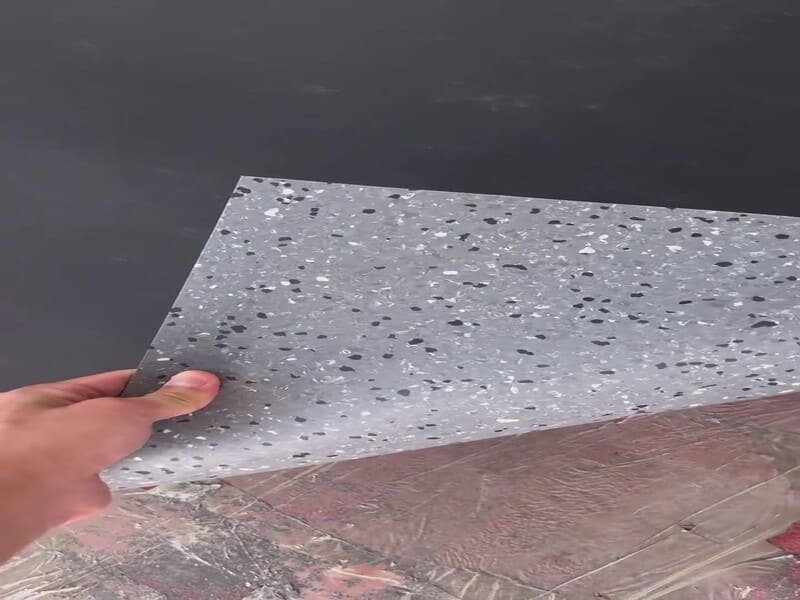
Yes, vinyl flooring can support future modular-wall changes. The result depends on the vinyl type (floating LVP or glue-down), the wall mounting method, and whether the wall restricts floor movement.
I work on custom and bulk vinyl flooring projects, and office owners, designers and contractors ask me this question often. It is especially common in commercial offices, healthcare spaces and flexible workplaces where layouts change over time. Most people focus on the floor, but the real issue is how the wall touches the floor. A lightweight demountable partition rarely causes trouble. A heavy, anchored wall on a floating floor can cause buckling, gaps and permanent marks. The right match between floor and wall system keeps your floor usable after the walls move.
Here is a quick view of how the two main types compare:
| Faktor | Floating Click-Lock LVP | Vinyl zum Verkleben |
|---|---|---|
| Durability under heavy load | Mittel | Hoch |
| Floor movement | Expands and contracts | Very little |
| Ease of wall relocation | Mittel | Hoch |
| Risk of damage | Higher at joints and edges | Lower, but screw holes remain |
Let me start with how each vinyl type behaves, because that sets the base for every choice after it.
Which Vinyl Flooring Type Handles Demountable Partitions Best?
Glue-down vinyl usually handles demountable partitions best because it is bonded to the subfloor and has much less movement than floating systems. Floating LVP can work too, but only if the wall does not restrict floor movement.
How Each Vinyl Type Behaves Under Load
Floating click-lock LVP is not fixed to the subfloor. It grows and shrinks with temperature, so it needs an expansion gap at every edge, often around 1/4 inch (6 mm). Always check the manufacturer’s exact number. The click joints are also the weakest part of the plank, so heavy point loads can stress them. Floating click-lock LVP may work with lightweight demountable walls, provided the wall system does not restrict floor movement. Glue-down luxury vinyl tile or plank is bonded to the subfloor, so it carries weight well and gives you the most freedom to change a layout. Sheet vinyl has fewer seams, which helps with hygiene and appearance, but heavy concentrated loads can still cause indentation or damage if the product’s static load rating is exceeded. On the wall side, I group office partition systems into three types: freestanding pressure-mounted walls, track-mounted or anchored walls, and light cubicle-style screens.
| Wall System | Floor Load | Best Vinyl Match |
|---|---|---|
| Pressure-mounted partition | Niedrig bis mittel | Glue-down, or floating LVP if movement stays free |
| Track-mounted or anchored wall | High at fixing points | Glue-down, or floating with a cut-through detail |
| Cubicle-style screen | Sehr niedrig | Any vinyl type |

Many clients already have vinyl in place before they plan new walls, so let me cover that case next.
Can Modular Walls Be Installed Over Existing Vinyl Flooring?
Yes, in most cases. Light movable walls can sit on existing vinyl with protective pads. Heavy or anchored walls need a check of the vinyl type, subfloor and manufacturer approval first.
What to Check Before You Install
The answer changes with the flooring you already have. On glue-down vinyl, most relocatable walls can sit on top or anchor through the vinyl into the subfloor, because the floor is already bonded and stable. On floating LVP, the safe path depends on the wall weight. A light pressure-mounted wall with rubber or neoprene pads is usually fine if it leaves the floor free to move. A heavy wall or a track fixed through the planks is a different case. It needs a planned cut-through detail or written approval from the flooring manufacturer. Before you install, check four things: the vinyl type, the wall weight per contact point, the subfloor material, and the warranty terms.
| Bestehender Boden | Light Movable Wall | Heavy or Anchored Wall |
|---|---|---|
| Glue-down vinyl | Place on top with pads | Anchor into subfloor, plan plank swap |
| Floating LVP | Pads, keep floor free to move | Cut-through detail or manufacturer approval |
| Vinylbahnen | Pads to spread load | Load-spreading plates, avoid point loads. Follow the manufacturer’s approval for permanent track systems |
Now let me show you what can go wrong when the wall and the floor do not match.
What Can Go Wrong When Modular Walls Sit on Vinyl Flooring?
The four main problems are permanent surface damage, blocked floor expansion, harm to the subfloor and layers beneath, and indentation that does not recover. Most are easy to avoid with early planning.
The Four Pain Points I See Most Often
First, surface damage. Screw holes, drill points and track marks stay in the vinyl after the wall is gone. Over time, the covered strip can also look different from the exposed floor because of light exposure. Second, blocked expansion. A heavy wall acts like a fixed cabinet on a floating floor and traps it. When the floor tries to grow in summer, the planks bow, buckle or open up somewhere else in the room. Third, subfloor damage. Drilling through vinyl into a concrete slab is different from drilling into plywood. You can break a moisture barrier or damage acoustic underlayment. Fourth, indentation. Every vinyl product has a static load limit. Common reference tests include ASTM F970 for static load and ASTM F1914 for residual indentation. Compare the wall’s weight, spread over its contact points, to the floor’s rating.
| Problem | Most Affected Type | Hauptursache |
|---|---|---|
| Screw holes and track marks | Beide | Anchoring through the vinyl |
| Buckling or gaps | Floating LVP | Wall locks floor movement |
| Moisture barrier damage | Floating LVP on slab | Drilling through layers |
| Einrückung | Any type, if rating is exceeded | Heavy concentrated load |
Once you know the risks, the next question is how to install the wall the right way.
How Should I Install Modular Walls on Vinyl Flooring?
Pick the method that fits the wall weight. Use the cut-through method for heavy walls on floating LVP, pads for light pressure-mounted walls, and direct anchoring where the floor is glue-down.
Three Installation Methods That Work
Method 1 is the cut-through method. I use it for heavy or permanent walls on floating LVP. Install the wall tracks on the subfloor first, then run the vinyl up to the track and leave an expansion gap that trim or baseboard covers. The floor can still move, and nothing is pinned down. The installer must also keep the original moisture protection and acoustic requirements around the cut area. The downside is that you must patch the floor with new planks if you remove the wall later. Method 2 is a top-mounted, non-invasive system. Pressure-mounted walls with rubberized pads need no drilling and leave almost no mark. This suits temporary or light walls. Method 3 is direct anchoring. It is usually preferred over glue-down vinyl, where you fix the wall through the vinyl into the subfloor and plan to swap a few planks later. Floating floors need a planned cut-through detail or manufacturer approval before you anchor.
| Methode | Am besten für | Profis | Nachteile |
|---|---|---|---|
| Cut-through | Heavy walls on floating LVP | No buckling, floor stays intact | Needs patching later |
| Top-mounted | Light or temporary walls | No drilling | Not for heavy walls |
| Direct anchoring | Glue-down vinyl | Strong and stable | Holes remain |
Good installation is only half of the work. The other half is planning for the day you move the wall.
How Do I Future-Proof My Space for Wall Relocation?
Keep spare flooring, protect the surface under the wall, read the warranty, and plan utility routes before install. These four steps cut repair cost and downtime when you move the wall.
Four Steps I Follow on Every Project
Step one: keep attic stock. Keep extra material from the same dye lot, often around 5 to 10 percent or more, depending on project size and how often you expect to reconfigure. Vinyl colors can change between production runs, so a later order may not match. Step two: use friction pads. Place high-density rubber or neoprene under non-anchored wall tracks to stop scratching and indentation. Step three: check the warranty. Some flooring makers say that fixing a wall to a floating floor voids the warranty, and others do not. Ask in writing before you install. Step four: plan electrical and utility routes. Wall wiring should not cut through the floor’s moisture barrier. I have seen a small conduit hole cause a moisture problem under a floating floor on a slab. A short planning meeting between the wall supplier and the flooring installer at the start can save a lot of money later.
| Schritt | Aktion | Warum es wichtig ist |
|---|---|---|
| 1 | Keep extra material (often 5 to 10% or more) | Match for repairs |
| 2 | Use rubber or neoprene pads | Prevent marks |
| 3 | Check the warranty | Avoid lost coverage |
| 4 | Plan utility routes | Protect the moisture barrier |
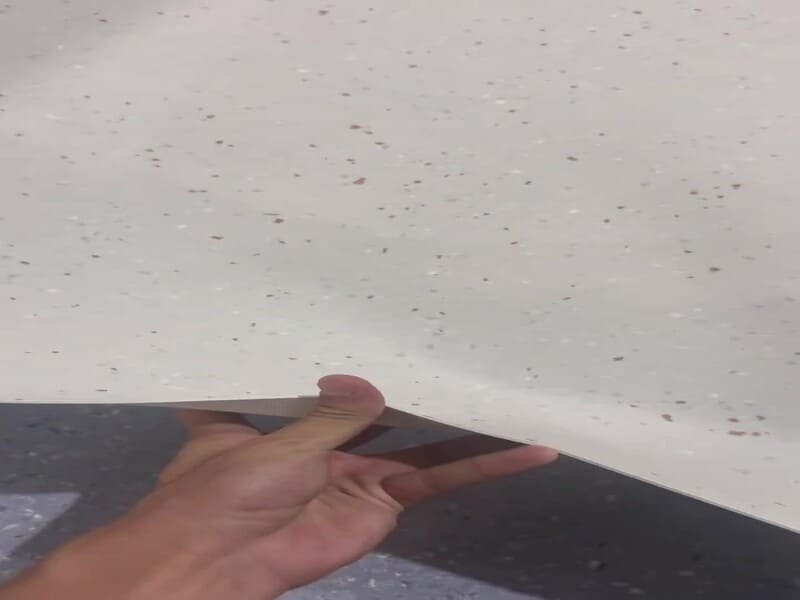
Even with good planning, you will need a quick repair at some point. Here is the short version.
How Do I Fix Vinyl Flooring After Removing a Modular Wall?
Fill small screw holes with color-matched vinyl repair putty. Replace planks with large damage or deep dents. Replace and blend planks across a wider area to fix fading.
Simple Repair Options
For screw and anchor holes, color-matched putty works well, especially on busy patterns and wood-look planks. If the hole is large, or the plank is cracked or dented, replace the plank. A click-lock plank can be unlocked from the nearest wall or cut out. A glue-down plank is warmed, lifted, scraped clean and reset with fresh adhesive. For fading, replace planks across a wider area so the color change looks natural.
| Damage | Die beste Lösung |
|---|---|
| Small screw hole | Color-matched putty |
| Large hole, crack or deep dent | Plank replacement |
| Fading | Replace and blend planks |
Many readers also ask a few direct questions, so I answer them next.
What Do People Ask Most About Vinyl Flooring and Movable Walls?
Most questions are about floor heating, warranty, weight limits and commercial use. The short answers are below, with one technical detail for each.
Can I install modular walls over floor heating with vinyl flooring?
Yes, with care. Many manufacturers limit the surface temperature to around 80 to 85°F (27 to 29°C), but always follow the product specification. Anchoring through the floor can also hit heating elements, so map the system first.
Will anchoring a modular wall void my LVP warranty?
It can. Many floating floor warranties require that the floor stays free to move. Ask the manufacturer in writing before you fix any track through the planks.
How much weight can LVP hold before the click joints break?
There is no single number. Weight limits depend on plank thickness, core type and wear layer. Ask for the static load rating tested under ASTM F970, and spread wall weight over a wide contact area.
Is glue-down vinyl better than click-lock for commercial offices with flexible layouts?
Often, yes. Glue-down vinyl handles rolling loads and heavy walls better and allows single-plank replacement. Click-lock installs faster and can cost less in labor.
Now let me give you a simple guide to pick your setup.
Which Wall and Floor Setup Should I Choose?
Match the wall weight to the vinyl type. Heavy wall on floating LVP means a planned cut-through detail. Light wall on glue-down means install directly on top.
Decision Guide
Use the table below as a checklist before you start. If you are unsure about the wall weight, the subfloor or the warranty, ask your flooring supplier and your partition supplier at the design stage. In my experience, early talks between both teams give the best results and the lowest repair cost. Also add the cost of extra material and future patching to your budget, because these small items cost much less than a full floor replacement.
| Ihre Situation | What I Recommend |
|---|---|
| Floating LVP + heavy or anchored wall | Cut-through detail, track on subfloor, or manufacturer approval |
| Floating LVP + lightweight demountable wall | Pads, no drilling, floor free to move |
| Glue-down vinyl + heavy wall | Anchor through vinyl, plan plank swap |
| Glue-down vinyl + light wall | Install directly on top |
| Sheet vinyl + any heavy wall | Load-spreading pads, avoid point loads, follow manufacturer approval for permanent tracks |
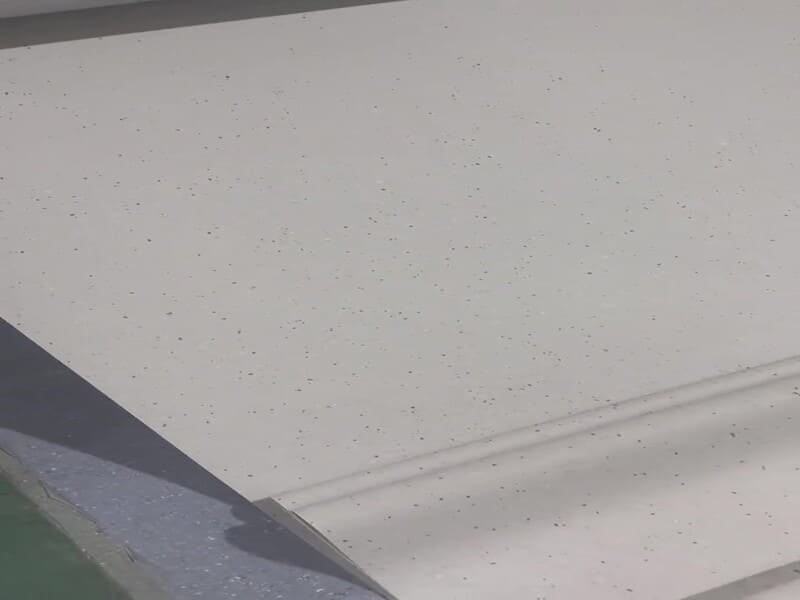
Schlussfolgerung
Vinyl flooring can support future wall changes when you match the vinyl type to the wall system and plan repairs early.
Über den Autor
I am a vinyl flooring manufacturing specialist with years of hands-on experience in custom and bulk vinyl flooring production. I work with designers, contractors and product teams on material selection, installation planning and design optimization for many industries.
Need Help With Your Vinyl Flooring Project?
Planning a space with demountable partitions or movable walls? Send me a private message with your floor type, wall system and layout plan. I will help you pick the right setup before you install.