



Subfloor preparation is listed separately because its scope depends on the existing floor: moisture, pH, flatness, cracks, and surface contamination. PVC flooring is priced by specification and quantity. Prep needs a site-based price.
Many buyers see a large "subfloor preparation" line on a PVC flooring quote and think it is a hidden fee. I understand why. The flooring price looks reasonable, and then another number appears under it. But that line is a different job with its own labor, materials, and risk.
Picture two sites. One has a new, flat concrete slab. The other is a 20-year-old warehouse floor with oil stains, cracks, and old adhesive. The PVC material may be identical, but the work under it is not. A separate line shows each buyer what their own floor needs.
This guide focuses mainly on glue-down PVC sheet and tile flooring installed over concrete subfloors. Loose-lay, click-lock, and rigid-core systems, as well as wood-based substrates, may have different preparation requirements. Always follow the specific installation guidelines for your product.
Why Do Suppliers Split Subfloor Prep From the Flooring Price?
Prep cost depends on the site, not the product. A separate line shows how much of a quote is material and how much is site work, and it lets you set scope and responsibility. It does not by itself prove the price is fair.
PVC flooring can usually be priced by its specifications and order quantity. Thickness, wear layer, construction, surface treatment, and customization all change the material price. Subfloor prep works differently. Nobody can know its scope until the slab has been inspected and tested.
Reason 1: Every Subfloor Is Different
A new slab may need only cleaning and light patching. An old slab may need glue removal, grinding, crack treatment, and moisture control. A bundled "average" price would overcharge the first buyer and underprice the second.
Reason 2: Clearer Quotes
Separating preparation costs makes it easier to see how much of the quotation covers flooring materials and how much covers site work. It also helps you compare Material A and Material B without prep costs changing the result. However, bundled pricing is not necessarily less transparent, provided that the included work, exclusions, and total installed cost are clearly stated.
Reason 3: Flexible Scope
On many commercial jobs, the general contractor or your maintenance team may want to do demolition or grinding. A separate line lets you accept, change, or remove that scope. If you do, agree in writing who verifies the slab afterward.
Reason 4: Clear Responsibility
If the subfloor does not meet the manufacturer’s installation requirements, flooring or adhesive failures may affect warranty coverage. The exact conditions depend on the product, adhesive system, and written warranty terms. A separate line is only a start. The quotation and contract should identify who performs the preparation, who checks the substrate, and who approves it before flooring installation.
| السبب | What It Does for You |
|---|---|
| Different site conditions | You pay for the work your floor needs |
| Separate pricing | You see material cost and site work apart |
| Flexible scope | You can self-perform or negotiate prep |
| Clear responsibility | The contract names who prepares, checks, and approves |
What Does Subfloor Preparation Actually Include?
It can include testing, old flooring removal, surface preparation, crack and joint treatment, moisture control, and patching or leveling. Not every site needs every task. The goal is a dry, flat, clean surface the adhesive can bond to.
When a buyer asks me "what am I paying for," I go through the tasks one by one. The word "can" matters. Prep is built from the slab condition, so a good slab may need a few steps and a poor slab may need most of them. The right method also depends on the flooring, the adhesive, and the manufacturer’s written instructions.
الاختبار
Before installing resilient flooring over concrete, check moisture, pH, and surface flatness. Moisture testing may use ASTM F2170 for in-situ relative humidity. Where the manufacturer still specifies it, ASTM F1869 may be used for moisture vapor emission rate (MVER). Concrete pH should also be tested according to the applicable guidelines. Compare all results with the limits specified by the flooring and adhesive manufacturers. These limits vary by product.
The required flatness tolerance comes from the manufacturer’s installation guidelines. Some commercial resilient flooring guides use tolerances around 3mm over 1.8m, but this is not a universal rule.
Removal and Surface Preparation
Existing flooring does not always need to be removed. Some existing resilient floors may be suitable for overlay if they are single-layered, non-cushioned, fully bonded, smooth, and free from moisture, alkaline conditions, and surface damage. Wax, grease, and other contaminants must also be removed. The installer must confirm that the existing floor is approved as a substrate for the selected flooring system. If its condition is uncertain, removal or an approved underlayment may be necessary.
Before disturbing old resilient flooring, backing, or adhesive, confirm whether asbestos may be present. Do not sand, dry scrape, grind, or mechanically break suspected materials until their status has been established. Testing, removal, and disposal must follow applicable local regulations.
Mechanical preparation methods such as diamond grinding or shot blasting may be used to remove surface contaminants or create the required concrete profile. Choose the method according to the substrate condition and the requirements of the flooring, adhesive, and underlayment manufacturers. After preparation, remove dust and check that the surface is suitable for bonding.
Oil and grease contamination may penetrate below the concrete surface. Surface cleaning alone may not be enough. The affected area should be assessed, and contaminated material may need to be removed if it cannot provide a suitable bonding surface.
Cracks, Joints, and Moisture
Check cracks and joints before repair. Non-moving cracks and joints can be treated with compatible patching materials when the flooring system allows it. Expansion joints, isolation joints, and other moving joints must keep working, so do not fill them with ordinary rigid repair compounds.
A high moisture reading does not automatically mean a moisture barrier is the right fix. First find the source of the moisture and check for active water intrusion or another underlying problem. Any moisture mitigation system must be compatible with the slab, the adhesive, and the flooring product.
Patching, Primer, and Leveling
Depending on the slab, prep may involve localized patching, primer, or a cementitious leveling compound. These are not needed on every project. Their use and thickness should follow the manufacturers’ instructions.
Flatness and levelness are not the same. Most flooring specifications focus on surface flatness, so self-leveling work should follow the required tolerance rather than automatically aiming to make the entire floor perfectly horizontal.
| المهمة | When It Is Needed | Key Point |
|---|---|---|
| Moisture, pH, and flatness testing | Before installation over concrete | Follow applicable test methods and manufacturer limits |
| Old flooring and glue removal | When existing flooring cannot stay | Overlay may be allowed in some cases; check asbestos first |
| Mechanical preparation | When contaminants or poor profile block bonding | Method depends on the substrate and system; remove dust afterward |
| Oil and grease treatment | When contamination has soaked into the concrete | Surface cleaning may not be enough |
| Crack and joint treatment | When cracks or joints are present | Do not fill moving joints with rigid compounds |
| الحد من الرطوبة | When moisture exceeds limits and the source is understood | Must suit the slab, adhesive, and flooring |
| Patching, primer, leveling | When the surface is uneven or absorbent | Not required on every project |
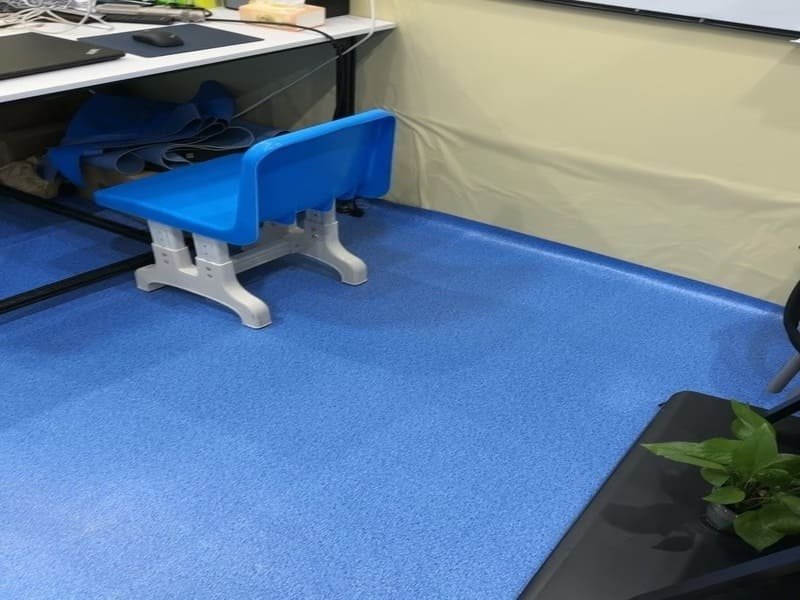
Why Does PVC Flooring Require a Properly Prepared Subfloor?
Many glue-down PVC products are thin and flexible, so they can show surface flaws and react to moisture problems. How much prep a project needs depends on the product and the slab condition.
Many glue-down PVC sheet and tile products are relatively thin and flexible, so surface irregularities may show through after installation. However, the risk depends on the product construction, thickness, adhesive system, and condition of the subfloor.
التلغراف
Flexible PVC can follow the shape under it. A pebble, a crack edge, or a trowel ridge can show through, and it often gets clearer after traffic and temperature changes.
الرطوبة
Many PVC flooring systems have relatively low moisture permeability. When concrete moisture goes past the limits of the flooring or adhesive system, it can contribute to bond failure, bubbling, and seam problems. High concrete pH can also harm adhesive bonding. If moisture stays for a long time, it may support mold growth where suitable organic material is present.
Heavy and Rolling Loads
Heavy static and rolling loads can cause indentation, adhesive stress, or seam damage when the subfloor has unsupported areas or uneven patches. In warehouses and industrial spaces, check that the selected PVC flooring is rated for the expected loads, wheel types, and traffic. Not every PVC floor suits forklift traffic.
| المشكلة | Cause Under the Floor | Result on the Surface |
|---|---|---|
| التلغراف | Pebbles, ridges, crack edges | Visible bumps and lines |
| Moisture or pH problems | Moisture or alkalinity above product limits | Bond loss, bubbles, lifting seams |
| Load damage | Unsupported or uneven areas | Indentation, seam stress, splits |
How Are Subfloor Preparation Costs Estimated?
Suppliers estimate prep cost from the slab condition, then confirm it after a site inspection. Early quotes often show an allowance. The final number depends on measured area, test results, old flooring, and the repairs needed.
Many early quotes list prep as an "Allowance" or "TBD pending site inspection." This is normal when old flooring has not been lifted yet. Cracks, glue, and damp spots under carpet cannot be judged from a photo. After the floor is opened and tested, the installer can confirm the preparation scope and give a more accurate quotation.
Cost Drivers by Condition Level
Treat this as a rough guide, because every slab is different.
| Condition Level | Typical Tasks | التأثير النسبي على التكلفة |
|---|---|---|
| جيد | Cleaning, testing, light patching | منخفضة |
| معتدل | Grinding, crack repair, patching or leveling | متوسط |
| فقير | Demolition, glue removal, moisture mitigation, deep leveling | عالية |
What Should a Detailed Subfloor Preparation Quote Include?
A good quote shows what is done, how much, how it is priced, and what you can check. The numbers below show the format only. They are not standard quantities or market prices.
| البند | Quantity / Scope | أساس التسعير | ما الذي يجب التحقق منه |
|---|---|---|---|
| الطحن | Example: 500 m² | السعر للمتر المربع | Area and preparation method |
| Crack repair | Measured length, width, and depth | Per linear meter or agreed repair scope | Repair method, material, and crack movement |
| Self-leveling | Example: 500 m², 3mm average thickness | Material consumption and labor per m² | Product, average thickness, and total estimated quantity |
| Moisture and pH testing | Number of test locations | Per test or project fee | Test method and test count |
| التخلص من النفايات | Estimated waste volume | Fixed or volume-based fee | Removal and disposal included |
Also ask whether material and labor are priced separately, and how extra work is calculated if the real slab differs from the estimate.
Red Flags in a Quote
A $0 line does not always mean no work. The cost may sit inside another item. Ask for the scope in writing. Check that the prep line includes old flooring removal and disposal, because some quotes cover only surface work.
If the installer and the flooring supplier are different companies, ask who accepts the substrate before installation starts. Ask what conditions trigger extra charges, so change orders do not pile up after work begins.
A lump-sum price is not necessarily unreasonable, but the quotation should still define the preparation scope, included materials, exclusions, acceptance criteria, and conditions for additional charges.
A separate line item does not automatically mean the price is fair. Check the measured area, quantities, unit rates, materials, labor scope, and exclusions before comparing quotations.
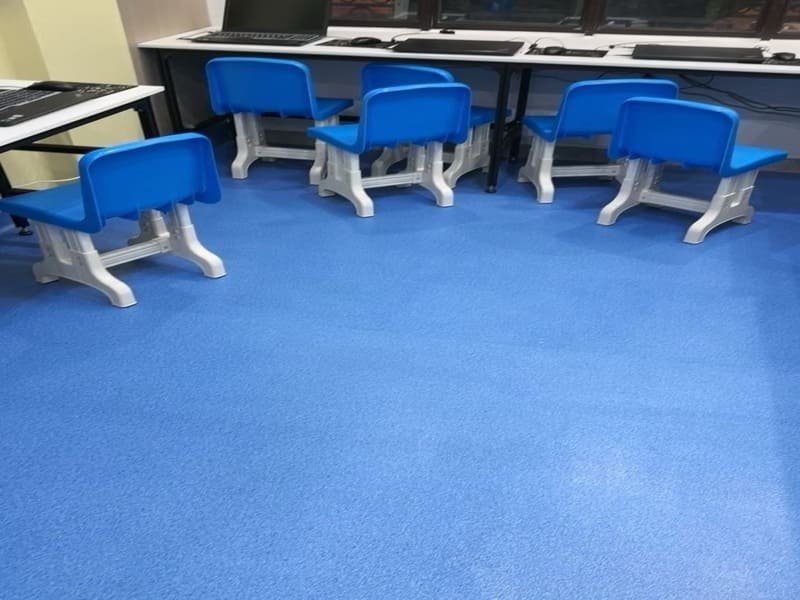
What Should I Check in a PVC Flooring Quote Before Signing?
Check the test methods, flatness tolerance, patching or leveling products, removal and disposal scope, and the specs and approval process if your own team does the prep. Get each answer in writing.
Ask these questions in writing and keep the answers with your contract.
The Five Questions
- Which moisture and pH test methods are used, how many tests are included, and what happens if results exceed the product limits?
- What flatness tolerance applies, and does it match the flooring manufacturer’s installation guidelines?
- Which patching, primer, or leveling products are included, at what thickness, and at what unit rate?
- Are old flooring removal, waste disposal, and any hazardous material check included?
- If my team does the grinding or leveling, what specs must we meet, and who signs off on the slab before installation? Is there a documented substrate inspection and approval process before the flooring installation begins?
| سؤال | ما أهمية ذلك | A Good Answer Looks Like |
|---|---|---|
| Moisture and pH testing | Moisture and pH problems cause many bond failures | Named methods, test count, and a plan for high readings |
| Flatness tolerance | Controls telegraphing | A written figure from the manufacturer’s guidelines |
| Products, thickness, unit rate | Sets cost and performance | Named products, stated depth, and clear pricing basis |
| Removal and safety | Avoids extra charges and safety risk | Scope listed, with an asbestos check where needed |
| Substrate inspection and approval | Protects coverage and clarifies duty | Written specs, test records, flatness check, preparation records, and a named person who approves the slab |
الخاتمة
A separate prep line makes a quote more transparent only when scope, quantities, materials, and responsibilities are clearly defined. Review those details before you accept it.