


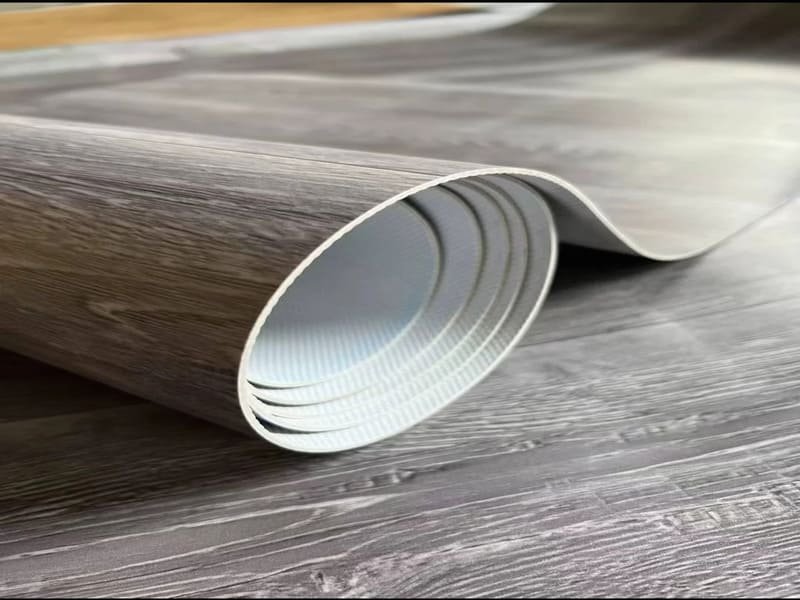
Most homogeneous vinyl floors accept light foot traffic after 24 hours, normal traffic and furniture after 24–48 hours, and heavy rolling loads after 72 hours. Exact times depend on the adhesive TDS, so treat these as planning figures, not fixed rules.
I have walked hundreds of job sites the morning after install, and the question is always the same: "Can we use it now?" The honest answer depends on what is happening under the surface. Adhesive needs time to build bond strength with the subfloor, and rushing that process risks shifting, seam gaps, and permanent indentation. This guide mainly covers fully adhered homogeneous vinyl sheet flooring. Homogeneous tiles, conductive or static-dissipative systems, loose-lay products, and specialty fast-set adhesives can follow different reopening schedules, so always check the specific product’s technical data sheet (TDS).
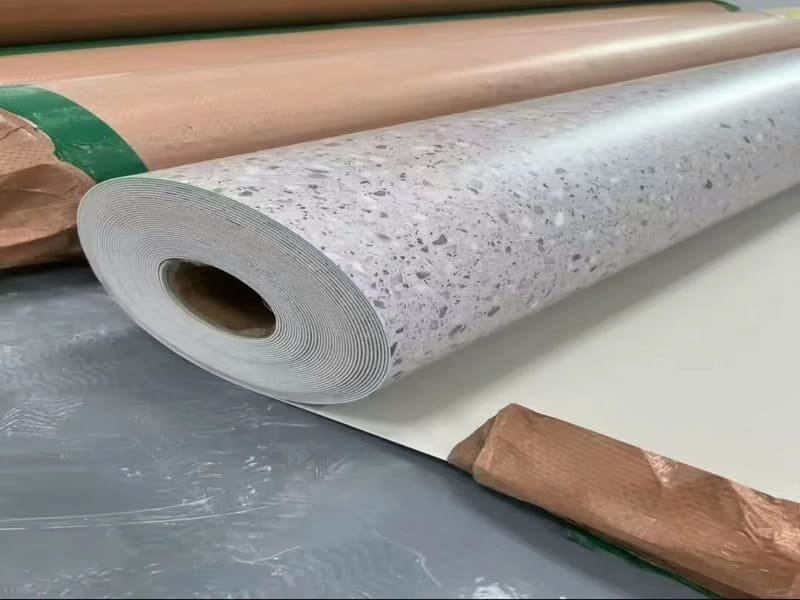
Most readers just want a working number, so let’s start with a quick reference, then unpack the reasoning behind each stage and the variables that shift it.
What Is the Quick Reference Timeline for Homogeneous Vinyl Flooring?
Heat welding usually happens about 24 hours after glue-down, once the adhesive has developed enough bond strength. Light traffic follows around 24 hours, normal traffic and furniture at 24–48 hours, and heavy rolling loads at 72 hours.
| المهمة | Typical Wait Time |
|---|---|
| Heat welding seams | ~24 hours, or once adhesive has bonded |
| Light foot traffic | ~24 hours |
| Normal foot traffic | 24–48 hours |
| Furniture and fixed equipment | 48–72 hours, per adhesive TDS |
| Rolling loads (beds, carts, wheelchairs) | ~72 hours |
| First light cleaning | ~72 hours |
| Heavy wet cleaning or wet cleaning machines | Per manufacturer, typically further delayed |
These are general planning figures, not universal cure times. Some spray or roll-applied adhesives allow earlier traffic, while certain two-part polyurethane systems require longer closures. The flooring manufacturer’s installation guide and the adhesive TDS always take priority over any general chart.
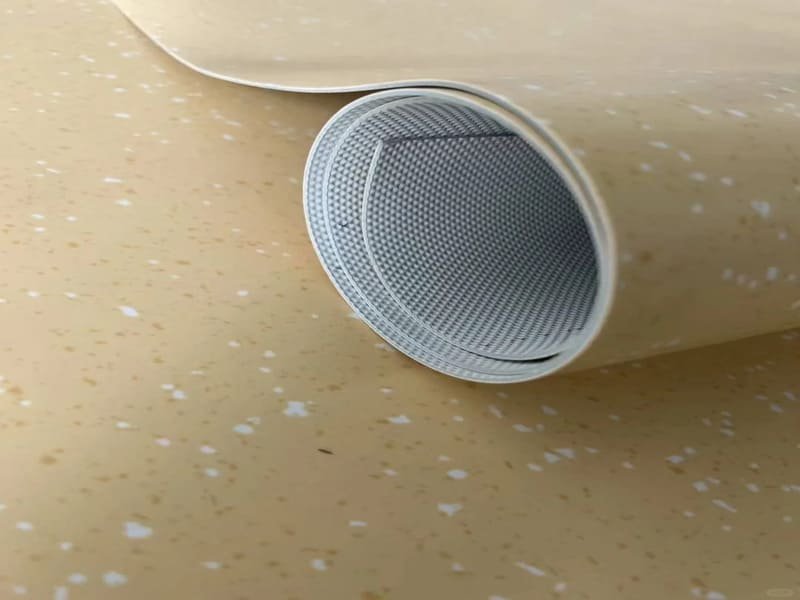
With the overview in place, let’s walk through what is physically happening at each stage.
What Happens During the First 24 Hours After Installation?
Only minimal, cautious foot traffic is allowed in the first 24 hours, and full avoidance is best if full-spread adhesive was used. The adhesive is still building its initial bond with the subfloor.
During this window, the adhesive is developing tack and starting to bond with the subfloor surface. Walking heavily, dragging carts, or rolling equipment across the sheet can shift it before the bond sets, which shows up later as bubbles or ridges telegraphing through the surface. If your crew used full-spread adhesive, I recommend keeping the area closed entirely rather than allowing "light" traffic, since foot pressure alone can leave a lasting flat spot in soft, uncured glue.
Heat welding is commonly carried out about 24 hours after glue-down, or only once the adhesive has developed sufficient bond strength, per major manufacturer installation guides. Welding too early can shift the seam edges before the adhesive has locked them in place; welding too late risks the sheet edges lifting before the weld seals them. Always confirm the exact welding window against the flooring and adhesive manufacturer’s instructions, since this varies by product.
Is It Safe to Transition to Normal Foot Traffic After 24 to 48 Hours?
Most floors accept normal foot traffic within 24 to 48 hours, but shoe type still matters. Soft rubber soles are generally safe; heels and hard boot heels should wait longer.
| Shoe Type | Safe at 24–48 Hours? |
|---|---|
| Soft rubber-soled shoes | نعم |
| Sneakers, clean flats | نعم |
| High heels, stiletto tips | No, wait until adhesive TDS clears full traffic |
| Work boots with hard heels | No, wait until adhesive TDS clears full traffic |
In commercial settings like hospitals or schools, I usually recommend keeping the full area closed for 48 hours before opening it to general staff and public traffic, since these environments see concentrated point loads even during normal walking. Residential spaces have more flexibility, but I still advise keeping pets off the floor during this window. This isn’t because the surface layer itself is more scratch-prone while curing — the factory-applied wear layer is fully cured before it ever leaves the plant — it’s to prevent the floor from being disturbed, tracked with dirt, or subjected to concentrated paw pressure before the adhesive and seams have fully stabilized.
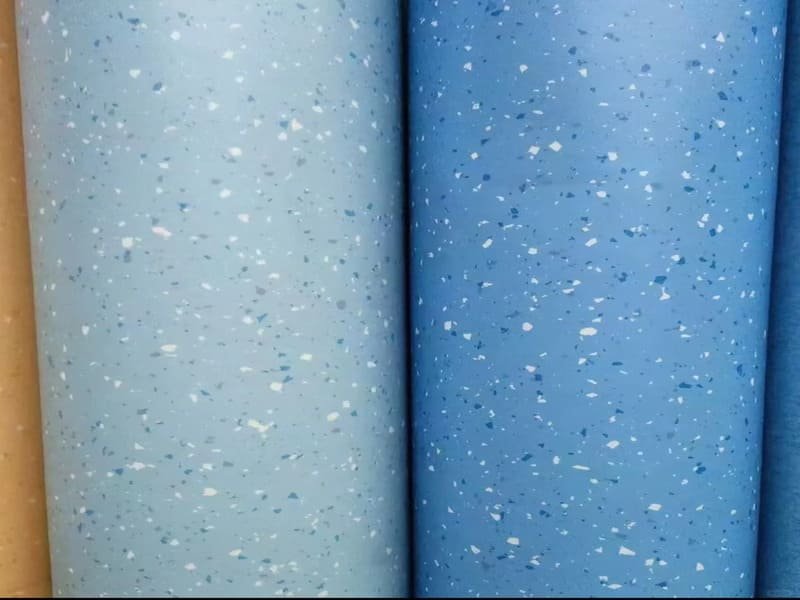
Once the field adhesive has enough working strength, you can start thinking about heavier loads.
When Can You Place Furniture and Rolling Loads on the Floor?
Heavy rolling loads, hospital beds, carts, and wheelchairs should generally wait until 72 hours after installation, though some specialty adhesive systems allow earlier or require longer closures. Always confirm against the adhesive TDS.
Rolling loads apply concentrated, repeated pressure across a small contact area, which is exactly the kind of stress uncured adhesive struggles to resist. In healthcare and education facilities, I typically schedule equipment moves for the third day at the earliest as a safe default, then adjust based on the actual adhesive used. For office chairs and desks, use hardboard or plywood sheets as a rolling path if you must move items sooner, and always lift rather than drag furniture legs. Felt pads under legs help distribute weight once the floor is ready for normal use, but they don’t substitute for the required cure time.
When Can Water or Cleaning Solutions Touch the Floor?
Light damp cleaning with a wrung-out mop and neutral cleaner can typically begin around 72 hours. Heavy wet cleaning, standing water, or floor-scrubbing machines should wait longer, per the flooring manufacturer’s guidance — often through the first week.
It helps to separate this into three distinct stages rather than one blanket rule:
- After 72 hours: light damp mopping with a well-wrung mop and neutral pH cleaner is generally acceptable.
- Within the first 3 to 7 days: avoid standing water, floor-scrubbing machines, heavy wet cleaning, or letting water pool at seams and wall edges.
- Specialty adhesives: follow the specific TDS, since some water-based acrylic systems are more moisture-sensitive before full cure than two-part polyurethane or epoxy systems.
Excess water reaching an under-cured, water-based acrylic adhesive can soften its bond before it fully sets. This risk doesn’t apply the same way to every adhesive chemistry, so I avoid treating all systems as equally vulnerable — check what was actually used on your job before setting your cleaning schedule.
What Factors Change Your Specific Wait Time?
Wait times shift based on adhesive chemistry, room temperature and humidity, subfloor porosity, and installation method. Always confirm the specific product’s cure schedule rather than assuming a universal number.
| نوع المادة اللاصقة | Typical Effect on Cure Time |
|---|---|
| Water-based acrylic | Sensitive to subfloor absorbency, temperature, and humidity |
| Pressure-sensitive (PSA) | Must reach the specified dry-tack or bonding state before traffic |
| Two-part polyurethane/epoxy | Often suited to wet, heavy-load, or rolling-load environments, but cure time still follows the TDS |
| Spray or roll-applied | Some systems allow earlier traffic, but only on manufacturer-approved substrates |
I always check subfloor moisture before install, since concrete still releasing moisture vapor slows adhesive curing regardless of room conditions. Cold weather is another factor teams underestimate: adhesive viscosity increases at low temperatures, which slows the chemical set. If the job site runs below 65°F (18°C), I add extra time to every stage above and re-check against the TDS rather than guessing.
What Should You Do and Avoid After Installation?
Maintain stable HVAC temperature, protect entry points with mats, and use protective boards for moving heavy items. Avoid dragging furniture, heavy wet cleaning early, or covering the floor with plastic sheeting.
افعل ذلك:
- Keep HVAC running at a stable temperature for at least 48 hours
- Place non-staining mats at entry points to catch grit
- Use hardboard or plywood paths when moving heavy items
- Use wide felt pads under furniture legs once traffic resumes
لا تفعل
- Drag furniture or equipment across the new floor
- Run heavy wet cleaning or scrubbing machines before the manufacturer’s cleared time
- Cover the floor with non-breathable plastic while it cures
- Wear sharp or pointed heels during the early curing phase
How Can You Confirm the Floor Is Ready for Use?
Before reopening the area, confirm cure time has passed per the adhesive TDS, seams are fully welded and trimmed, and there is no bubbling, movement, or hollow-sounding areas.
I recommend running through this checklist before releasing any space back to full use:
- The minimum cure time in the adhesive TDS has passed
- Heat welding and final seam trimming are complete
- There are no bubbles, loose edges, soft spots, or seam movement
- Room temperature and humidity stayed within the specified range throughout curing
- Heavy equipment routes are protected with hardboard where required
- Initial cleaning follows the flooring manufacturer’s maintenance guide
- The wait period is counted from the last area glued, not from when installation first began
- For conductive or static-dissipative systems, grounding checks and resistance testing are complete, not just adhesive cure
That last point matters more than people expect — on a large floor, the first section glued may be well past its cure window while the last section is still hours away from ready.
Troubleshooting Early Traffic and Common Concerns
A single light step on a curing floor usually causes no lasting damage, but persistent softness, bubbles, or hollow sounds should be inspected rather than assumed normal. Don’t treat surface irregularities as routine off-gassing.
If you suspect early damage, press gently across the area and listen for a hollow or crackling sound, which signals a debonded spot. I want to be direct here: persistent softness, bubbles, movement, or hollow areas should not be written off as normal curing behavior. These signs can point to insufficient adhesive transfer, trapped air, subfloor moisture, incorrect open time, or adhesive displacement during installation, and they should be checked by the installer before the space is opened to traffic. For seam sequencing, weld first, trim second, and hold traffic off the seam until it has fully cooled and the surrounding field adhesive has set. If radiant floor heating is part of the system, ramp the temperature up gradually over several days per the manufacturer’s schedule rather than switching it on immediately, since a sudden temperature swing can affect curing unevenly across the floor.
First Cleaning and Maintenance Protocol
Dry sweep only for the first 24 to 48 hours. Light damp mopping can begin around 72 hours, with heavier wet cleaning delayed further per the manufacturer’s guide.
| المرحلة | طريقة التنظيف |
|---|---|
| 24–48 hours | Dry sweep with a soft-bristle broom or microfiber dust mop |
| ~72 hours | Light damp mop, well-wrung, neutral pH cleaner |
| First week+ | Heavier wet cleaning, scrubbing, or initial finish per manufacturer TDS |
Change your cleaning solution frequently and avoid flood-mopping even once damp cleaning is cleared, since pooled water at seams remains a risk longer than the open field of the sheet. If the specific product calls for an initial finish or wax coat, confirm the required cure period first, since finish applied too early can trap moisture underneath.
الأسئلة الشائعة
How long after installation can you roll hospital beds or heavy equipment on homogeneous vinyl?
Around 72 hours is a common minimum, though some adhesive systems allow it sooner or require longer. Confirm against the adhesive TDS before scheduling equipment moves.
Can you put furniture on homogeneous vinyl after 24 hours?
Light furniture is often acceptable in the 48–72 hour range, but this depends entirely on which adhesive was used. Always use wide felt pads under the legs regardless of timing.
Why avoid wet cleaning on fresh homogeneous vinyl flooring?
Standing water or heavy wet cleaning can affect an under-cured, water-based adhesive’s bond before it sets. Light damp mopping is generally fine after about 72 hours; heavier wet cleaning should wait longer.
Does heat welding change the wait time before using the floor?
Heat welding itself typically happens around 24 hours after glue-down, once the adhesive has bonded enough to hold the seam steady. The weld needs its own cooling time before the seam takes traffic.
الخاتمة
Plan for roughly 24 hours before light traffic, 24–72 hours before furniture and normal use, and 72 hours or more before heavy loads and wet cleaning — but always confirm against the specific adhesive TDS.
About the author: I work as an engineering installation director specializing in custom and bulk-order homogeneous vinyl flooring manufacturing, with hands-on experience across healthcare, education, and commercial installation projects. My background covers manufacturing process optimization, adhesive and material selection, and design consultation for clients building out custom flooring solutions at scale.
Have a job site with unusual conditions — cold weather, high humidity, or a specialty adhesive system? Send me a message and I will help you work out the right timeline for your project.