


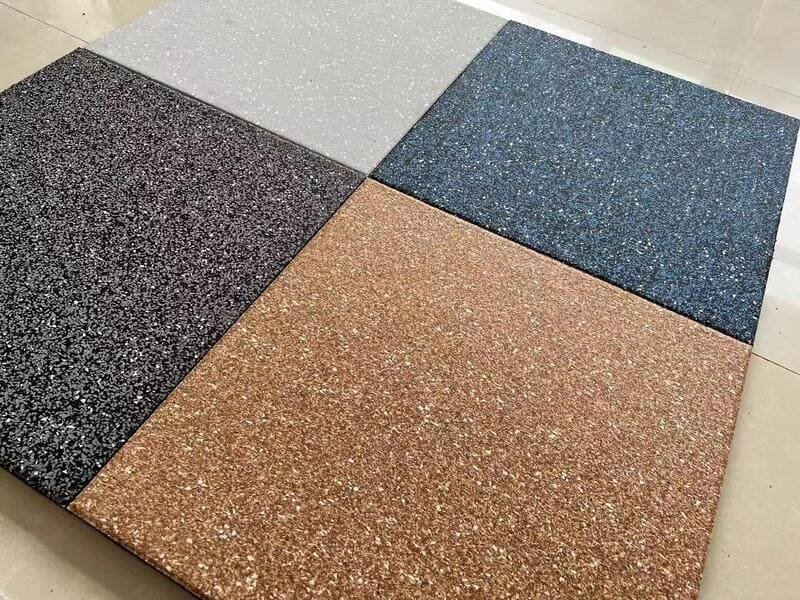
Preventing heavy equipment from crushing rubber flooring requires distributing the weight over a larger surface area using load spreaders like steel plates or high-density sub-layers. Choosing vulcanized rubber with high density ensures the material resists permanent indentation and maintains its structural integrity under static pressure.
I spend my days in the factory testing the compression set of various rubber compounds. I see many gym owners buy expensive 20mm flooring only to find deep pits under their power racks after one month. This damage happens because of point load pressure. A heavy rack has small feet that concentrate hundreds of pounds on just a few square inches. This pressure exceeds the physical limit of the rubber bonds. When the bonds break, the rubber cannot spring back. You are then left with a permanent "rut." My goal is to show you how to stop this by using simple engineering logic to protect your subfloor and your investment.
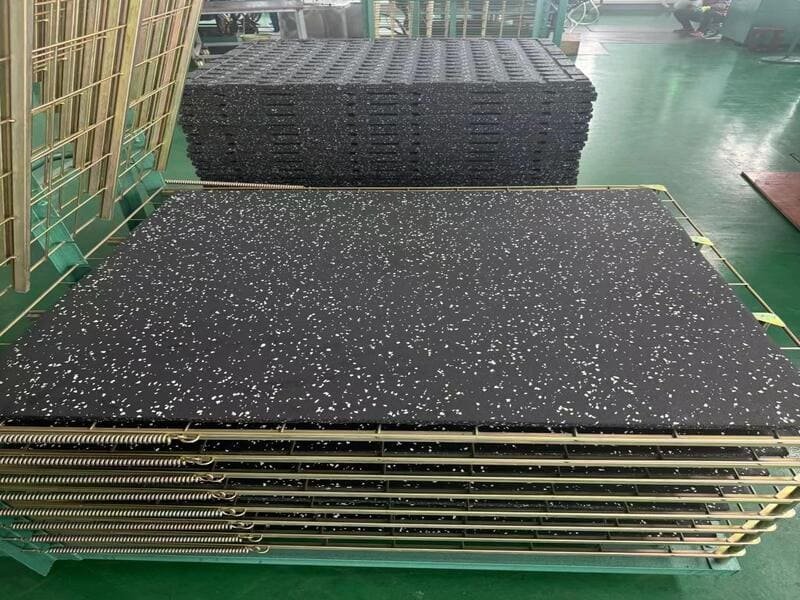
You must understand the science behind why rubber fails before you can fix the problem.
Why Does Heavy Equipment Cause Permanent Indentations in Rubber?
Rubber crushes when the weight per square inch exceeds the material’s tensile strength and density limits. Small equipment feet create high point loads that cause "cold flow," where the rubber physically moves away from the pressure point. Using high-density mats reduces this risk significantly.
| Фактор | Impact on Crushing | QC Technical Insight |
|---|---|---|
| Foot Surface Area | Высокий | Smaller feet concentrate force; larger feet spread it. |
| Плотность материала | Высокий | Low-density foam crushes at 50 PSI; high-density rubber handles 200+ PSI. |
| Static Weight | Средний | Constant weight over years causes more damage than dropping a weight once. |
The Science of Point Load and Material Memory
In our lab, we use a durometer to test hardness. Soft rubber feels great for floor exercises but it is a disaster for heavy equipment. When you place a 500lb machine on 1-inch feet, you are applying massive pressure to a tiny spot. This is different from a car tire which has a large contact patch.
The rubber "memory" refers to its ability to return to its original shape. If the load is too high, the polymer chains stretch until they snap or permanently deform. This is what we call a compression set failure. You also need to watch for "cold flow." This is when the rubber does not just compress but actually oozes to the sides of the equipment feet.
Understanding Vulcanized vs. Recycled Rolls
We test both vulcanized and urethane-bonded rubber. Vulcanized rubber is cooked under high heat and pressure. This creates a much tighter bond. It is like the difference between a dense cake and a sponge. If you are placing heavy equipment, you need a material with a high Shore A hardness rating.
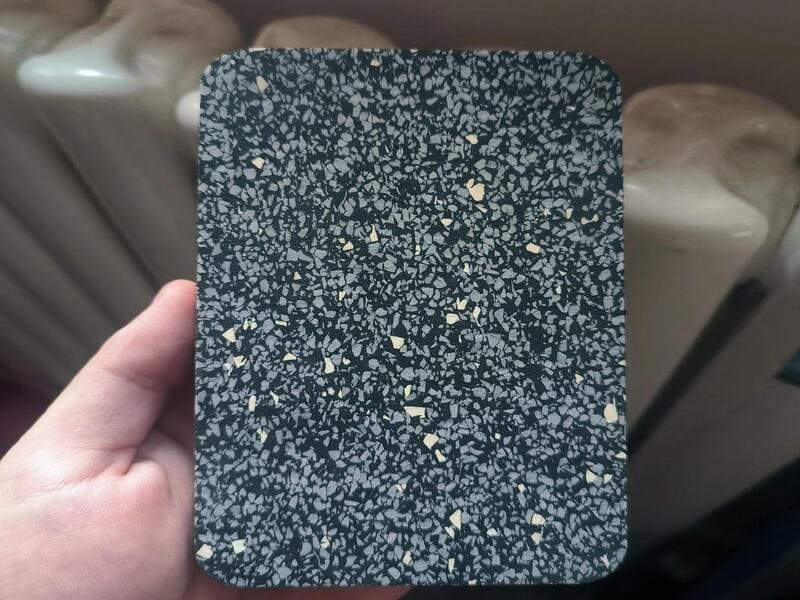
If you already have your flooring, you need to know the best ways to spread the load now.
What Are the Best Solutions for Distributing Heavy Loads?
The most effective way to prevent crushing is to use load spreaders like steel shims or plywood sub-layers. These tools increase the contact area between the equipment and the floor. This simple change reduces the pressure on the rubber fibers and prevents the feet from sinking.
| Решение | Эффективность | Лучшее для |
|---|---|---|
| Steel Plates | 100% | Heavy Power Racks and Industrial Lathes |
| Plywood Inlays | 85% | Lifting Platforms and Functional Areas |
| Buffer Mats | 60% | Cardio Equipment and Light Benches |
Implementing Load Spreaders and Buffer Layers
I always tell my clients to use "sacrificial" layers. A common trick is to use powder-coated steel plates. You place these 6×6 inch plates under each foot of the rack. This triples the contact area. If the area is larger, the pressure is lower. It is basic physics that saves you thousands in floor repairs.
Another professional method is the "mat on a mat" strategy. You place a high-density PVC mat on top of your rubber flooring. If the top mat gets crushed, you replace it for a low cost. You do not have to rip up your entire floor. We also see great results with CNC-cut plywood. You can sink the plywood into the floor so it is flush with the rubber. This provides a rock-solid base for the equipment.
The Role of Bolt-Down Strategies
Many people forget that vibration causes crushing too. When a machine vibrates, it creates "scuff-crushing." The feet micro-move and saw into the rubber. By bolting the equipment through the rubber and into the concrete, you stop this movement. Use a sleeve anchor to keep everything tight. This reduces the friction that wears down the rubber surface over time.

The best cure is prevention, so you must choose the right product from the start.
Which Rubber Flooring Thickness is Best for Heavy Loads?
For heavy equipment, a thickness of 15mm to 30mm is the industry standard. While 8mm is fine for home use, it does not have enough vertical depth to absorb the energy of a heavy rack. Thick, high-density tiles are usually better than rolls because they are easier to replace if damage occurs.
Comparison of Flooring Types for Load Bearing
| Толщина | Лучшее приложение | Crushing Risk |
|---|---|---|
| 8 мм - 10 мм | Yoga, light dumbbells | Высокий |
| 15 мм - 20 мм | Standard commercial gyms | Средний |
| 25mm – 30mm+ | Powerlifting, heavy machinery | Низкий |
Why Thickness and Material Type Matter
When we run quality checks, we find that thickness is only half the story. You must look at the density. A 30mm "soft" tile will crush faster than a 15mm high-density vulcanized tile. In my experience, tiles are better for heavy areas. If a rack foot eventually leaves a mark, you only need to swap one tile. If you use rolls, you have to cut out a whole section.
You also need to check your subfloor. I have seen rubber "crush" because the concrete underneath was crumbly or uneven. The rubber sinks into the gaps in the concrete. Always ensure your subfloor is level and hard before you lay a single square inch of rubber. If the subfloor fails, the rubber will follow.
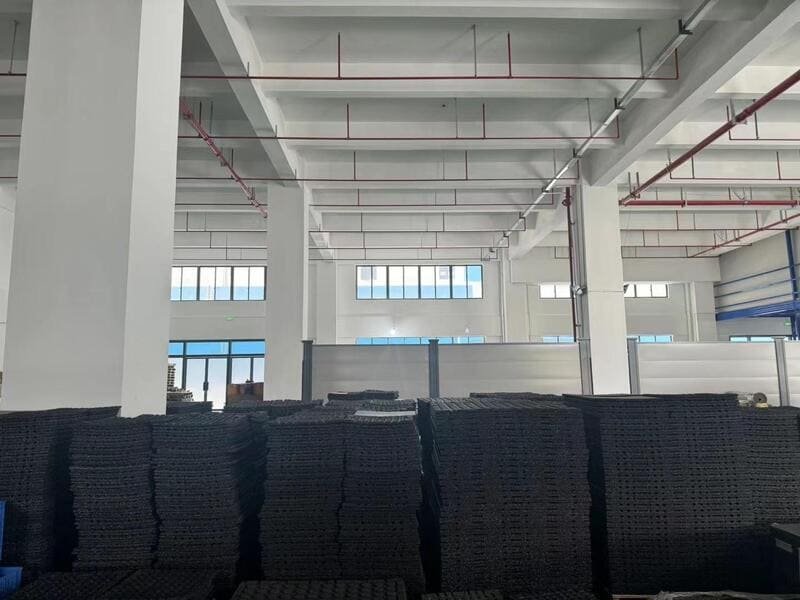
This guide helps you protect your floors today and in the future.
Заключение
Use load spreaders to save your floors.
Need expert advice on the right density for your project? Send me a private message to get a custom flooring technical spec sheet.