


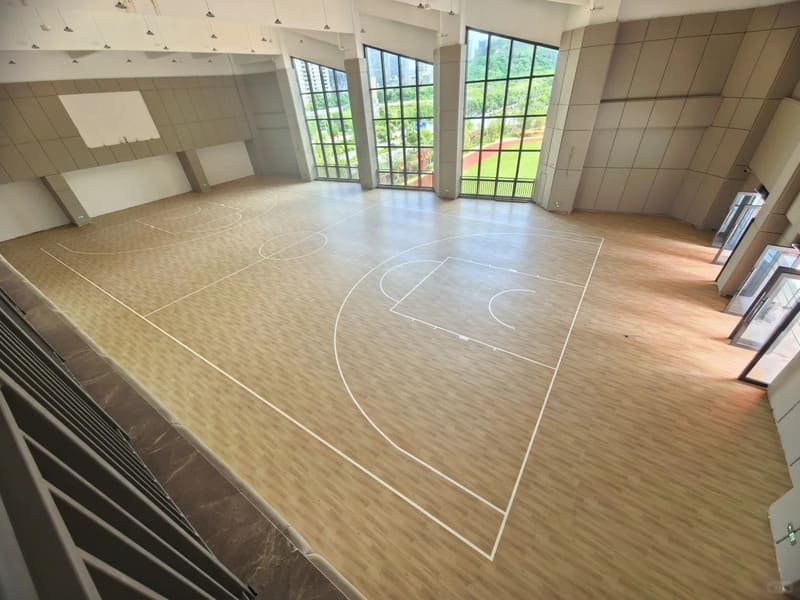
Low ball bounce on PVC sports flooring can come from the floor’s elastic construction, but unusually low or inconsistent rebound often points to a product mismatch, an installation issue, or even the ball itself. A properly built sports floor can offer both shock absorption and high ball rebound.
I have spent years on the production floor engineering PVC sports flooring, and this question comes up almost every week. Many people assume that a soft, cushioned floor must always bounce a ball lower than a hard one. That is not the full picture. Standards like EN 14904 require indoor sports floors to deliver both shock absorption for players and a high vertical ball rebound at the same time. Current point-elastic PVC systems on the market, tested under this standard, regularly reach 25 percent or higher shock absorption while still returning 90 percent or more ball rebound. So when a floor feels dead, the real cause is usually one of a few specific things: an underbuilt structure, a subfloor or installation problem, an environmental factor, or simply a soft or underinflated ball.
Let me walk through how shock absorption and ball rebound actually relate to each other, then get into the material, installation, and environmental factors that can pull bounce down in the real world.
Are Shock Absorption and Ball Rebound Always Opposites?
Shock absorption and ball rebound are related, but they are not a simple trade-off. A well-engineered floor can deform under a player’s larger, slower impact while still returning most of the energy from a much smaller, faster basketball bounce.
The confusion comes from two very different impact events being tested on the same floor.
| Тип испытания | What Hits the Floor | Contact Area | Loading Speed |
|---|---|---|---|
| Shock absorption (player) | Human body weight | Большой | Slower |
| Ball rebound (basketball) | Баскетбол | Маленький | Быстрый |
Because the mass, contact area, and speed of these two impacts are so different, a floor’s response to one does not automatically predict its response to the other. Area-elastic systems, for example, can let a wide section of the structure flex under a player’s landing while the top surface still returns a high percentage of a basketball’s energy on a fast, small bounce. This is exactly why some of the more cushioned point-elastic PVC products on the market still carry ball rebound ratings of 90 percent or higher. Shock absorption and ball bounce depend on the whole system working together, not on one property canceling out the other.
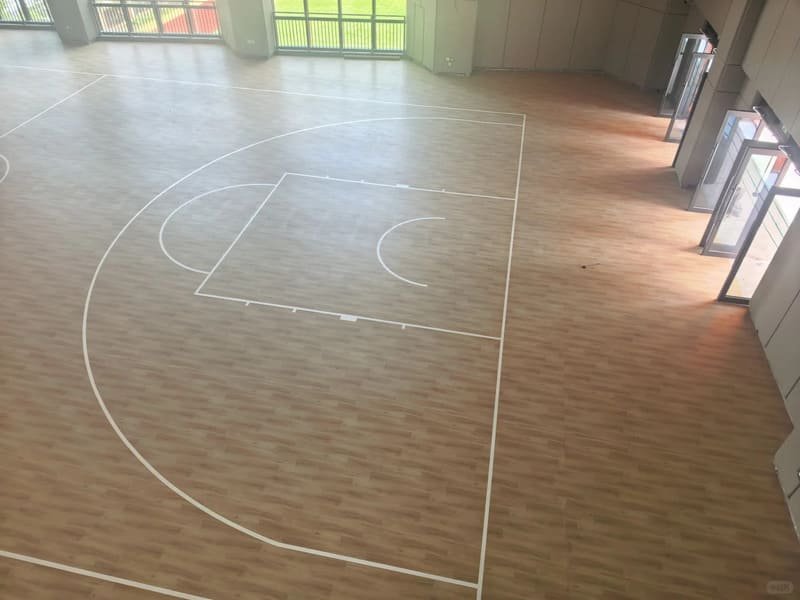
Because these two properties are not simply opposites, low bounce almost always traces back to a more specific cause. Before looking at the floor’s construction, it helps to rule out the simpler explanations first.
Is the Flooring Really the Cause of Low Bounce?
Before blaming the floor, check the ball itself and where the low bounce is happening. A soft or underinflated ball, or a bounce test limited to one small area, can look exactly like a flooring defect.
This step gets skipped more often than it should. Ball rebound testing, including the EN 12235 method used under EN 14904, depends on using a properly conditioned test ball dropped from a fixed height. In the field, a basketball that is even slightly underinflated, worn, or cold can lose a noticeable amount of bounce on its own, with no fault in the floor at all. Before assuming the flooring is defective, I always recommend a simple comparison:
- Use the same properly inflated ball across every test point
- Bounce it in several spots across the full court, not just one
- Compare a suspect area to a section of the same floor that feels normal
- Note whether the low bounce is consistent everywhere or limited to specific spots
If the whole court feels low and consistent, the cause is more likely tied to the product structure or its match to the sport. If only certain spots feel dead while the rest of the court performs normally, the issue is more likely local, tied to installation, subfloor condition, or moisture underneath that specific area.
Once the ball and the pattern of the problem are ruled out or confirmed, it becomes much easier to trace the issue back to the flooring’s material structure, its installation, or its environment.
How Does Material Composition Affect Ball Bounce Performance?
Foam density, thickness, reinforcement, and overall system stiffness all influence ball rebound together. No single layer on its own determines whether a floor bounces high or low.
Foam Backing and System Stiffness
Foam backing plays a real role in how a ball behaves on impact, but density and thickness alone do not predict the outcome. A softer or more deformable backing can reduce rebound, but the same backing paired with the right reinforcement layer and overall system design can still deliver a high, standard-compliant bounce. The full combination of foam density, cell structure, reinforcement, and total system stiffness is what actually determines ball response, not any one layer in isolation.
Wear Layer and Surface Treatment
A polyurethane surface treatment mainly affects stain resistance, scratch resistance, cleaning, and surface friction. It generally has a much smaller effect on vertical ball rebound than the foam backing and overall structural stiffness do. If bounce feels low, the wear layer is rarely the main reason, even on floors with a heavier PU finish.
Overall Thickness Is Not a Reliable Predictor
| Фактор | Possible Effect on Ball Rebound |
|---|---|
| Softer foam structure | May reduce rebound if not properly engineered |
| Higher system stiffness | May increase rebound |
| Reinforcement structure | Helps control deformation and consistency |
| Общая толщина | Influences performance, but does not determine rebound on its own |
| Subfloor and support system | Can strongly affect overall system response |
There is no fixed rule that thicker or thinner PVC automatically means lower or higher bounce. Some multi-sport systems well over 10mm thick still carry ball rebound ratings above 90 percent, because thickness is only one input into a much larger structural design.
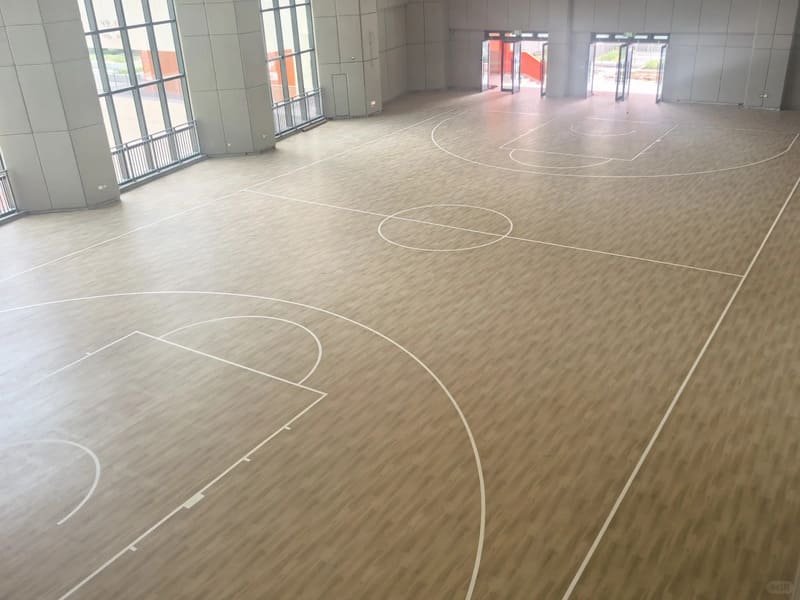
Material design sets the baseline for how a floor should perform. What happens on-site, during installation and in daily use, decides whether it actually performs that way.
How Do Environmental and Installation Factors Affect Ball Bounce?
Temperature can change how stiff or elastic PVC and foam layers feel, and installation quality matters more than the specific gluing method used. Consistent, manufacturer-approved installation matters more than any single technique.
Temperature and Testing Conditions
Temperature can shift the stiffness and elasticity of PVC and foam layers, so rebound measurements can vary somewhat with the conditions on the day of testing. Rather than assuming cold always raises bounce or heat always lowers it, the more reliable approach is to test under stable indoor conditions and record the surface temperature at the time. Humidity is a separate factor. It mainly affects the subfloor, moisture levels, and the adhesive system underneath, rather than softening the PVC surface itself.
Installation Method and Approved Systems
Installation affects rebound mainly when the installed system differs from what the manufacturer tested and certified, or when there are unintended voids, debonded areas, bubbles, or uneven support underneath. This is not the same as saying one gluing method is inherently worse than another. Approved loose-lay systems and limited-adhesive systems can perform just as well as full-spread adhesive installations, as long as they follow the manufacturer’s tested configuration and are installed correctly.
Moisture and Localized Issues
Moisture-related adhesive failure can create localized debonding or bubbles under the flooring. This tends to make ball response inconsistent from spot to spot rather than simply lowering bounce across the entire court. This is exactly why checking whether low bounce is court-wide or limited to specific areas, as covered earlier, matters so much for diagnosing the real cause.
Environmental and installation issues explain a large share of real-world complaints. The formal benchmark for what counts as acceptable performance in the first place comes from the industry testing standards.
What Do Industry Standards Say About Ball Bounce on PVC Flooring?
Under EN 14904, vertical ball behavior is tested using the EN 12235 method with a basketball, and the relative rebound height must reach at least 90 percent of the rebound measured on solid concrete.
| Стандарт | Роль |
|---|---|
| EN 14904 | Sets the performance requirement for indoor multi-sport flooring, including ≥90% relative ball rebound |
| EN 12235 | Defines the test method itself, including a basketball dropped from 1.80m ± 0.01m |
The EN 12235 method conditions the test ball and drops it from a fixed height onto both the flooring and a solid concrete reference surface, then compares the two rebound heights. A relative rebound of at least 90 percent is required for indoor multi-sport flooring under EN 14904.
Why Field Results Sometimes Differ From Lab Reports
Lab testing happens under controlled temperature, on a flat rigid subfloor, using a properly conditioned test ball. Field conditions rarely match this exactly. A certified floor can still underperform on-site if the ball used for testing is worn or underinflated, the subfloor is uneven, or the installation departs from the tested configuration. A certified lab report and correct field installation need to go together, not one or the other.
Knowing what the standard actually requires makes it much easier to tell whether a floor is underperforming or simply being tested under different conditions than the lab used.
How Can You Fix or Mitigate Low Ball Bounce on PVC Flooring?
Start by checking the ball and testing conditions, then look at whether the issue is court-wide or localized. Court-wide problems usually point to product selection, while localized problems usually point to installation or moisture.
For Existing Floors
- Retest with a properly inflated, undamaged ball under stable indoor conditions
- Check whether the low bounce is consistent across the whole court or limited to specific spots
- Inspect localized areas for debonding, bubbles, or uneven subfloor support
- If the flooring system itself does not match the sport’s requirements, consult the flooring manufacturer or system designer before changing the underlayer or subfloor construction, since this can alter several certified performance properties at once
For Future Purchases (Buyer’s Guide)
- Choose a composite structure designed and tested for the specific sport or sports the court will host
- Ask for certified EN 12235 / EN 14904 test reports before bulk ordering, rather than relying on thickness or foam density alone
- Request physical samples to compare against your current floor under the same test conditions
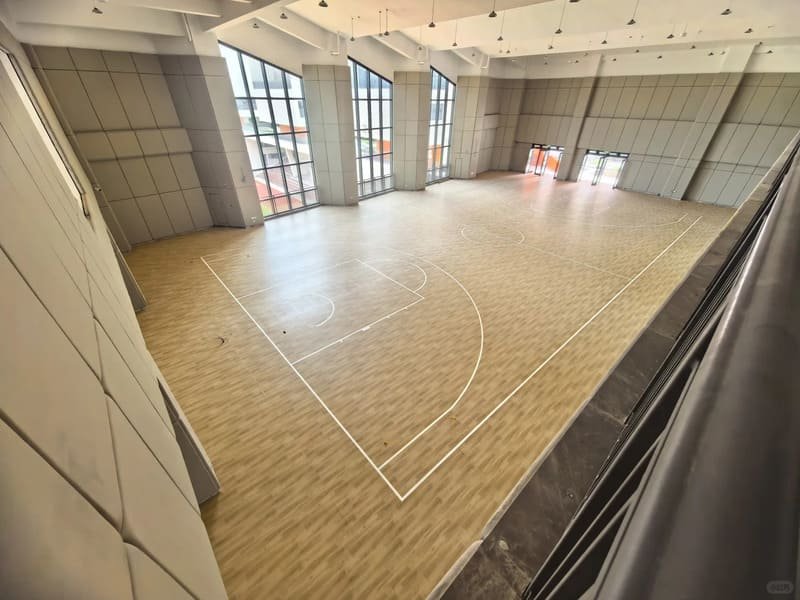
With the physics, the materials, the environment, and the standards covered, most remaining questions come down to specific, practical concerns from facility managers and players.
What Are Common Questions About Low Ball Bounce on PVC Flooring?
Can low ball bounce cause injuries to players?
Low ball bounce on its own is not usually an injury risk. The bigger concern is inconsistent bounce across the same court, often caused by localized debonding or an uneven subfloor, which can force players to adjust their movement unpredictably from one spot to another.
Is PVC flooring suitable for competitive basketball?
Yes. FIBA lists approved PVC synthetic flooring systems for Level 2 basketball competitions, and current products from major manufacturers meet the EN 14904 ball rebound requirement across a wide range of thicknesses. FIBA Level 1 competitions, however, require an approved wooden or glass floor, so buyers should check the required competition level rather than assuming thickness alone determines eligibility.
How can I test my current floor’s ball rebound height accurately?
Use a properly inflated basketball and drop it from 1.80 meters, the same height specified in the EN 12235 test method, onto both the PVC floor and a solid concrete section nearby. Compare the two rebound heights across several points on the court. For certified numbers rather than a field estimate, request lab testing performed according to EN 12235 and evaluated against the EN 14904 requirement.
Заключение
Low ball bounce is usually a sign of a product mismatch, an installation issue, or a testing condition, not a fixed rule that soft floors must bounce low.
Об авторе
I work as a production process engineer specializing in custom and bulk PVC sports flooring manufacturing. My background covers material composition, foam backing engineering, and structural design optimization for basketball, volleyball, and multi-purpose court systems. I regularly support product development teams and facility buyers with technical consultation on structure selection, performance testing, and design optimization for sport-specific applications.
Have a specific ball bounce or flooring performance issue you’re trying to solve? Send me a message and I’ll help you work through the material and structure options that fit your project.