


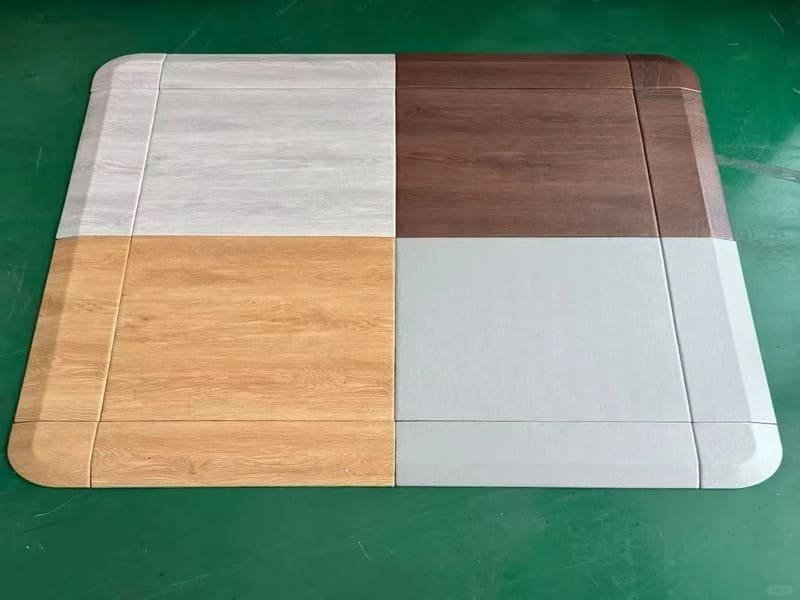
You can repair compression dents in rubber flooring by applying indirect heat and moisture to stimulate the material’s "memory." Most indentations in high-density vulcanized rubber or horse stall mats will vanish when treated with a steam iron over a damp cloth, which resets the compressed polymer chains.
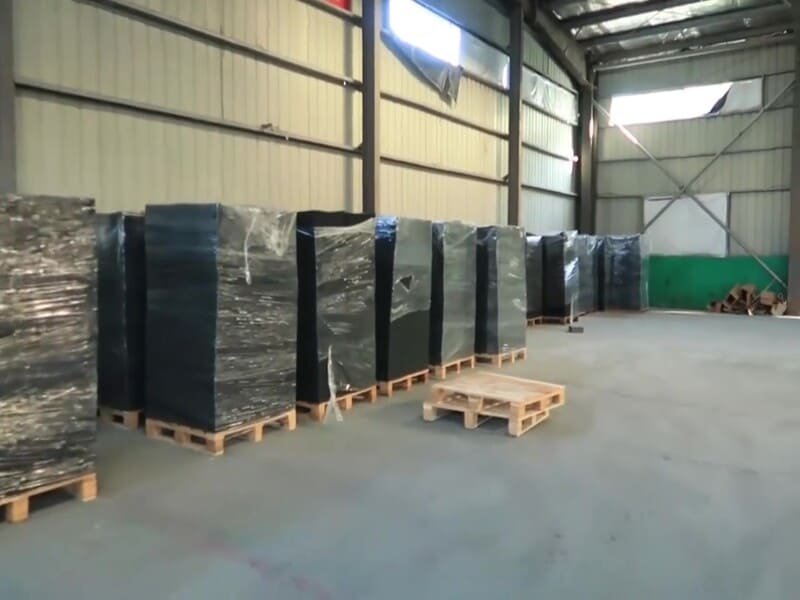
As a production process engineer, I have spent years optimizing the vulcanization of rubber tiles. I know that rubber is not a static material; it is viscoelastic. This means it behaves like both a liquid and a solid. When you place a heavy power rack on a rubber mat for months, the polymer chains slowly slide and reorganize. This is called "creep." From a manufacturing view, the density of your mat—often ranging from 900 kg/m³ to 1,200 kg/m³—dictates how much it will compress. High-density mats resist deep pits better but require more energy to "pop" back into place. Understanding these material science principles helps us fix the floor without causing permanent damage to the surface texture or the structural integrity of the rubber.
It is important to understand the cause before you start the repair process. This ensures you do not waste time on damage that might be permanent.
Why Do Dents Form in High-Density Rubber Flooring?
Dents form because of high-point loading and a polymer behavior called "creep," where constant weight causes molecules to slowly shift. In vulcanized rubber, the cross-linked bonds want to return to their original shape, but they need external energy like heat to overcome the static compression from heavy equipment.
| Фактор | Impact on Denting | Техническая причина |
|---|---|---|
| Тип нагрузки | Статическая нагрузка | Constant pressure over 500 lbs causes molecular displacement. |
| Тип материала | Recycled Crumb | Lower density bonds allow deeper initial indentations. |
| Производство | Вулканизация | High heat/pressure during production creates a stronger "memory." |
| Температура | Cold Environments | Cold rubber is brittle and recovers much slower than warm rubber. |
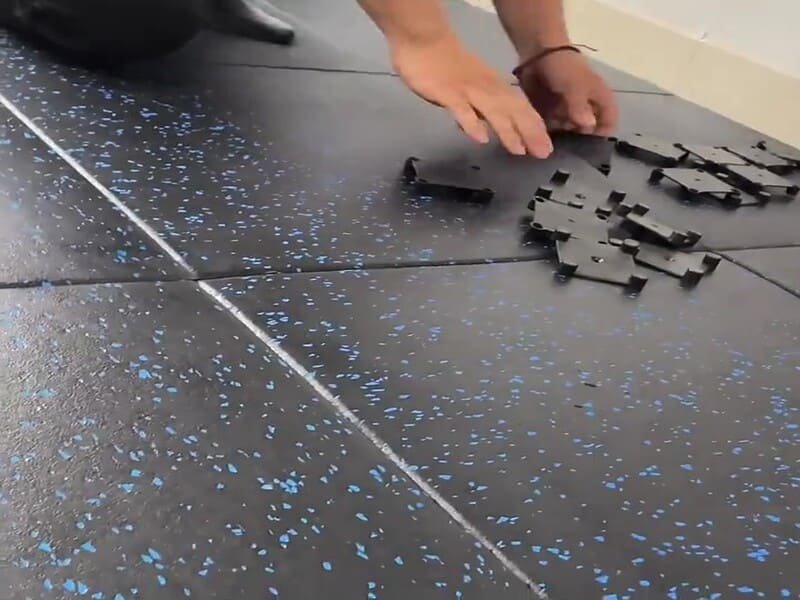
When I design production lines, we focus on the sulfur cross-linking process. This is what gives rubber its "bounce back" ability. If your flooring is non-vulcanized and held together only by polyurethane binders, it might not recover as well as vulcanized mats. You must also check if the dent is a "structural tear." If the rubber granules have actually pulled apart or shredded under the weight, no amount of heat will fix it. Another issue is subfloor depression. Sometimes the rubber is fine, but the plywood or OSB board underneath has collapsed. You can test this by pressing a finger into the dent; if it feels hollow or crunchy, the problem is under the mat.
Once you confirm the rubber is simply compressed, you can move to the first stage of recovery.
How Does the Natural Recovery Period Work for Rubber?
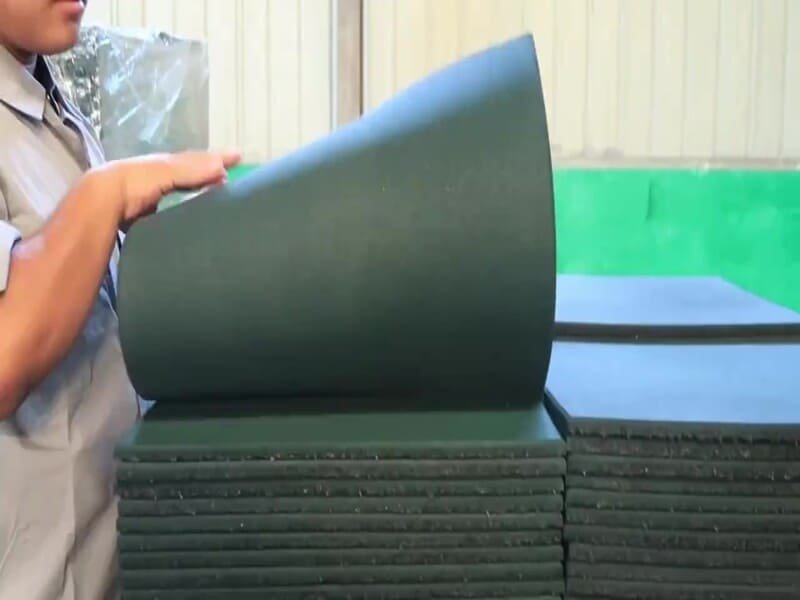
The natural recovery period involves removing the weight and waiting 24 to 48 hours to let the rubber expand. This process is faster in warm rooms because heat increases molecular mobility, allowing the internal "memory" of the vulcanized bonds to push the surface back to its original level.
Why Ambient Conditions Matter for Self-Healing
In my experience at the factory, we see that temperature is the biggest variable in material testing. If your gym is in a cold garage, the rubber molecules are "locked" in place. I suggest turning up the heat in the room to at least 25°C (77°F) during this period.
| Room Temperature | Скорость восстановления | Probability of Full Success |
|---|---|---|
| Below 10°C | Очень медленно | Low (Material is too stiff) |
| 18°C – 22°C | Умеренный | Medium (Standard home gym) |
| Above 26°C | Быстрый | High (Optimal for polymer movement) |
If the dent is still there after two days, it means the "creep" has set in too deep for natural air to fix. You need to intervene with more aggressive methods. Do not worry yet, as most industrial rubber is designed to withstand significant stress. We often test these mats by compressing them to 50% of their thickness for weeks. They almost always return to 98% of their original height once the load is removed and heat is applied.
If waiting does not work, it is time to use the most effective tool in your house for this job.
Can You Use Heat and Moisture to Remove Deep Dents?
Yes, you can use a steam iron and a wet towel to lift deep dents by injecting heat into the rubber core. This "Steam Press" method softens the material and allows the compressed bonds to expand, effectively "steaming out" the indentation without melting the surface.
The Engineering Process of Heat Recovery
I always tell people to be careful with heat. Rubber has a high melting point, but the binders can smoke or smell if you apply direct dry heat. You must use a buffer.
- Подготовка: Clean the area with a damp cloth to remove any dust that could bake into the pores.
- The Wet Buffer: Place a thick cotton towel soaked in water over the dent.
- Steam Injection: Use a clothing iron on the "Steam" setting. Press it onto the towel for 30 seconds.
- Повторяйте: Do this three to five times until the rubber feels hot to the touch.
| Инструмент | Назначение | Engineering Logic |
|---|---|---|
| Steam Iron | Heat Source | Provides the energy to break the static molecular set. |
| Wet Towel | Thermal Buffer | Protects the surface from scorching and creates steam. |
| Water Spray | Constant Moisture | Steam penetrates deeper into the rubber pores than dry air. |
I have seen this work on 20mm thick mats that had 5mm deep pits. The steam works better than a hair dryer because water conducts heat much faster than air. Once the area is hot, the rubber becomes pliable. This is your window of opportunity to manually manipulate the surface.
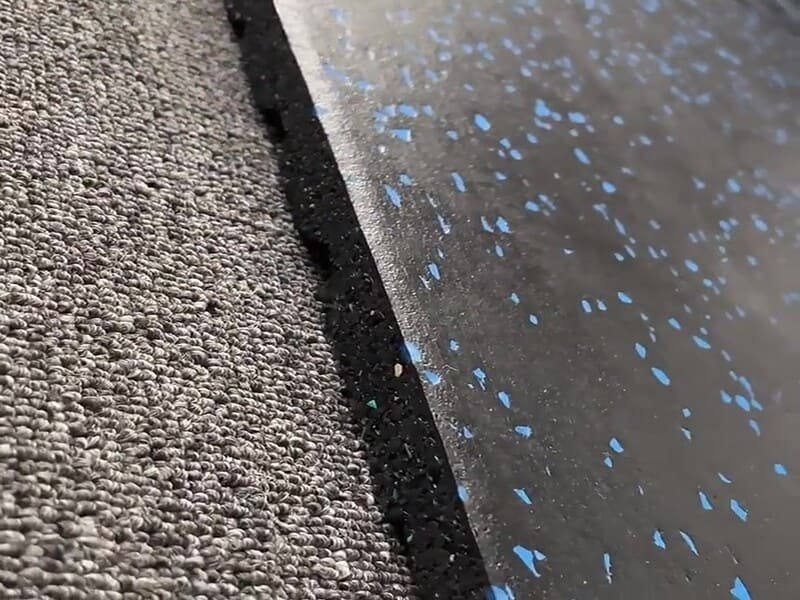
After the heat treatment, you can help the floor along with some mechanical force.
What is Mechanical Manipulation for Rubber Repair?
Mechanical manipulation involves using tools like a J-roller or a rubber mallet to vibrate and stretch the warm rubber fibers back into place. By applying force to the edges of the dent, you "pull" the surrounding material into the hole to equalize the surface pressure.
Professional Tools for Manual Leveling
In the factory, we use rollers to ensure the density is even across the entire slab. You can do the same at home. While the rubber is still warm from the steam iron, use a heavy rolling pin or a specialized floor roller.
- The Rolling Method: Roll from the center of the dent outward in a star pattern. This redistributes the bulk.
- The Percussion Method: Use a rubber mallet to strike a flat wood block placed over the dent. The vibration helps the granules settle.
- Kneading: Use your thumbs to "massage" the edges of the pit inward.
I once worked with a gym owner who had "ghost" dents everywhere. We used the heat-and-roll method and fixed 90% of them. If the dent remains, you might be looking at a subfloor issue. If the plywood underneath has a hole, the rubber will always sag into it. You must lift the mat and check the wood. If there is a hole in the wood, fill it with a wood hardener or a shim before putting the rubber back down.
Repairing is good, but preventing the next dent is much smarter for your wallet.
How Can You Prevent Future Compression Dents?
You can prevent dents by using load distribution plates and choosing the correct mat thickness for your equipment. Spreading the weight over a larger surface area reduces the pressure (PSI) on the rubber, which keeps the material within its elastic limit and prevents permanent creep.
Engineering Solutions for Weight Distribution
As an engineer, I look at the math: $Pressure = \frac{Force}{Area}$. If you increase the area, the pressure drops.
- Spreader Plates: Put a 4×4 inch square of steel or plywood under every foot of your rack.
- The 3/4" Standard: Use 19mm (3/4 inch) mats for areas with weights over 100 lbs. Thin 8mm mats have no "travel" and will bottom out quickly.
- Equipment Coasters: Buy high-density plastic cups designed for heavy machinery.
- The Micro-Shift: Every three months, move your equipment by just one inch. This gives the rubber a break and prevents "permanent set."
| Метод профилактики | Эффективность | Cost Level |
|---|---|---|
| Spreader Plates | Очень высокий | Low (DIY Plywood) |
| Thicker Flooring | Высокий | High (Investment) |
| Micro-Shifting | Средний | Ноль |
I always recommend that buyers invest in the right thickness from day one. It is much cheaper than replacing a whole floor. If you have a very heavy treadmill, a 6mm "equipment mat" on top of your floor provides a sacrificial layer that takes the damage instead of your expensive flooring.
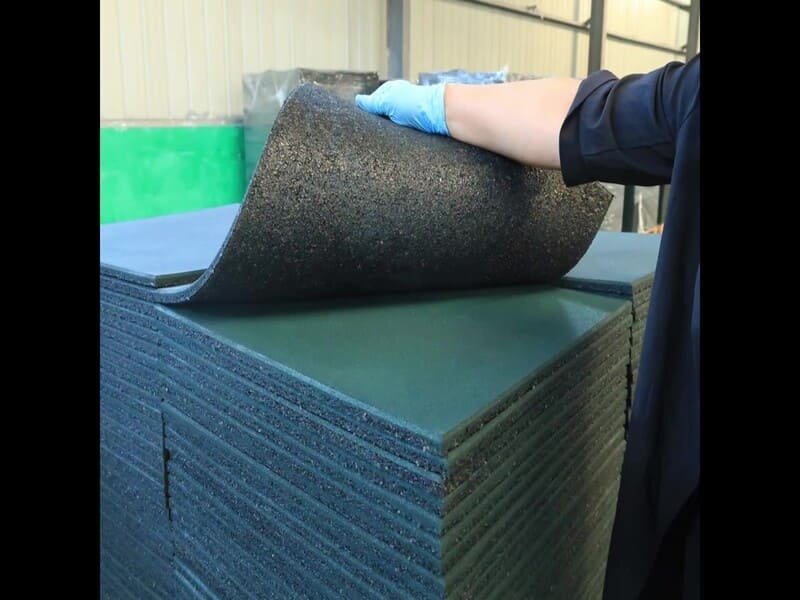
Protecting your floor is a long-term project that requires the right habits.
Заключение
Rubber flooring is very resilient and recovers well with heat and patience.
If you are a gym owner or a distributor looking for high-density, low-creep rubber flooring solutions that resist permanent denting, feel free to send me a private message for technical advice or custom manufacturing options.