


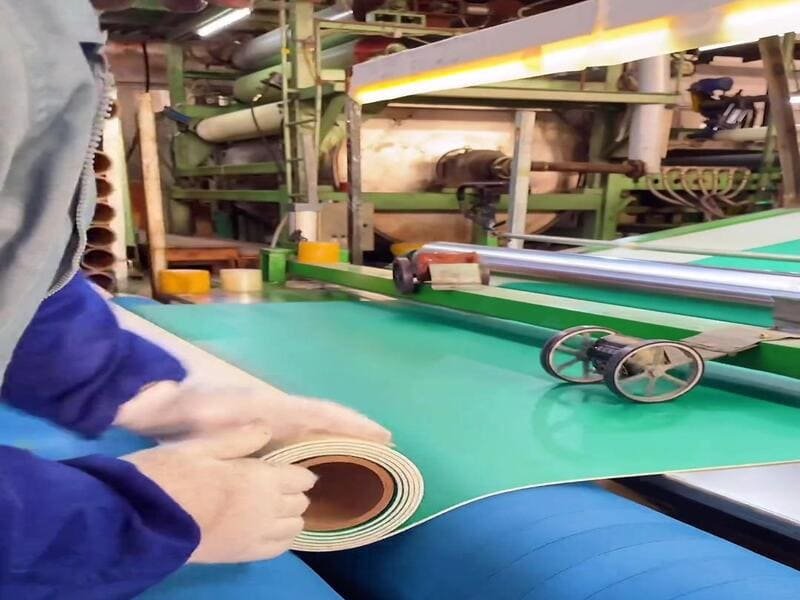
A reliable PVC/LVT/SPC factory needs lab equipment covering four areas: dimensional stability, surface wear, safety and comfort, and chemical safety. Without these machines, a factory cannot prove its floors are stable, safe, or compliant.
I have spent years on the production floor of a PVC flooring factory, and I can tell you one thing: a nice showroom sample tells you almost nothing about quality. What tells you the truth is the lab behind the production line. A factory that skips testing equipment is gambling with your project. A factory that invests in it is protecting your investment before the floor ever leaves the warehouse.
Why Is Testing Equipment the Real Sign of a Quality PVC Flooring Factory?
Testing equipment matters because sales samples and smooth pitches cannot predict how a floor performs after installation. Only lab data can confirm stability, durability, and safety before shipment.
The Buyer’s Dilemma
Most buyers evaluate a factory by touching a sample board and listening to a sales pitch. But a small sample cannot show you how a full batch behaves under heat, humidity, or years of foot traffic. I have seen buyers choose a supplier based on a shiny finish, only to face edge curling or off-gassing complaints six months later.
| Risk Without Testing | Real-World Consequence |
|---|---|
| No heat shrinkage test | Gaps or buckling after installation |
| No peel strength test | Layers delaminating over time |
| No VOC chamber | Failed indoor air quality certification |
| No wear resistance test | Premature scratching in high-traffic areas |
Poor quality control does not just cost money on rework. It damages your brand when end users file complaints about warped planks or strange smells.
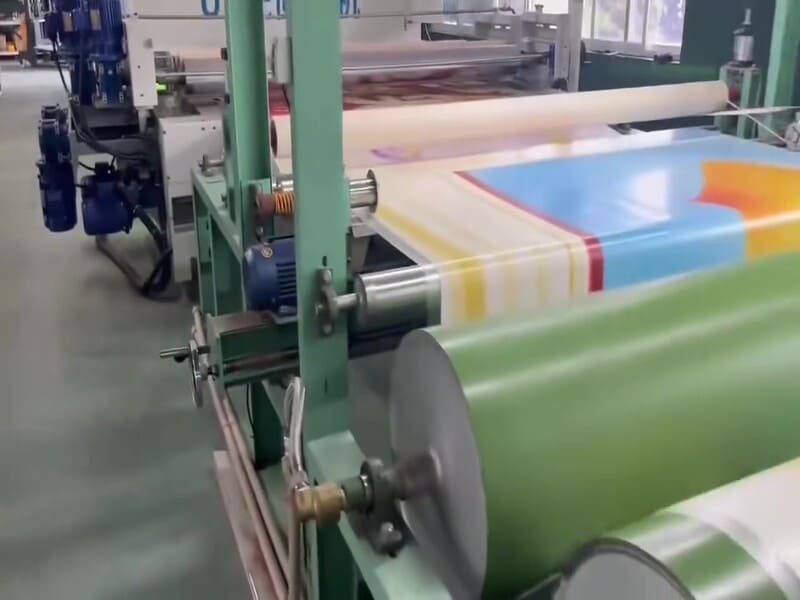
A well-equipped lab is not a marketing claim. It is proof. Let me walk you through exactly which machines a serious factory should have, and why each one protects your project.
What Equipment Tests Dimensional Stability and Structural Integrity?
A factory needs a heat shrinkage oven, precision calipers, and a curling tester to confirm planks stay flat and fit tightly after installation, even under temperature changes.
Heat Shrinkage and Structural Testing Tools
| Оборудование | Стандарт | What It Prevents |
|---|---|---|
| Heat Shrinkage & Oven Expansion Tester | EN 434 / ASTM F2199 | Gaps or buckling from heat exposure |
| Precision Digital Calipers & Thickness Gauges | Internal / batch QC | Loose or broken click-lock joints |
| Curling & Cupping Measuring Apparatus | Internal thermal stress test | Uneven transitions, trip hazards |
I always tell customers that dimensional stability is the foundation of a good click-lock floor. If a plank shrinks or expands unevenly, the whole locking system fails. The oven expansion test heats samples to simulate direct sunlight or underfloor heating, then measures the length and width change. Calipers check wear layer thickness and click-tolerance so every plank from every batch locks the same way. The curling tester confirms edges stay flat, not lifted, after thermal stress. These three machines together tell us if a floor will still fit perfectly a year after installation, not just on day one.
Dimensional stability is only half the story. The surface of the floor faces a different kind of stress: daily wear.
What Equipment Tests Surface Durability and Wear Resistance?
Surface durability testing uses a Taber abraser, castor chair tester, scratch tester, and UV chamber to confirm the wear layer resists foot traffic, furniture, and sunlight over years of use.
Surface Performance Machines
| Оборудование | Функция | Стандарт |
|---|---|---|
| Taber Abrasion Tester | Simulates years of foot traffic | EN 660-2 / ASTM F510 |
| Castor Chair Resistance Tester | Rolls office chairs over joints 25,000+ cycles | EN 425 |
| Scratch & Gouge Resistance Tester | Measures force needed to scratch the surface | Internal |
| UV / Xenon Arc Light Fastness Tester | Simulates long-term sunlight exposure | ISO 105-B02 |
The Taber abrasion test is how we confirm the official wear group rating, like T-Group or P-Group, printed on the product sheet. It is not a guess; the rotating abrasive wheels grind the surface until the print layer shows, and we count the cycles. For office and commercial projects, the castor chair tester matters even more, because rolling chair legs put repeated stress right on the click joints. The scratch tester checks if furniture dragging or pet claws will dull the surface. The UV chamber protects your design near large windows, where fading and yellowing are common complaints.
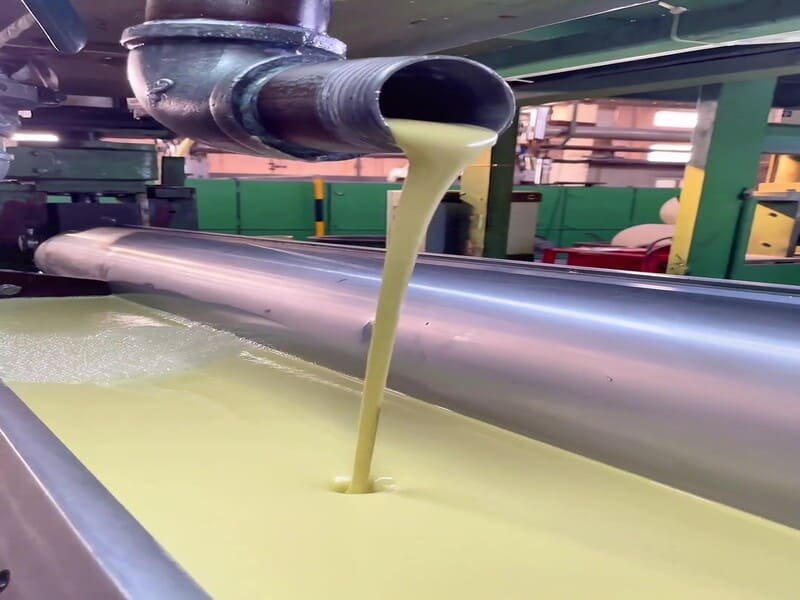
Durability is about the surface holding up. But safety and comfort are about how the floor performs under people’s feet every day.
What Equipment Tests Safety, Comfort, and Performance?
Safety and comfort testing covers indentation recovery, slip resistance, and impact sound insulation, confirming the floor is safe to walk on and comfortable to live or work on.
Safety and Comfort Testing Tools
| Оборудование | Функция | Стандарт |
|---|---|---|
| Residual Indentation Tester | Measures recovery after static load | EN 433 / ASTM F1914 |
| Pendulum / Dynamic Slip Resistance Tester | Tests wet and dry friction | DIN 51130 / EN 13893 |
| Acoustic Impact Sound Insulation Chamber | Measures decibel reduction (ΔLw) | ISO 10140 / ASTM E989 |
Heavy furniture is a common complaint point, so the indentation tester applies static pressure over time and checks how much the floor recovers. A good SPC or LVT core should show minimal permanent marks. Slip resistance testing is not optional for commercial, healthcare, or public spaces; the pendulum tester gives an R9 to R11 rating under wet and dry conditions, and codes in many countries require proof. For multi-story buildings, the acoustic chamber tests floors with attached IXPE or EVA underlayment, confirming the soundproofing claim on the spec sheet actually holds up in real conditions, not just in marketing copy.
Safety is one concern. Chemical safety is another, and it is the one that can stop your shipment at customs.
What Equipment Tests Chemical Safety and Environmental Compliance?
Chemical safety testing uses GC-MS/XRF spectrometers and VOC emission chambers to confirm the floor is free of banned phthalates, heavy metals, and excess formaldehyde before it ships.
Chemical and Environmental Testing Tools
| Оборудование | Функция | Regulation |
|---|---|---|
| GC-MS / XRF Spectrometer | Detects phthalates and heavy metals | REACH, Prop 65, RoHS |
| VOC / Formaldehyde Emission Chamber | Captures off-gassing rate in a sealed chamber | EN 717-1 / ISO 16000 |
I consider these two machines non-negotiable for any factory exporting internationally. The GC-MS or XRF spectrometer scans raw materials and finished planks for banned plasticizers and heavy metals like lead or cadmium. Skipping this step is how shipments get rejected at customs or recalled after sale. The VOC emission chamber places samples in a climate-controlled space and measures how much gas they release over time. This is the exact data needed for certifications like FloorScore or GREENGUARD Gold. Without a chamber on site, a factory has to rely entirely on outside labs, which slows down every new product launch.
Chemical safety protects the end user. But consistency starts even earlier, with the raw materials going into the extruder.
What Equipment Controls Raw Material and Chemical Formulation Quality?
Raw material control relies on a universal testing machine, rheometer, and color spectrophotometer to confirm layer bonding strength, consistent core density, and matching color across every batch.
Raw Material and Formulation QC Tools
| Оборудование | Функция | Стандарт |
|---|---|---|
| Universal Testing Machine (Peel/Tensile) | Tests bonding strength between layers | EN 431 / ASTM F904 |
| Rheometer & Melt Flow Indexer | Tests flow and viscosity of PVC compound | Internal process control |
| Color Spectrophotometer | Matches color (ΔE) between batches | Internal batch QC |
Delamination is one of the worst failures a floor can have, where the print film or wear layer peels away from the backing. The universal testing machine pulls layers apart under controlled force and gives us a peel strength number in real units, not a guess. The rheometer checks the PVC and plasticizer compound before extrusion, making sure the melt flow is consistent so the core does not turn brittle in one section and soft in another. The color spectrophotometer catches shade differences between production runs, which matters a lot when a customer orders multiple containers and expects every plank to match.
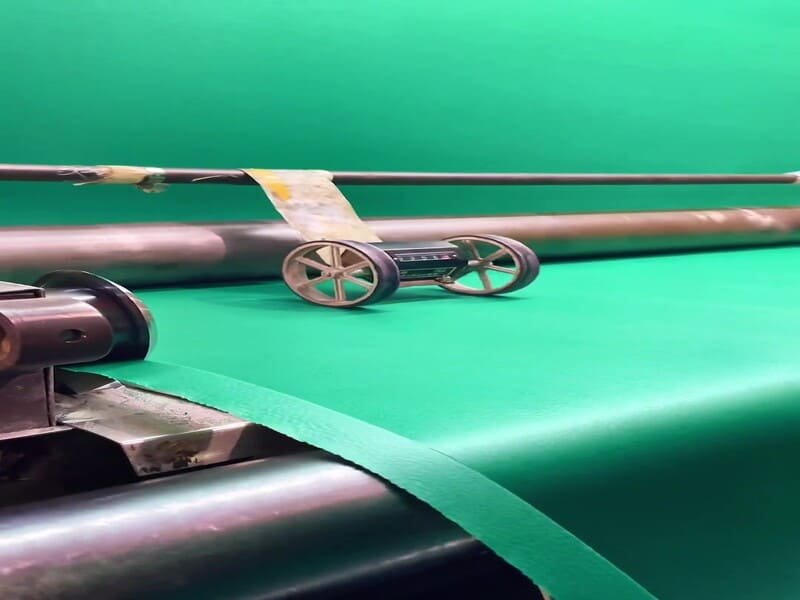
Having the right machines is one thing. Using them at the right stage of production is what actually makes them useful.
Where and When Are These Tests Conducted in the Factory?
Testing happens at three stages: incoming raw material checks, in-process monitoring during extrusion, and outgoing checks before shipment. Each stage catches different types of defects.
The Three-Stage QC Workflow
| Этап | What Is Checked |
|---|---|
| Входящий контроль качества (IQC) | PVC resin, calcium carbonate, plasticizers, wear film |
| Внутрипроцессный контроль качества (IPQC) | Extrusion temperature, gauge thickness, UV cure, click-profile cutting |
| Outgoing Quality Control (OQC) | Heat shrinkage, peel strength, drop tests, color match |
I have worked with factories where testing only happened at the end, right before shipment. That approach catches problems too late, after the material and labor are already spent. A proper workflow starts with IQC, checking raw resin and additives before they ever touch the extruder. IPQC happens during production, with operators checking gauge thickness and UV coating cure in real time so defects get caught within the same shift. OQC is the final gate, where a batch sample goes through heat shrinkage, peel strength, and drop testing before the container gets sealed. This layered approach is what separates a factory that reacts to problems from one that prevents them.
Knowing the workflow helps, but as a buyer, you also need a practical way to check if a factory is actually following it.
How Can Buyers Audit a PVC Flooring Factory’s Lab?
Buyers should ask which tests run on every batch versus weekly samples, request raw lab logs alongside third-party certificates, and check the factory’s calibration protocol for lab equipment.
Red Flags and Key Questions
| Категория | Что проверить |
|---|---|
| Красный флаг | No dedicated lab space, or equipment covered in dust |
| Красный флаг | Cannot show dated lab logs matching current production batches |
| Красный флаг | Relies only on third-party reports, no internal daily QC |
| Вопрос на вопрос | "Which tests run on every batch versus weekly sampling?" |
| Вопрос на вопрос | "Can you share raw lab logs alongside SGS or Intertek reports?" |
| Вопрос на вопрос | "What is your calibration protocol for lab equipment?" |
During factory visits, I always suggest buyers walk straight to the lab before the showroom. A lab covered in dust or missing basic equipment tells you everything about how seriously that factory takes quality. Ask to see logs from the current week’s production, not an old report from a past order. Third-party certificates like SGS or Intertek are useful, but they usually cover a single sample submission, not daily production. A factory that also keeps its own internal logs is one that catches problems before they reach you. Calibration matters too; equipment that has not been calibrated in years gives numbers you cannot trust.
Заключение
A well-equipped testing lab is the clearest sign a PVC flooring factory takes stability, safety, and compliance seriously.
Partnering with a fully equipped factory means fewer installation failures, fewer warranty claims, and smoother customs clearance for every shipment.
Об авторе
I work as a production process engineer specializing in PVC/LVT/SPC flooring manufacturing, with hands-on experience across extrusion, lamination, and quality control system design. My background covers custom and bulk production for clients across residential, commercial, and hospitality sectors, with a focus on engineering optimization and design consultation during early product development. I work directly with QC labs and testing protocols to catch issues before they become field failures.
If you are evaluating a PVC flooring supplier or working through a custom project spec, feel free to send me a message. I am happy to walk through your requirements and talk about what testing data you should be asking for.