


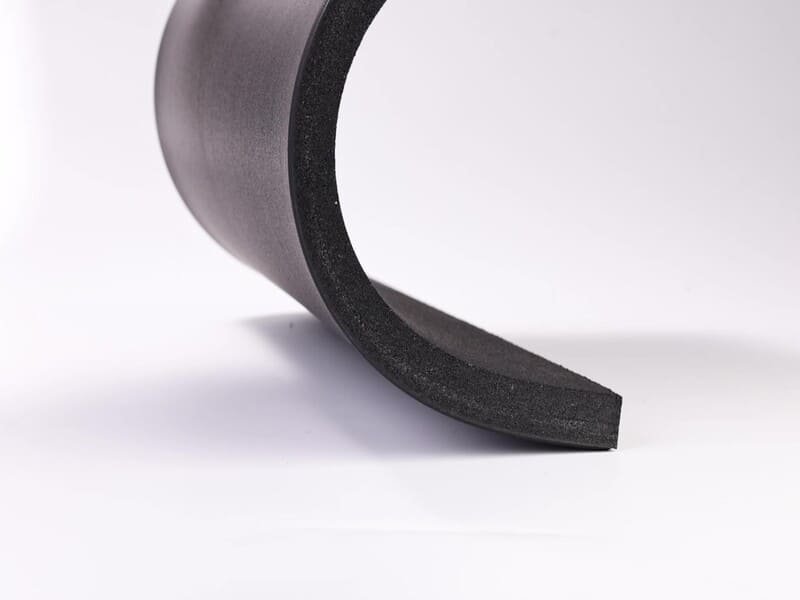
Acoustic performance in rubber mats degrades primarily due to mechanical fatigue, environmental aging, and chemical changes that reduce the material’s ability to absorb vibrations. These factors cause the rubber to lose its elastic "spring" and permanent deformation occurs, which bridges sound paths rather than blocking them.
When I talk to engineers about soundproofing mats, I often see a common mistake. People think once a mat is installed, it stays the same forever. In reality, rubber is a polymer. It is a live material in a chemical sense. Over years of use, the internal structure of the rubber changes. If you have a high-traffic area, the constant pressure breaks down the polymer chains. This is what we call acoustic fatigue. I have seen projects where a mat with a high Impact Insulation Class (IIC) rating lost nearly 30% of its effectiveness in just five years. This happens because the material can no longer "rebound" after it is compressed. When the mat stays flat, it stops being a cushion and starts acting like a solid bridge for noise. Understanding this lifecycle is vital for long-term project success.
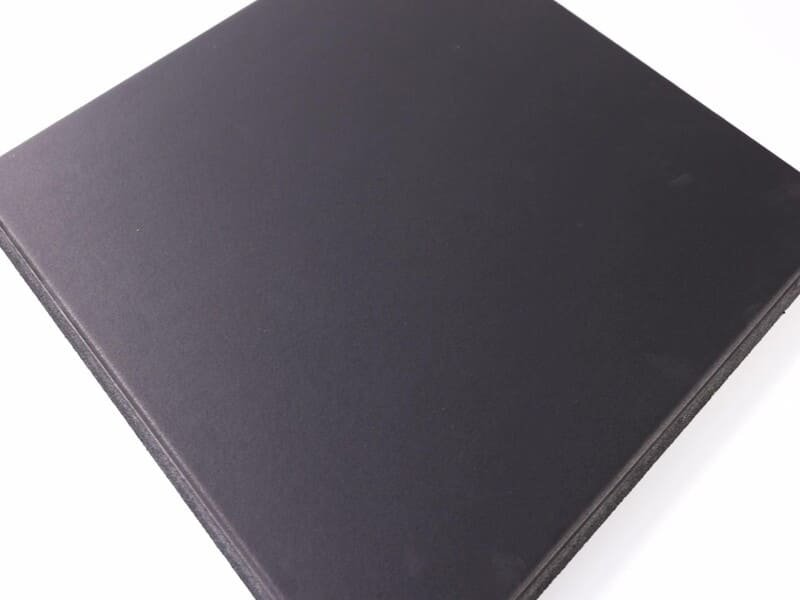
If you want your soundproofing to last, you need to look at the environment and the load. Most people ignore the small changes until the noise becomes a problem.
1. Why does the "invisible" decline happen in soundproofing?
The decline happens because rubber underlayment is not a static shield but a dynamic spring that wears out through physical and chemical stress. As the material loses its elasticity over time, it fails to decouple floor layers, allowing impact noise to pass through the structure easily.
| Фактор | Effect on Performance | Уровень воздействия |
|---|---|---|
| Mechanical Stress | Permanent thinning of the mat | Высокий |
| Химическое старение | Brittleness and cracking | Средний |
| Installation Errors | Immediate sound leaks | Высокий |
I remember a client who called me because their luxury apartment floor was suddenly "loud." They had used a standard recycled SBR mat. On the surface, everything looked fine. But when we pulled up a section, the mat was as hard as a rock. It had lost its ability to damp vibrations. This is the invisible decline. You cannot see the sound waves, but you can hear when the material stops fighting them. As a technical director, I always tell my team that rubber is like a battery. It has a limited amount of "flex" energy. Once that energy is gone due to age or stress, the acoustic insulation properties vanish. We must design with the end of the material’s life in mind to ensure the building stays quiet for decades.
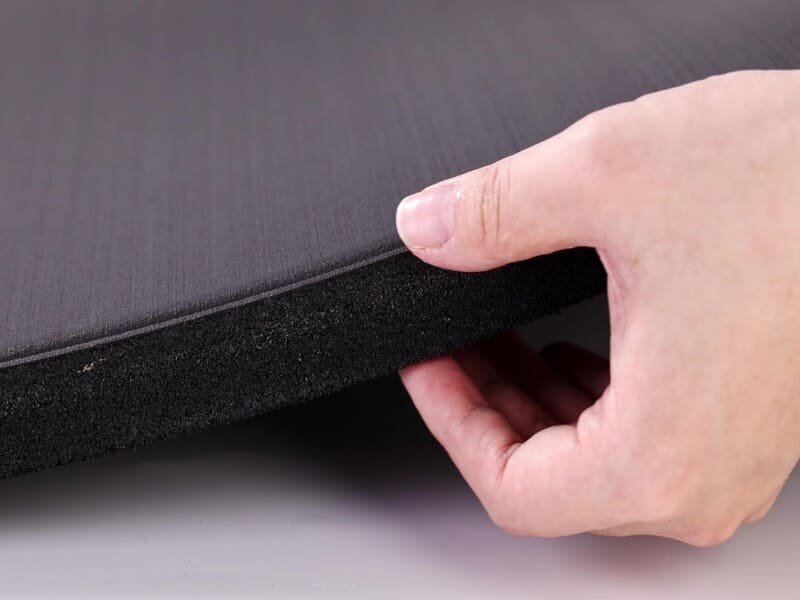
You must understand the material science to prevent these failures before they start.
2. Why is rubber the core material for acoustic control?
Rubber is used because it is an elastomer that acts as a mechanical spring to decouple vibrations. It converts kinetic energy from impacts into small amounts of heat, effectively stopping sound from traveling through solid structures like concrete or wood floors via high-performance damping.
Understanding Material Properties and Ratings
To understand why rubber is the best choice, we must look at how it handles energy. In my experience, the manufacturing process determines how well the mat will perform over ten years versus two years. We use specific density targets to balance support and softness. If a mat is too soft, it bottoms out. If it is too hard, it carries the sound.
| Метрика | Full Name | Role in Performance |
|---|---|---|
| IIC | Impact Insulation Class | Measures floor/ceiling impact noise like footsteps |
| STC | Sound Transmission Class | Measures airborne noise like voices or music |
| Shore A | Durometer Hardness | Measures the physical stiffness of the rubber mat |
These ratings are not permanent. An IIC 70 mat can become an IIC 50 mat if the rubber degrades. I always focus on the polymer density during production. High-quality SBR or EPDM rubber has better "memory" than cheap foams. This memory allows the mat to return to its shape after you walk on it. Without this elastic memory, the soundproofing mat is just a piece of trash under your floor. We test every batch to ensure the cell structure can handle millions of compression cycles without collapsing.
Knowing the material is just the start; you also have to watch out for physical fatigue.
3. What is mechanical fatigue and "bottoming out" in mats?
Mechanical fatigue occurs when rubber stays compressed for too long and loses its ability to return to its original thickness. This "bottoming out" creates a solid connection between the floor and subfloor, which allows impact vibrations to travel directly through the building structure.
The Science of Hysteresis and Compression
In the factory, we measure something called "Compression Set." This is a percentage that tells us how much the rubber stays squashed after we remove a heavy weight. If your mat has a high compression set, it will fail quickly under heavy furniture. This is why "bottoming out" is the number one killer of acoustic performance.
| Тип нагрузки | Пример | Влияние на резину |
|---|---|---|
| Статическая нагрузка | Heavy Refrigerator | Causes deep, permanent indentations |
| Dynamic Load | Running Children | Causes internal heat and fiber breakdown |
| Vibration | Industrial Motor | Accelerates molecular bond failure |
I once worked on a gym project where the weights were dropped in the same spot every day. Within six months, the 10mm mats were only 4mm thick in those spots. The air pockets inside the rubber were crushed. This is the "Hysteresis" effect. The rubber loses its internal energy. When those air pockets die, the soundproofing dies too. You need to match the density of your mat to the weight it will carry. Using a light residential mat under a heavy commercial load is a recipe for a noise complaint.
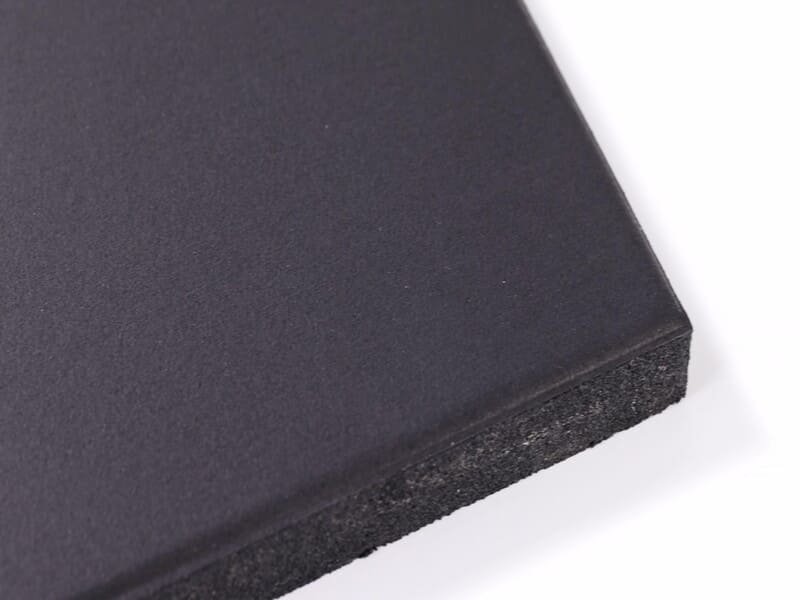
Physical wear is bad, but environmental factors can be even more destructive over time.
4. How do environmental factors cause "silent" degradation?
Environmental factors like oxidation, UV light, and humidity cause chemical breakdown in the rubber binders. This leads to dry rot and brittleness, which turns a flexible acoustic mat into a crumbly material that can no longer dampen vibrations or support floor weight.
The Impact of Temperature and Moisture
I have seen mats installed in damp basements that literally fell apart in three years. This is usually due to hydrolysis. This happens when water breaks the chemical bonds in the glue that holds the recycled rubber together. Temperature also plays a huge role in how the mat behaves.
| Environmental Factor | Physical Change | Acoustic Result |
|---|---|---|
| High Heat | Softens polymer and speeds up aging | Loss of structural support |
| Extreme Cold | Increases stiffness and brittleness | Reduced vibration absorption |
| Высокая влажность | Promotes mold and binder breakdown | Material disintegration |
Oxidation is another big issue. Even if the mat is under a floor, air can still reach it. Over time, the oxygen makes the rubber "crispy." If you bend a piece of old rubber and it cracks, it has oxidized. A brittle mat cannot absorb the energy of a footstep. It just shatters on a microscopic level. That is why we add anti-oxidants to our high-end acoustic mats. We want to make sure the air doesn’t steal the performance of the mat while it sits under your tile or wood.

Chemicals from outside the mat can also cause serious damage that you might not expect.
5. Why do chemicals and adhesives ruin acoustic mats?
Chemical degradation happens when plasticizers leach out of the rubber or when incompatible adhesives dissolve the mat’s structure. These chemical reactions turn the rubber into either a hard, brittle board or a soft, gooey mess, both of which destroy acoustic damping.
The Danger of Plasticizer Migration and Oils
One of the most common failures I see involves "The Hidden Killer"—bad glue. Many contractors use cheap, solvent-based adhesives to save money. These solvents can act like a slow-motion acid on rubber. They eat the bonds that give the mat its elasticity.
| Химический агент | Источник | Reaction with Rubber |
|---|---|---|
| Растворители | Incompatible Adhesives | Dissolves binders and softens mat |
| Petroleum / Oils | Garage spills or leaks | Causes swelling and loss of strength |
| Cleaning Agents | Harsh floor chemicals | Leads to surface cracking and leaching |
I once consulted on a workshop floor where the mats were swelling and curling at the edges. It turned out that small amounts of motor oil were leaking through the seams. The rubber was absorbing the oil like a sponge. This caused the mat to lose all its acoustic value. Also, plasticizer migration is a real threat. Plasticizers are what make the rubber flexible. In cheap mats, these chemicals leave the rubber and soak into the subfloor. The result is a mat that is too stiff to block sound. Always check the chemical compatibility of your glue and your mat before you start the job.
Even if the mat and chemistry are perfect, a bad installation can ruin everything.
6. Which installation flaws accelerate mat degradation?
Installation flaws like poor subfloor leveling and over-compression create "stress points" that tear the rubber. Furthermore, failing to seal seams creates "flanking paths" where sound leaks through gaps, making the mat appear as though it has degraded when it was never functional.
Common Errors in the Field
In my years on job sites, I have found that a soundproofing system is only as strong as its weakest point. If you have a small gap in your mat, the sound will find it. It is like a hole in a bucket of water. We call these "flanking paths," and they are the reason many people think their mats have "worn out."
| Installation Flaw | Acoustic Consequence | Long-term Damage |
|---|---|---|
| Неровный пол | Localized high-pressure spots | Tearing and thinning of the mat |
| Mechanical Bridging | Screws going through the mat | Permanent sound bypass |
| Poor Seam Sealing | Gaps between mat rolls | Direct noise transmission leaks |
One big mistake is over-compression. I see installers put heavy equipment directly on a thin mat without a load spreader. This crushes the mat instantly. Also, using screws that go through the mat into the wood subfloor creates a "sound bridge." The vibration travels down the screw, bypassing the rubber entirely. This is not the mat’s fault, but it looks like the mat failed. You must ensure the mat is a continuous, un-interrupted layer. If you break the layer, you break the silence.
If you are worried about your current setup, there are ways to tell if the mat is dying.
7. How can you spot the signs of acoustic degradation?
You can spot degradation through auditory cues like louder thumping noises or physical cues like thinning mats in high-traffic areas. A simple "bounce test"—pressing into the mat to see if it resists and recovers—is the best way to check if the rubber still has its elastic memory.
Listening and Looking for Failure
I tell my clients to use their ears first. If you start hearing high-frequency "clicks" from footsteps that you never heard before, the mat is likely thinning or hardening. This means the material is no longer filtering the sharp sounds.
- The Thud Test: Does a dropped object sound "hollow" or "solid"?
- Визуальный осмотр: Look at the transitions between rooms. Is the floor lower there?
- Фактор пыли: If you see black rubber dust near the baseboards, the mat is disintegrating.
I often perform a "bounce test" on-site. I take a sample of the mat and compress it with a heavy clamp for an hour. If it doesn’t return to 95% of its height in one minute, I know the batch is failing. If you are a homeowner, you can just feel the floor. If the "give" is gone and the floor feels like concrete, your acoustic layer has likely bottomed out. Once it reaches this stage, there is no way to fix it without replacing the material.
Maintenance is the only way to avoid these problems and save money in the long run.
8. How do you maximize the longevity of an acoustic mat?
To maximize longevity, you must choose the correct Shore Hardness for the expected load and use a vapor barrier to prevent moisture damage. Using load spreaders or coasters under heavy furniture also prevents the rubber from reaching a permanent compression set.
Best Practices for Maintenance
As a technical director, I focus on "Design for Durability." You should never buy the cheapest mat if you plan to stay in a building for ten years. You need to look at the specifications. If you have a heavy piano, you need a high-density mat in that specific area.
| Стратегия профилактики | Выгода | Почему это работает |
|---|---|---|
| Shore Hardness Match | Prevents bottoming out | Balances load vs. deflection |
| Пароизоляция | Stops hydrolysis | Keeps moisture away from binders |
| Load Spreaders | Distributes weight | Reduces psi on the rubber surface |
I always recommend a high-quality polyurethane-based adhesive because it stays flexible. Also, don’t forget the vapor barrier. Even a simple plastic sheet can save a rubber mat from the alkaline moisture in a concrete slab. If you treat the mat as a sensitive engineering component rather than just "trash rubber," it will last two or three times longer. Prevention is much cheaper than tearing up a hardwood floor to fix a noise problem.
Sometimes, even with the best care, you have to decide if it is time for a change.
Заключение
Rubber mats degrade due to compression and aging, but the right density and installation can stop this.
If you are facing noise issues or need a customized soundproofing solution that won’t degrade, please send me a private message to discuss your project requirements!