


Jawaban Cepat:
Rubber flooring typically becomes sticky due to Plasticizer Migration (oils leaching from low-quality rubber), Binder Hydrolysis (moisture breaking down the glue in recycled mats), or Chemical Damage from using oil-based cleaners.How to tell the difference: If you scratch the floor and sticky gunk comes off, it’s likely residue you can clean. If the rubber itself feels soft like melting tar, the material is degrading chemically and likely needs replacement.
The sticky feeling on your rubber floor is typically caused by one of three things: chemical residue from wrong cleaning products, "plasticizer migration" in low-quality rubber, or the breakdown of the binding agent due to humidity. While residue can be cleaned, material breakdown often signals the end of the floor’s lifespan.
As a flooring engineer, I have walked into countless gyms where every step sounds like peeling tape. It is frustrating and dangerous for athletes. To understand this, we must look at the chemistry. Sticky rubber is rarely just "dirty" in the traditional sense. Often, it is a sign of depolymerization or chemical incompatibility.
If you are using cheap, recycled crumb rubber, the polyurethane glue holding the crumbs together can react with moisture (hydrolysis) and revert to a liquid, sticky state. Alternatively, in low-quality molded rubber, manufacturers overload the mix with oily plasticizers to make the material feel soft. Over time, these oils separate from the rubber matrix and bloom to the surface. This is a manufacturing defect, not a maintenance failure. Conversely, if you have used an oil-based cleaner (like pine soap), you may have chemically dissolved the top layer of the floor. Understanding the root cause is the only way to determine if you can save your floor or if it is time to replace it.
Now that we have identified that stickiness is a chemical issue, let’s break down the specific culprits in detail so you can identify which one is attacking your facility.
The Science: Why Does Rubber Get Sticky? (The 3 Main Culprits)
Rubber becomes sticky mainly due to plasticizer migration (oils rising to the surface), binder hydrolysis (glue breaking down from moisture), or chemical attacks from improper cleaning agents. Identifying the specific cause is crucial because while cleaning errors are reversible, structural breakdown in cheap rubber is permanent.
Let’s analyze the three distinct chemical processes that turn a solid floor into a sticky mess.
1. Plasticizer Migration (The "Cheap Rubber" Problem)
In budget rubber manufacturing, we see factories adding excessive oil-based fillers to cut costs and artificially soften the rubber. Physics dictates that these oils must go somewhere. Eventually, they migrate to the surface, creating a perpetually tacky film that attracts dust. No amount of mopping will fix this because the oil is coming from di dalam the mat.
2. Binder Breakdown (Hydrolysis)
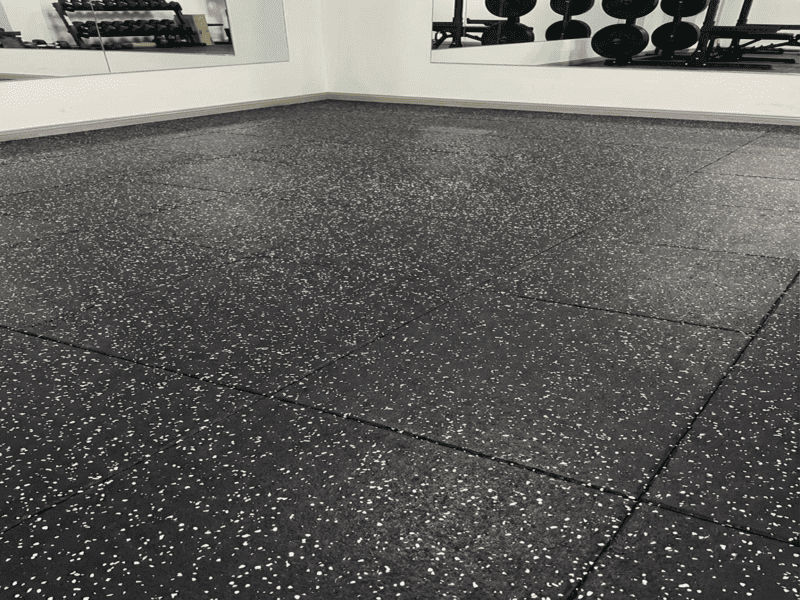
This is specific to "crumb rubber" (black mats with color specks). These mats are essentially shredded tires glued together. If the binder (glue) is low-grade, high humidity or water trapped underneath will cause the glue to break down chemically. The solid glue turns back into a viscous liquid, seeping up between the crumbs.
3. Chemical Reaction (User Error)
Rubber is sensitive to solvents. Using oil-soaps (like Murphy’s Oil Soap) or harsh degreasers dissolves the surface polymers. You are essentially melting the top microscopic layer of your flooring.
| Karena | Mechanism | Reversible? |
|---|---|---|
| Plasticizer Migration | Oils inside the rubber rise to the surface. | Tidak. |
| Binder Hydrolysis | Moisture turns the glue binder back into liquid. | Tidak. |
| Chemical Attack | Wrong cleaners dissolve the surface layer. | Sometimes |
So, low-quality materials and wrong cleaners cause stickiness. But this raises the question: why do some gyms have floors that stay dry and grippy for twenty years?
The Quality Factor: Why High-End Rubber DOESN’T Get Sticky
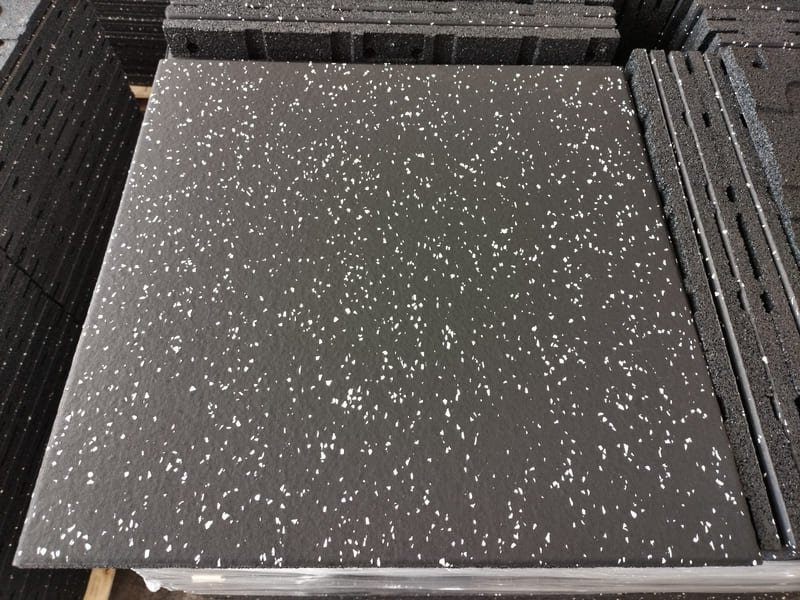
High-quality rubber avoids stickiness through vulcanization, a process using heat and pressure to bond materials at a molecular level, rather than relying on glues that degrade. Premium flooring uses high-density virgin rubber or EPDM, which has a closed-pore structure that prevents oil migration and moisture absorption.
In my years of R&D, the biggest differentiator I have seen is the curing process. Cheap flooring is often just compressed and glued. High-end flooring, like the products we engineer, undergoes vulkanisasi. We use immense heat and pressure to cross-link the polymer chains. This creates a single, homogenized sheet of material. It is not bits of rubber held together by hope and glue; it is one solid molecular structure.
Because of this, vulcanized rubber does not rely on liquid binders that can revert to a sticky state. Furthermore, high-quality manufacturing utilizes "Virgin Rubber" or premium EPDM rather than mystery recycled compounds. We control the formulation strictly, ensuring UV stabilizers and antioxidants are present to stop surface degradation. High-density rubber also has a "closed-cell" surface. It is non-porous. This means internal oils stay trapped (if they exist at all), and external contaminants sit on top where they can be easily wiped away. A floor built to this standard is an investment that remains stable for over a decade, unlike cheaper alternatives that fail within two years.
You now know the difference between good and bad manufacturing. But right now, you are standing on a sticky floor. Let’s figure out if it is just dirty or if it is destroyed.
Troubleshooting: Is It Dirty or Is It Dead? (Diagnostic Test)
To diagnose your floor, perform the "Scratch Test" and the "Deep Clean Test." If scratching yields removable gunk, it is likely cleaning residue; if the rubber itself feels like melting tar, it is degrading. A clean spot that becomes sticky again within 24 hours confirms material failure.
Before you panic, you need to run a field diagnosis. I use these two tests whenever a client complains about a tacky floor.
Test 1: The Scratch Test
Find a sticky spot. Take your fingernail or a coin and scrape it firmly.
- Hasil A: If you scrape up a roll of dark gray/black "gunk" that you can flick away, and the rubber underneath feels firm, you have a residue buildup. This is good news. It means you just need to strip the floor.
- Hasil B: If the rubber itself feels soft, like chewing gum on a hot sidewalk, or if your fingernail sinks in and leaves a permanent gouge without removing separate "gunk," the rubber is depolymerizing. It is dead.
Test 2: The Deep Clean Test
Clean a one-foot square section with a heavy-duty, pH-neutral degreaser and a scrub brush. Rinse it thoroughly. Wait 24 hours.
- If it stays dry: You solved it. It was dirt.
- If it "sweats" and becomes sticky again overnight: The material is breaking down from the inside out.
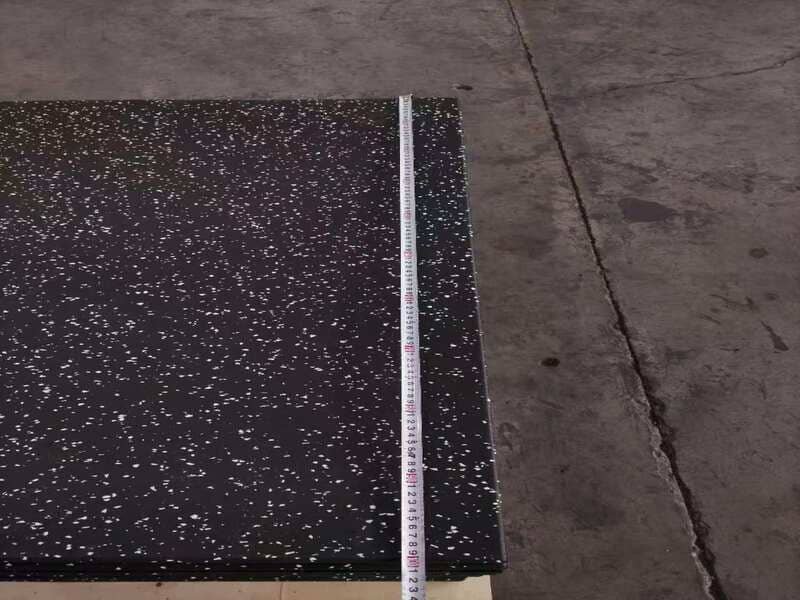
Once you have your diagnosis, you need a plan of action. Here is how to handle both scenarios, from deep cleaning to the hard truth about replacement.
How to Fix Sticky Rubber Flooring
If the issue is residue, strip the floor using a non-acidic heavy-duty degreaser, hot water, and an auto-scrubber, ensuring you rinse away all soap. If the rubber is degrading, you cannot reverse the chemical breakdown; you must seal it temporarily with a PU coating or replace the flooring entirely.
If your diagnostic test showed residue, you have a fighting chance. You need to strip the buildup. Do not use a mop; mops just spread the sticky paste around.
- Apply Solution: Use a high-quality, pH-neutral degreaser mixed with hot water. Let it dwell for 5-10 minutes to break down the oils.
- Agitate: You need mechanical agitation. Use an auto-scrubber with a red pad or a stiff deck brush. You are trying to lift the biofilm off the rubber pores.
- Extraction: This is critical. Vacuum up the dirty water with a wet-vac. If you let it dry, the stickiness returns.
If your floor is degrading (melting):
I have to be honest with you: you cannot reverse chemistry. Once the sulfur bonds break or the plasticizer migrates, you cannot push it back in.
- The Band-Aid: You can apply a specific Polyurethane (PU) sealer. This paints a hard shell over the sticky rubber. It is expensive and usually only lasts 6-12 months, but it buys you time.
- The Fix: You need to replace the flooring. This time, choose vulcanized, non-porous rubber to ensure you never face this cost again.
Cleaning is hard work, and replacement is expensive. The best strategy is to ensure this never happens again through smart buying and proper maintenance.
Prevention & Maintenance: Never Deal with "Sticky" Again
Prevent sticky floors by purchasing vulcanized, high-density rubber with low odor, which indicates fewer volatile chemicals and higher stability. Maintain the floor by exclusively using pH-neutral cleaners, avoiding oil-based mops or waxes, and controlling facility humidity to prevent binder breakdown in older or lower-quality mats.
As an engineer, I advise you to look at the "Tech Specs" sheet before you buy any flooring. Do not just look at the price tag.
- The Sniff Test: When you get a sample, smell it. A strong, chemical, sour, or oily smell indicates high VOCs and cheap solvents. These are the floors that get sticky. High-quality rubber smells faintly like a new car tire, or has no smell at all.
- Ask for "Vulcanized": Explicitly ask the supplier if the product is vulcanized or bonded. Vulcanized rubber is dense and impermeable.
- Maintenance Protocol: Throw away the "mop and glo" products. Never use wax. Never use harsh solvents. Stick to a neutral pH cleaner designed for rubber. Also, keep your humidity under control. Excess moisture is the enemy of the glues used in cheaper flooring.
| Feature to Check | Good Sign (Quality) | Bad Sign (Potential Sticky Issue) |
|---|---|---|
| Bau | Neutral / Faint Rubber | Strong Chemical / Oily / Sour |
| Struktur | Homogeneous / Solid | Visible Crumbs / Porous |
| Spesifikasi | Vulcanized / Virgin Rubber | Recycled Tire / Bonded Urethane |
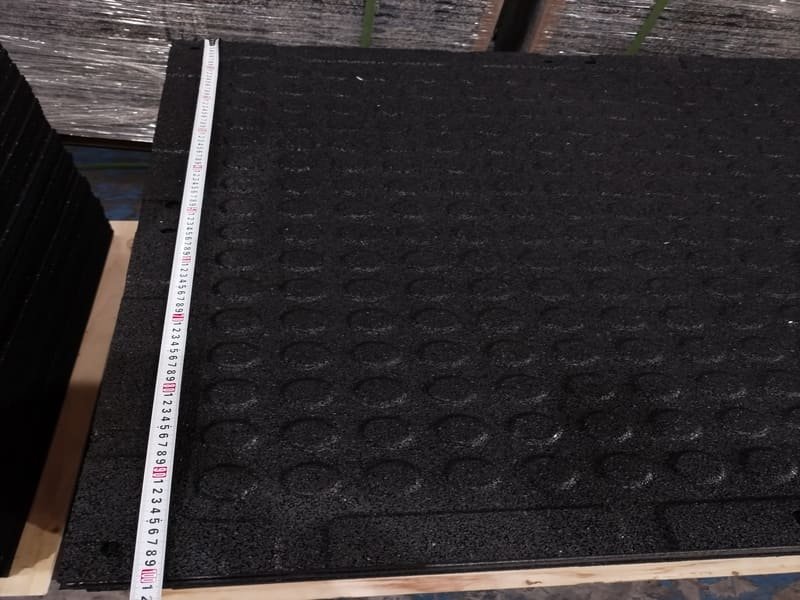
We have covered the chemistry, the cleaning, and the prevention. Now, let’s wrap this up so you can make the right decision for your facility.
Kesimpulan
Sticky flooring is usually a symptom of degradation in low-quality materials or improper care. Investing in professional-grade, vulcanized rubber eliminates these risks, saving you money and maintenance headaches in the long run.
Ajakan untuk Bertindak
If you are unsure if your current flooring can be saved, or if you want to compare a sample of our vulcanized rubber against what you have now, feel free to reach out. My team can help you check your specs or send you a free density kit to feel the difference yourself.