


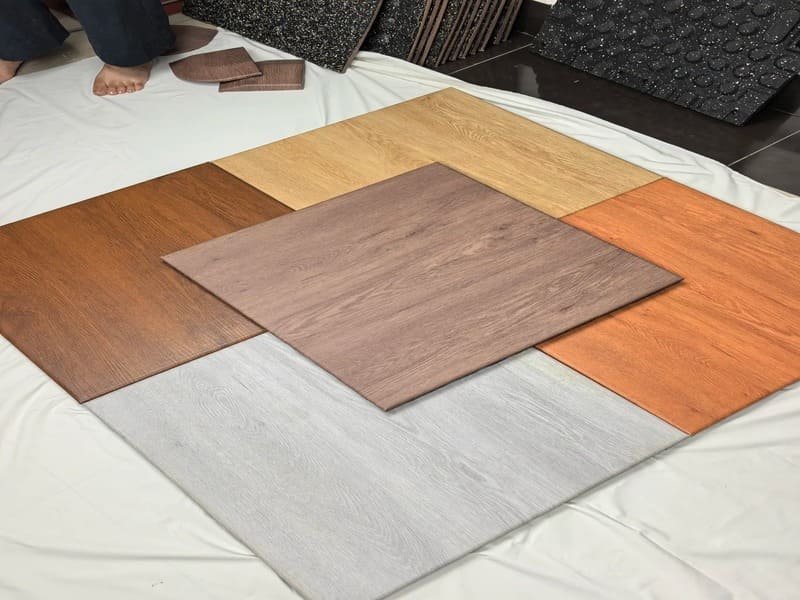
To choose the ideal rubber flooring thickness, you must match the specific impact energy of each zone with a corresponding density; generally, use 20mm-25mm for heavy lifting, 8mm-10mm for functional training, and 6mm for cardio areas to ensure full subfloor protection and maximum ROI.
As a production process engineer, I see too many studio owners overpay for thickness while ignoring density—a mistake that leads to "spongy" floors and cracked subfloors. From the vulcanization press to the gym floor, the real goal is energy management. If your floor is too thin, you risk structural damage; if it is unnecessarily thick, you waste capital that could be spent on equipment. We use the Impact Mitigation Formula: $\text{Protection} = \text{Thickness} \times \text{Density}$. This guide provides the engineering logic and commercial data you need to make an informed purchase, ensuring your studio is safe, quiet, and cost-effective from day one.
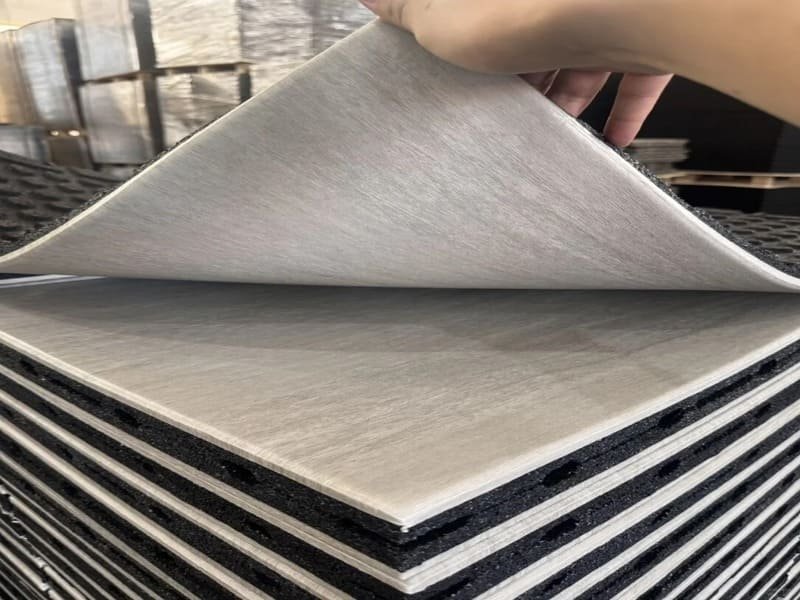
The following blueprint translates complex material science into a practical purchasing strategy for your facility.
Which thickness is the best fit for your specific gym type?
The best thickness depends on your business model; a home gym needs versatility at 10mm, while a professional CrossFit box requires 20mm+ in drop zones to handle high-velocity impacts and protect the property investment.
| Jenis Gym | Best Thickness | Primary Reason | Performance Priority |
|---|---|---|---|
| Boutique PT Studio | 8mm - 10mm | Acoustic dampening & Sleek look | Noise Control |
| CrossFit / Kotak | 20mm - 25mm | Heavy barbell drops (20kg+) | Perlindungan Lantai Bawah |
| Rumah Gym | 10mm | Balanced cost and protection | Keserbagunaan |
| Commercial Cardio | 6mm | Static load support | Resistensi Lekukan |
In my experience on the production floor, we adjust the Shore A hardness based on these use cases. For a Boutique Studio, we prioritize a seamless, high-density 8mm roll ($1,050\text{ kg/m}^3$) because the main risk is foot traffic and light kettlebell use. However, for a CrossFit Box, the "Point-load shock" is extreme. A 20mm tile is the only way to dissipate the kinetic energy of a 100kg deadlift. I have seen owners try to save 30% by using 10mm everywhere; they ended up spending that "saving" twice over on concrete repairs within six months. This "Quick Selector" helps you avoid that trap by matching the engineering spec to the actual physical demands of your clients.
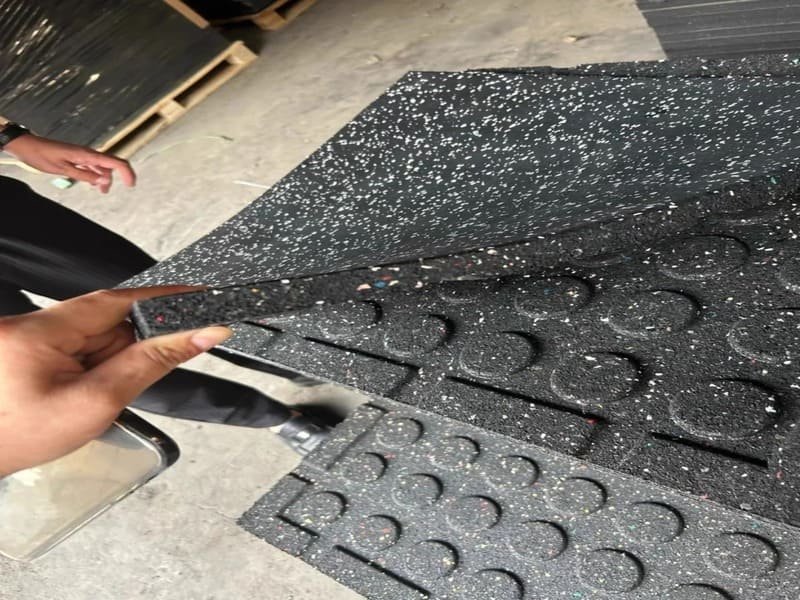
Understanding your gym type is the start, but true optimization requires a zone-by-zone budget allocation.
How to distribute your flooring budget effectively across different zones?
Smart budgeting follows a "High-Low" strategy: invest in 20mm-25mm premium tiles for the 20% of your space where weights are dropped, and use cost-effective 6mm-8mm rolls for the remaining 80% of cardio and traffic areas.
The Recommended Setup (3,000 sq.ft Example)
| Zona | Spesifikasi Bahan | % of Floor Space | ROI / Lifespan |
|---|---|---|---|
| Heavy Drop Zone | 20mm Composite Tile | 20% | 10+ Years (Replaceable) |
| Area Fungsional | 10mm High-Density Roll | 50% | 8-10 Years (Durable) |
| Cardio / Walkway | 6mm Standard Roll | 30% | 5-7 Years (Cost-Effective) |
From a manufacturing standpoint, "Over-specifying" is as bad as "Under-specifying." You do not need a 20mm tile under a treadmill; it is a waste of raw material and money. A 6mm high-density roll is actually superior for machines because it reduces "machine sway" and resists permanent indentations better than softer, thicker tiles. In a recent 3,000 sq.ft project, we helped a client save \$4,000 by down-specifying their cardio zone from 15mm to 6mm, allowing them to upgrade their lifting zone to 25mm premium shock-absorbing tiles. This "Mixed-Media" approach ensures your budget is spent where the impact is highest, extending the total life of your facility’s floor system.
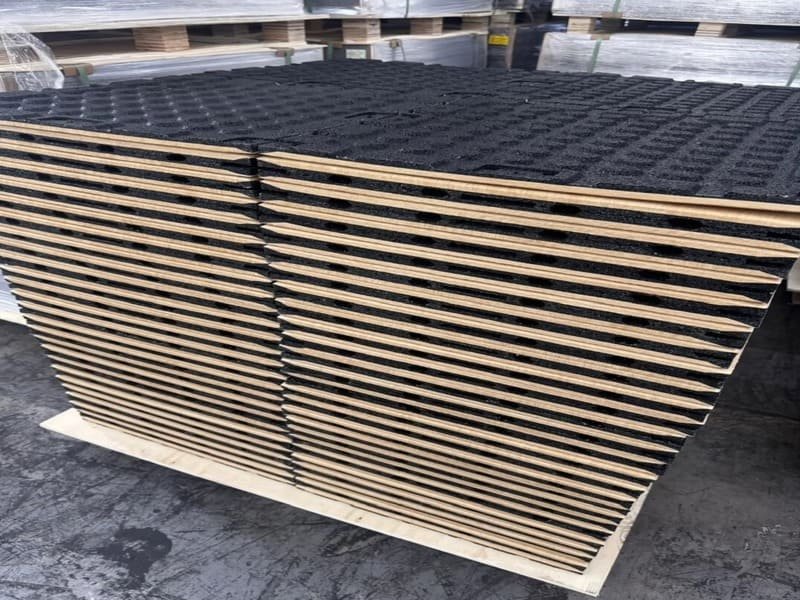
A strategic budget protects your wallet, but the technical specs protect your reputation and your neighbors.
Why is the ROI of high-density flooring higher than "cheap" thick rubber?
High-density flooring ($1,000\text{ kg/m}^3+$) has a lower Total Cost of Ownership (TCO) because it resists "shedding" and compression fatigue, lasting 3x longer than low-density alternative products.
Technical ROI Comparison
| Metrik | High-Density (Premium) | Low-Density (Budget) | The "Why" (Engineering) |
|---|---|---|---|
| Ketebalan | 10mm | 15mm | Density > Sheer Volume |
| Umur yang diharapkan | 10 Years | 2-3 Years | Tensile strength prevents tearing |
| Akustik | Excellent (ΔLw 25dB) | Poor (Hollow sound) | Mass blocks vibration |
| Pemeliharaan | Easy (Non-porous) | Hard (Traps dirt) | Vulcanization pressure level |
Many buyers focus on the "Price per sq.ft" today, but they forget the "Price per year." Cheap, low-density rubber is often made with inferior TDI binders and large crumbs. These floors start "shedding" (creating black dust) within 12 months. As an engineer, I focus on the MDI-binding process. MDI creates a stronger, moisture-resistant bond. This means the floor is non-porous, so sweat and cleaning chemicals don’t break it down. Over 10 years, a high-density 10mm floor costs 40% less than a "cheap" 15mm floor that needs to be replaced twice. Always ask for the density spec ($kg/m^3$) and the tensile strength ($MPa$) before looking at the price tag.
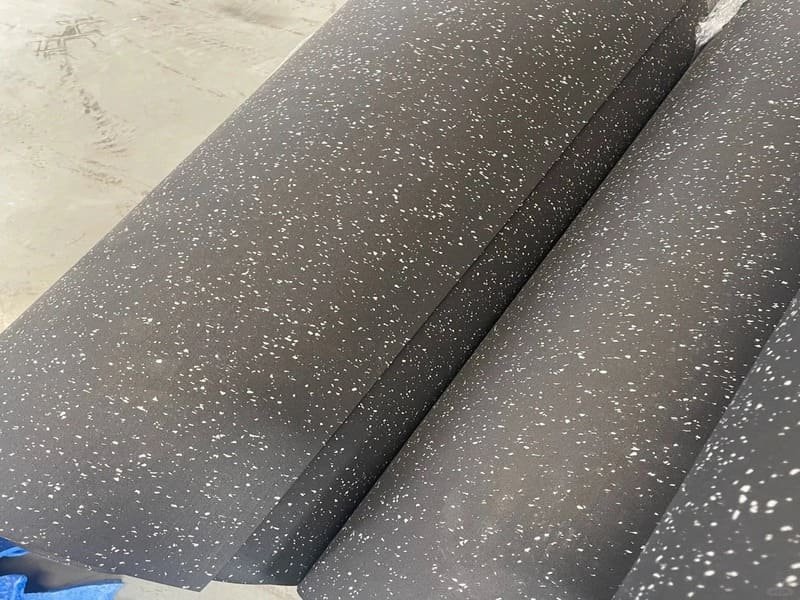
Format choice is the final step in ensuring your investment remains easy to manage and maintain.
What are the "Do’s and Don’ts" of choosing between tiles and rolls?
Do use interlocking tiles for heavy weight areas to allow for easy localized replacement; Don’t use tiles for large functional areas where sweat and dirt can accumulate in the numerous seams.
The Best Setup Recommendation
- Lakukan: Glue down rubber rolls in your HIIT and functional zones. This creates a monolithic, hygienic surface that won’t shift during lateral movements like mountain climbers or sled pushes.
- Jangan: Use thin rolls (under 6mm) for heavy deadlift areas. Even with high density, the "energy path" is too short to protect the concrete.
- Lakukan: Choose 20mm+ tiles for "Free Weight Islands." If a tile is damaged by a sharp edge, you can replace it in minutes without professional help.
- Jangan: Ignore VOC ratings. A "cheap" thick floor that smells like a tire factory will drive away members and create health liabilities.
I have seen many "DIY" installs fail because the owner chose rolls for a deadlift area. When the rubber eventually cut under a heavy drop, they had to cut out a whole section of the roll, leaving an ugly patch. For impact zones, modular is king. For everything else, seamless is superior. This simple rule of thumb will save you hours of maintenance labor and keep your studio looking brand new.
Peran Saya
I am a Production Process Engineer with over a decade of experience in rubber vulcanization and floor system design. I help gym owners and architects move beyond "standard specs" to create high-performance facilities.
Saran Saya
Your flooring is the foundation of your business, not an afterthought. Making the right choice now prevents the "catastrophic failure" of a cracked subfloor or the "reputation failure" of a smelly, noisy gym.
If you are ready to move from guesswork to an engineered solution, my team is here to help. We can provide a Custom Zone-Mapping Spec Sheet for your project or send a High-Density Sample Kit so you can test the material yourself.