


Jawabannya adalah TPV. While EPDM has been the standard for decades, TPV (Thermoplastic Vulcanizate) offers superior UV stability, chemical safety, and long-term elasticity. For kindergartens where safety and longevity are paramount, TPV’s advanced polymer technology provides a better return on investment despite a higher initial cost.
As a Quality Control Engineer, I view playground flooring not as a decoration, but as a critical safety system. Choosing between materials can be confusing because they look similar in photos. EPDM (Ethylene Propylene Diene Monomer) is the traditional choice, known for being budget-friendly. However, TPV is the rising contender, engineered to solve the failures we often see in aged EPDM surfaces. The goal of this article is to dissect these materials through a technical lens—analyzing safety, durability, and cost—to help facility managers make an investment that won’t require expensive repairs in two years.
What is EPDM Flooring?
EPDM is a synthetic rubber composed of ethylene, propylene, and a diene monomer. It has been the go-to material for playgrounds due to its low cost and wide availability. While initially elastic, standard sulfur-cured EPDM has inherent weaknesses when exposed to harsh outdoor elements.
EPDM granules are essentially thermoset rubber. In the factory, we cure them (usually with sulfur) to give them shape and bounce. The key advantage here is cost—it is cheap to manufacture and easy to source globally. However, sulfur curing often leaves a residual smell and can cause the granules to yellow or “amber” when mixed with polyurethane binders. More critically, lower-grade EPDM has a tendency to continue cross-linking under heat, which means it hardens over time, losing the shock absorption properties (HIC value) necessary to protect a falling child.
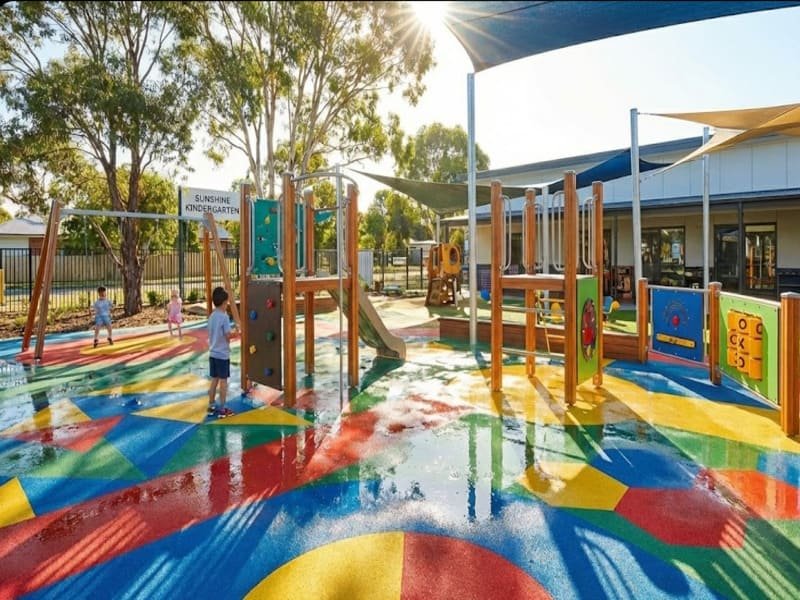
What is TPV Flooring?
TPV is a high-performance polymer alloy that combines the processing properties of plastic with the durability of rubber. Manufactured using dynamic vulcanization, it offers superior consistency. TPV is designed specifically to resist UV radiation and chemical degradation, making it the premium choice for outdoor safety surfaces.
TPV is produced using dynamic vulcanization to fully cure the rubber phase within a thermoplastic matrix. This eliminates the need for sulfur or peroxide curing, resulting in a much cleaner chemical profile. TPV is made from virgin polymers, not recycled scraps, ensuring consistent UV stabilizers and antioxidants. This recyclability and lack of heavy metals make it an eco-friendlier option for modern, green-certified school projects.
Head-to-Head Comparison: The Decision Matrix
To give you a quick answer before the deep dive, here is the Golden Table comparing the two materials side-by-side:
| Fitur | EPDM (Standard) | TPV (Virgin) | Pemenang |
|---|---|---|---|
| Safety (PAHs) | Risk of PAHs (if recycled) | Virgin material, PAH-free | ⭐ TPV |
| Bau | Sulfur odor (strong) | Almost odorless | ⭐ TPV |
| Tahan UV | Fades in 1–2 years | Vibrant for 5–8+ years | ⭐ TPV |
| Daya tahan | Hardens over time | Retains elasticity long-term | ⭐ TPV |
| Price (Material) | Cheap ($6–12/m²) | Premium ($10–18/m²) | ⭐ EPDM |
| Umur | 3–5 years | 8–10+ years | ⭐ TPV |
| Best for Kids? | Acceptable (Indoor) | Best Choice (Outdoor) | ⭐ TPV |
A. Safety & Toxicity (The #1 Concern)
Safety goes beyond preventing falls; it includes chemical exposure. Virgin TPV is generally safer than EPDM because it lacks the polycyclic aromatic hydrocarbons (PAHs) often found in recycled rubber. TPV’s cleaner manufacturing process also eliminates the strong sulfur odors associated with traditional rubber flooring.
Cheap, black recycled EPDM often used as a base or filler can contain hazardous PAHs. Even colored EPDM, if sourced from unreliable suppliers, can vary wildly in toxicity. TPV is manufactured from virgin feedstock, making it easier to certify against strict standards like EN 71-3 (Toy Safety Standard). The “new playground smell” that parents complain about is usually sulfur off-gassing from EPDM. TPV is virtually odorless, which is a significant advantage for indoor or semi-enclosed play areas.
B. UV Resistance & Color Fastness
EPDM is prone to “chalking” and fading within 1–2 years due to UV attack. TPV is engineered with high-grade UV stabilizers, ensuring colors remain vibrant and distinct for 5–8+ years.
Field Report:
- EPDM in Dubai → Chalked after 3 years
- TPV in Singapore international school → Still vibrant after 8 years
C. Durability & Aging (ROI Calculation)
Durability dictates value. TPV resists hardening and abrasion better than EPDM, retaining its Critical Fall Height (CFH) protection ratings for longer. EPDM may become brittle and crack, while TPV maintains elasticity.
Hardening reduces safety. EPDM can harden by 30% within three years. TPV’s polymer structure remains stable across temperature changes. TPV also performs better in high-wear zones under swings and slides.
D. Cost Analysis (Short-term vs. Long-term)
Initial Cost (Material only):
- EPDM: USD 6–12/m²
- TPV: USD 10–18/m²
Total Cost of Ownership (TCO):
- EPDM → re-top every 3–5 years
- TPV → lasts 8–10+ years
TPV saves money long-term due to fewer repairs and better aging stability.
Installation & Workability
TPV offers superior adhesion to PU binders, resulting in fewer loose granules and smoother finishes.
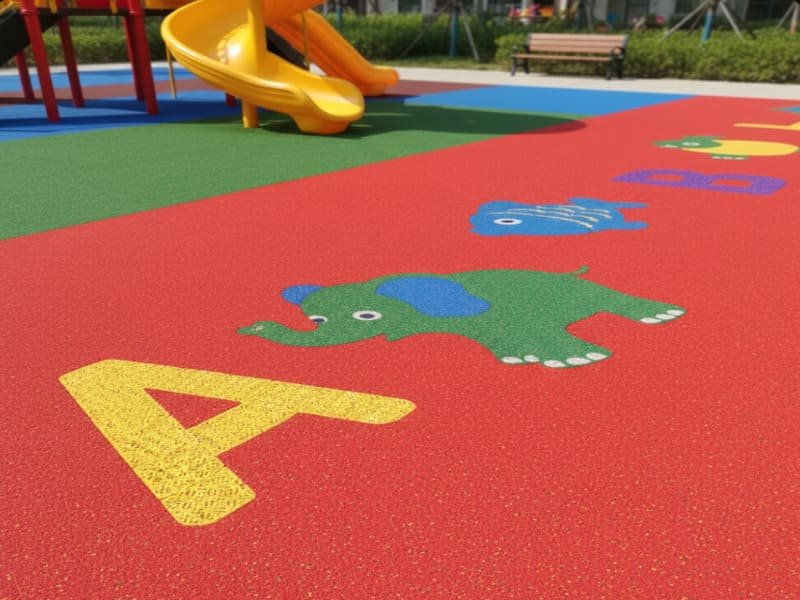
TPV granules are cleaner, less dusty, and more uniform. This ensures better wetting and a stronger bond. EPDM (especially low-grade) may contain dust or oil, which interferes with binder curing.
User Scenarios: Which Should You Choose?
Golden Rule
- Outdoor + Kids → Choose TPV
- Indoor + Low Budget → EPDM is acceptable
Scenario A: Indoor + Budget-limited → EPDM ok
Scenario B: Outdoor premium school → TPV required
Scenario C: Eco-certified projects → TPV only (recyclable, non-toxic)
PERTANYAAN YANG SERING DIAJUKAN
Is TPV flooring safe for toddlers?
Yes. Virgin TPV is free from heavy metals and PAHs.
Why does my EPDM playground look white/chalky?
UV breakdown → “Blooming”.
Can TPV be installed over concrete?
Yes, if clean, dry, and properly primed.
Price difference?
TPV: $10–18/m², EPDM: $6–12/m²
Kesimpulan
TPV wins on:
- Keamanan
- Umur panjang
- Estetika
EPDM wins only on initial price.
For kindergartens—where safety is non-negotiable—TPV is the smarter long-term investment.
Ready to see the difference for yourself?
Request a free comparison kit or schedule a technical consultation with our engineering team.