


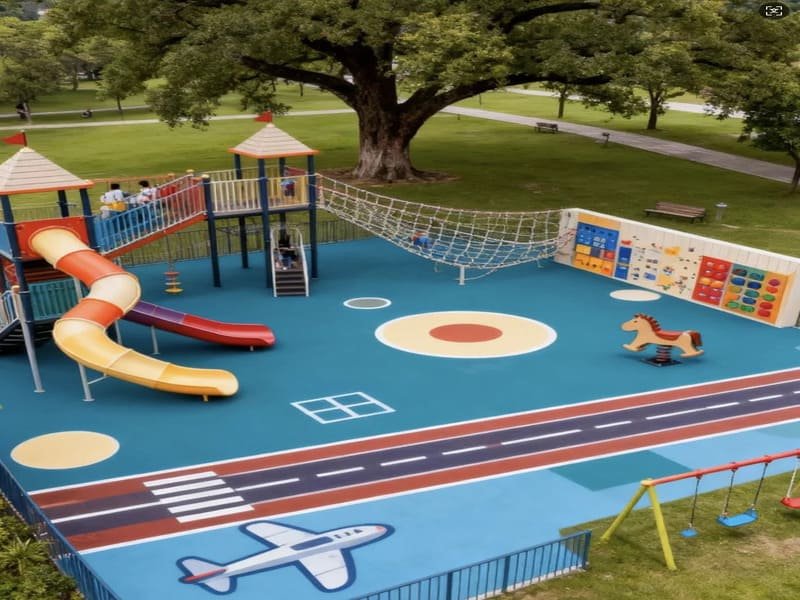
Yes, EPDM flooring offers exceptional resistance to both UV radiation and heavy rain. Its stable chemical structure prevents cracking under the sun, while its porous design allows water to drain instantly, preventing dangerous puddles.

The Science Behind Outdoor Durability
As an engineer who has spent years testing materials in climate chambers and observing them on real playgrounds, I often see people hesitate to use rubber outdoors. They worry it will crumble like an old tire. However, high-quality EPDM (Ethylene Propylene Diene Monomer) is fundamentally different.
The secret lies in its molecular backbone. Unlike natural rubber, EPDM has a fully "saturated" polymer chain. In simple terms, this means there are no weak links for UV rays or ozone to attack. When we run accelerated weathering tests in the lab—simulating years of harsh sunlight—standard rubber becomes brittle and cracks, but EPDM retains its flexibility. This intrinsic stability makes it the gold standard for outdoor surfaces, from school tracks in scorching Dubai to walkways in rainy London. It is not just about surviving the weather; it is about maintaining performance reliability year after year.
Now that we understand the material’s core chemistry, let us look at the specific challenge that worries most facility managers: the sun.
Will My Floor Fade or Crack Under Intense Sun?
EPDM granules themselves are highly UV-stable and will not crack due to heat. However, the overall color stability depends heavily on the type of PU binder used during installation.

The Critical Role of Aliphatic vs. Aromatic Binders
While the EPDM rubber itself is tough, the "glue" that holds it together is where many projects fail. In my experience consulting on failed projects, 90% of "fading" complaints are actually due to the binder, not the rubber. There are two main types of Polyurethane (PU) binders we use: Aromatic and Aliphatic.
Aromatic binders are the industry standard for black rubber base layers because they are strong and affordable. However, when exposed to sunlight, they undergo a chemical reaction that causes "ambering"—turning the surface yellow. If you mix this with blue or grey EPDM, your beautiful floor will look green or dirty within months.
For a truly UV-resistant top layer, I always engineer specifications using Aliphatic binders. These are formulated with superior UV stabilizers that remain clear and colorless, ensuring the pigment of the EPDM shines through accurately for years.
| Fitur | Aromatic Binder | Aliphatic Binder |
|---|---|---|
| Stabilitas UV | Low (Yellows/Ambers) | High (Remains Clear) |
| Biaya | Economy | Premium |
| Penggunaan Terbaik | Base layers, Black EPDM | Colorful top layers, Logos |
| Chemical Basis | MDI based | HDI based (UV stable) |
| Est. Life | Structure lasts, color shifts | Color and structure last |
Choosing the right binder is the first step, but clients always ask for the bottom line: how long will it actually last?
Real-World Lifespan: What Can You Expect?
High-quality EPDM surfaces typically last 8–12 years outdoors, and up to 15 years when aliphatic binder is used for the top layer, even under intense UV exposure.
Having monitored installations across various climates, I can confidently provide these lifespan estimates, but they depend on the environment:
- Intense UV Regions (e.g., Dubai, Arizona): The material will not degrade structurally, but surface color may fade slightly faster without UV-stable binders. Expect 10-12 years of functional life.
- High Rainfall Regions (e.g., London, Seattle): Rain does not shorten the lifespan of EPDM. In fact, it helps keep the pores clean. The main risk here is moss growth if neglected, not material failure. Expect 12-15+ years.
The key takeaway is that EPDM does not "expire" suddenly; it wears down gradually over a decade, giving you excellent return on investment compared to materials that crack or rot.

How Does EPDM Handle Heavy Rain and Standing Water?
EPDM flooring is designed to be water-permeable, allowing rain to pass through the surface and into the ground. This eliminates puddles and significantly reduces slip hazards compared to concrete.
Engineering a Self-Draining System
One of the biggest advantages of a wet-pour EPDM system is that it is not a solid sheet; it is a matrix of granules. When we design the mixing ratio of granules to binder, we intentionally leave microscopic void spaces. This creates a permeable structure.
In my field tests, a properly installed EPDM surface can handle massive downpours without flooding. Instead of water sitting on top—creating a slipping hazard or a breeding ground for mosquitoes—it drains vertically through the rubber and follows the sub-base slope to the drainage outlets.
Furthermore, EPDM is inorganic synthetic rubber. Unlike wood chips or natural grass, it does not rot or decompose when wet. Mold can only grow on surface dirt, not on the rubber itself. The high coefficient of friction provides excellent grip even when wet, which is why we specify it for pool decks and splash pads. It transforms a rainy day from a safety risk into a manageable situation.

Does EPDM Perform Well in Freeze/Thaw Cycles?
Yes, EPDM remains flexible in freezing temperatures. Unlike rigid materials like asphalt, it expands and contracts without cracking during rapid temperature shifts.
Thermal Flexibility: The Engineer’s Perspective
A common failure mode for outdoor construction materials is the freeze/thaw cycle. Water enters a crack in concrete, freezes, expands, and breaks the material apart. EPDM behaves differently because it is an elastomer.
In our thermal cycling tests, we subject EPDM samples to -30°C and then rapidly heat them. Because the material has a low glass transition temperature, it stays flexible even in deep winter. When the ground below shifts due to frost heave, the EPDM layer stretches to accommodate that movement rather than snapping.
EPDM vs. Other Outdoor Materials: The Complete Comparison
To help you make the best engineering decision, here is how wet-pour EPDM stacks up against common alternatives like TPV, Tiles, and Artificial Grass.
I have compared these materials based on their chemical properties and field performance:
| Bahan | Tahan UV | Rain & Drainage | Estimated Lifespan | Pros & Cons |
|---|---|---|---|---|
| EPDM (Wet-Pour) | Excellent (with Aliphatic binder) | High (Permeable) | 10-15 Tahun | Seamless, custom designs, soft. Best overall value. |
| TPV Granules | Unggul | High (Permeable) | 12-15+ Years | Slightly better color retention than EPDM, but significantly more expensive. |
| Ubin Karet | Bagus. | Medium (Seams can trap water) | 5-10 Years | Easy DIY repair, but seams create trip hazards and curl over time. |
| Pre-colored SBR | Poor (Fades to black) | High (Permeable) | 5-8 Years | Cheapest option. Surface color wears off quickly to reveal black rubber. |
| PP Tiles (Plastic) | Medium (Can become brittle) | High (Drainage holes) | 5-8 Years | Hard surface, slippery when wet, noisy, uncomfortable to fall on. |
| Rumput Buatan | Bagus. | Medium (Porous backing) | 8-10 Years | Gets dangerously hot in summer, harder to clean, retains odors. |
Engineer’s Insight: While TPV is technically superior for color fastness, EPDM offers 95% of the performance at a much better price point, making it the industry favorite.

What Maintenance Is Required for Weather-Exposed EPDM?
Maintenance is minimal. Rain naturally cleans dust from the surface, but occasional pressure washing removes deep-seated dirt and prevents moss in shaded areas.
Practical Care for Long-Term Performance
I often tell clients, "EPDM is low maintenance, not no maintenance." While the material resists UV and rain, nature still drops debris. The most common issue I see is not the failure of the rubber, but the clogging of the drainage pores.
If leaves and dirt are allowed to mat down into the surface, they block the water flow we discussed earlier. Over time, this organic matter decays and creates a layer where moss can grow, especially in damp, shaded corners.
To keep the system functioning as engineered, I recommend a simple regimen. Use a leaf blower to keep the surface clear of dry debris. Once a year, use a pressure washer (fan tip, not pinpoint) to flush out fine sediment from the pores. This restores the permeability and grip. You do not need expensive waxes or sealants; the rubber’s chemistry is robust enough to stand alone.
Maintenance Checklist
- Mingguan: Remove leaves/twigs to prevent pore clogging.
- Seasonally: Inspect for moss in shaded areas; treat with mild detergent if needed.
- Annually: Power wash to restore drainage speed.
Kesimpulan
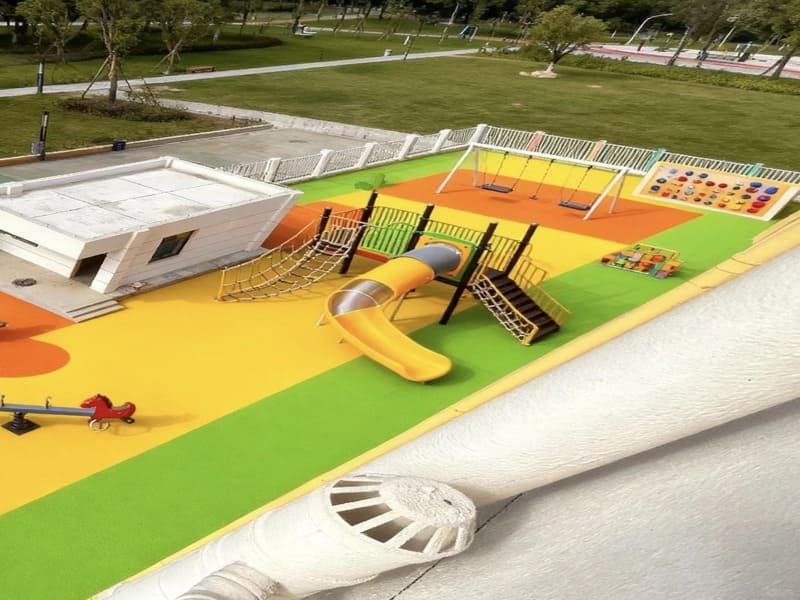
EPDM is chemically engineered to withstand UV degradation and heavy rainfall without cracking or fading, provided an Aliphatic binder is used. With a lifespan of 8-15 years, it outperforms concrete, tiles, and cheap SBR in safety and longevity.
Ready to see the quality difference?
Choosing the right specification—especially the binder—can be tricky. If you want to discuss your local climate challenges or examine the difference between binders yourself, contact our technical team today for a free consultation and sample kit.