


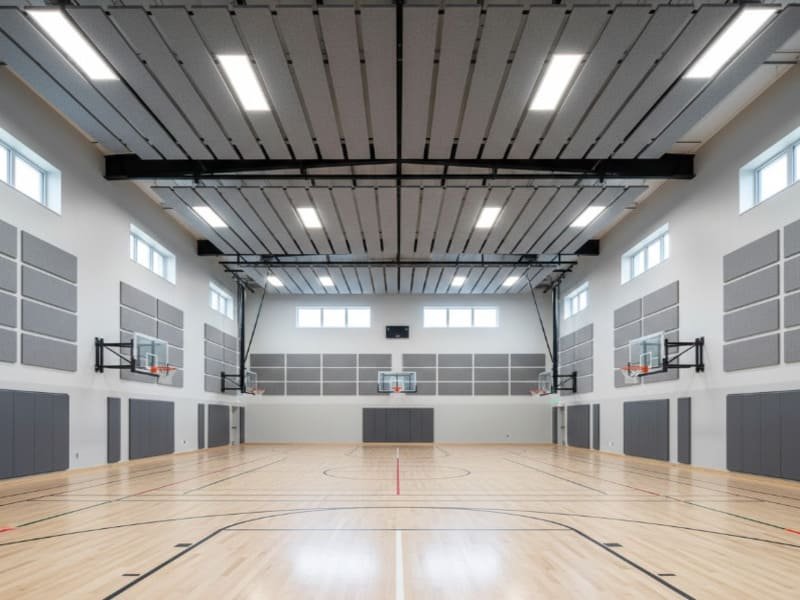
Untuk menguasai kedap suara di gedung olahraga, Anda harus mengontrol Waktu Gema (RT60). Anda melakukan ini dengan memasang bahan penyerap akustik yang tahan benturan pada dinding dan langit-langit. Secara khusus, Anda memerlukan panel yang diuji dengan standar DIN 18032-3. Hal ini akan mengatasi "Efek Pesta Koktail" dengan menyerap energi dan bukan menghalanginya. Hal ini memastikan komunikasi yang jelas dan membuat semua orang tetap aman.
Berdasarkan pengalaman saya mengawasi peningkatan fasilitas, masalah utama di ruang olahraga jarang sekali terjadi kebocoran suara. Masalah sebenarnya adalah gema internal. Permukaan yang keras seperti beton, kayu, dan logam memantulkan gelombang suara.
Hal ini menciptakan lingkungan kebisingan yang kacau. Untuk mengatasinya, saya menganalisis Waktu Gema (RT60). Aula yang tidak diolah biasanya memiliki RT60 5 hingga 8 detik. Ini sangat keras. Tujuan saya adalah menurunkannya menjadi 1,5 hingga 2,0 detik. Kami mencapainya bukan dengan membangun kembali dinding, tetapi dengan menempatkan bahan penyerapan secara strategis. Sebagai seorang insinyur kualitas, saya harus membedakan antara "kedap suara" (isolasi) dan "penyerapan" (koreksi), jika aula Anda masih terasa keras bahkan setelah menambahkan penyerapan dinding/langit-langit, tuas berikutnya adalah sistem lantai-lihat solusi kebisingan untuk lantai ruang olahraga untuk opsi underlay dan build-up yang mengurangi kebisingan benturan dan kelelahan secara keseluruhan.
Untuk ruang olahraga, penyerapan adalah prioritas.
Mengapa Gedung Olahraga Anda Begitu Keras?
Aula Anda terdengar keras karena volume yang besar dan permukaan yang keras membuat energi suara tetap aktif terlalu lama. Hal ini menyebabkan "Efek Pesta Koktail". Hal ini terjadi apabila pengguna berteriak agar didengar di tengah kebisingan latar belakang.
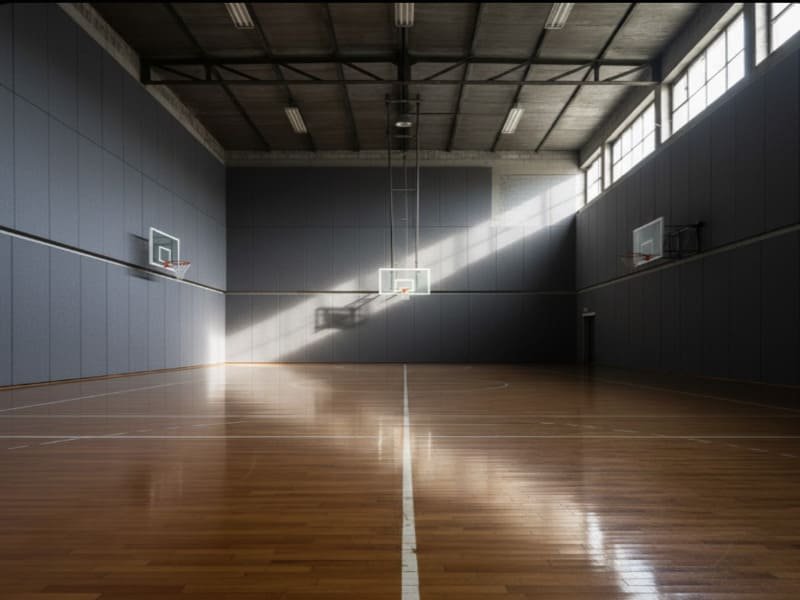
Ketika saya masuk ke dalam gedung olahraga yang bising, saya langsung melihat material permukaannya. Balok beton, kaca, dan lantai kayu sangat baik dalam memantulkan suara kembali ke dalam ruangan. Dalam penilaian teknis saya, saya menjelaskan kepada manajer fasilitas bahwa "kedap suara" berarti menghentikan suara agar tidak keluar dari gedung. Tetapi "penyerapan" menghentikan suara agar tidak memantul di dalam. Jika Anda hanya "kedap suara" pada dinding, Anda membiarkan suara masuk. Hal ini membuat lingkungan internal menjadi lebih buruk. Solusinya adalah dengan memutus jalur gelombang suara. Saya menggunakan metode perhitungan khusus untuk menentukan berapa banyak area permukaan yang perlu ditangani. Tingkat kebisingan yang tinggi menyebabkan kelebihan sensorik dan gangguan komunikasi. Ini adalah risiko keselamatan yang nyata selama pelajaran olahraga.
Menyelam lebih dalam: Fisika Suara dan RT60
Saya ingin menjelaskan secara tepat apa yang terjadi pada suara di aula Anda. Bayangkan Anda bertepuk tangan di tengah lapangan. Di lapangan terbuka, suara tersebut akan bergerak menjauhi Anda dan menghilang. Tetapi di dalam gedung olahraga, gelombang suara tersebut membentur dinding beton. Suara itu tidak berhenti. Gelombang suara itu memantul kembali dengan energi yang hampir sama. Kemudian menghantam lantai. Lalu ke langit-langit. Terus memantul. Inilah yang kami sebut Waktu Dengung, atau RT60. Ini adalah waktu yang dibutuhkan untuk menurunkan suara hingga 60 desibel.
Di banyak aula yang saya kunjungi, RT60 memiliki waktu lebih dari 5 detik. Ini berarti jika peluit ditiup, suaranya masih memantul sekitar 5 detik kemudian. Sekarang, bayangkan sebuah kelas yang terdiri dari 30 siswa. Seorang siswa berteriak. Suara itu bertahan selama 5 detik. Siswa lain berteriak. Bunyi-bunyian itu bercampur menjadi satu. Tingkat kebisingan latar belakang meningkat. Agar dapat didengar, guru harus berteriak lebih keras. Hal ini akan menambah lebih banyak energi di dalam ruangan. Siklus ini adalah "Efek Pesta Koktail". Hal ini menciptakan dinding kebisingan yang membuat pembicaraan menjadi tidak mungkin dipahami. Satu-satunya cara untuk menghentikannya adalah dengan meletakkan bahan lembut seperti spons di jalur gelombang untuk "memakan" energi sehingga tidak dapat memantul kembali.
Target Akustik Utama untuk Ruang Olahraga
Kita perlu tujuan yang jelas sebelum memulai. Di bawah ini adalah rincian target akustik yang saya gunakan selama inspeksi.
| Parameter | Aula yang tidak dirawat | Standar Target | Tujuan Utama |
|---|---|---|---|
| Waktu Gema (RT60) | 5,0 - 8,0 detik | <1,5 - 2,0 detik | Kejelasan ucapan |
| Indeks Transmisi Pidato | <0,45 (Buruk) | > 0,60 (Baik) | Instruksi yang jelas |
| Tingkat Kebisingan Latar Belakang | Tinggi (penumpukan) | Terkendali | Mengurangi kelelahan |
| Refleksi Permukaan | > 95% Reflektif | > 30% Menyerap | Pengurangan gema |
Apa Saja Solusi Inti untuk Perawatan?
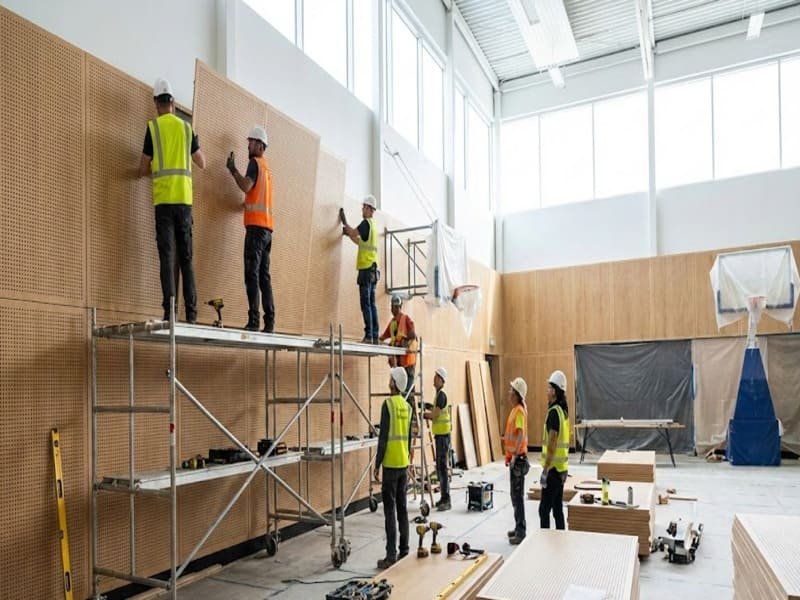
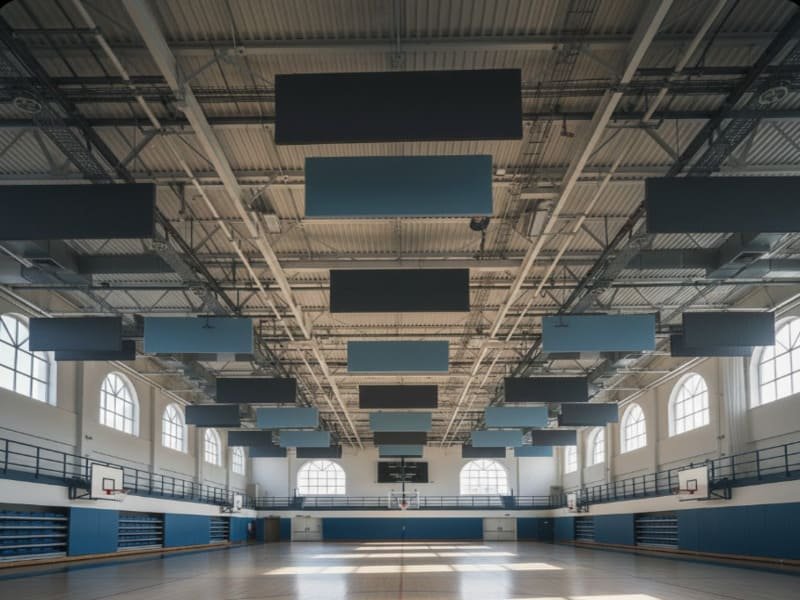
Solusi yang paling efektif adalah panel dinding tahan benturan yang dipasang pada bagian atas dan penyekat langit-langit gantung. Ini akan memecah area reflektif yang besar. Anda harus memilih ini daripada opsi semprotan untuk daya tahan yang lebih baik dan penggantian yang lebih mudah. Hal ini memastikan kinerja jangka panjang di lingkungan olahraga aktif.
Saya telah menguji berbagai metode. Penempatan strategis adalah kuncinya. Anda tidak perlu menutupi setiap inci. Strategi yang saya sukai biasanya melibatkan kombinasi panel dinding dan penyekat langit-langit. Panel dinding mudah diakses dan efektif. Tetapi mereka menghadapi risiko benturan yang tinggi. Penyekat plafon sangat baik karena kedua sisi panel menyerap suara. Hal ini menggandakan efisiensi per meter persegi. Meskipun akustik semprot ada, saya sering menyarankan agar tidak menggunakannya untuk retrofit. Mereka berantakan dan sulit untuk dibersihkan nantinya. Ketika saya merancang sebuah solusi, saya mencari "titik manis" cakupan. Biasanya, merawat 20% hingga 30% dari area permukaan memberikan hasil terbaik tanpa pengeluaran yang berlebihan.
Persyaratan Material Apa yang Harus Anda Cari?
Anda harus benar-benar memilih bahan yang memenuhi standar DIN 18032-3 untuk ketahanan terhadap benturan bola dan peringkat keselamatan kebakaran Kelas A. Busa kantor standar akan hancur jika terkena benturan dan menimbulkan bahaya kebakaran. Jadi, hanya panel khusus olahraga dengan kepadatan tinggi yang cocok.
Menyelam lebih dalam: Mengapa DIN 18032-3 dan Standar Keselamatan Penting
Sebagai Manajer Kontrol Kualitas, ini adalah area yang paling ketat bagi saya. Saya telah melihat busa akustik standar hancur setelah hanya beberapa minggu di gym. Sebuah bola sepak menghantam busa standar, dan busa tersebut robek. Kelihatannya sangat buruk, dan berhenti bekerja. Anda harus meminta sertifikat DIN 18032-3. Ini adalah tes mekanis khusus. Dalam tes ini, mesin menembakkan bola tangan ke panel dengan kecepatan tinggi berulang kali. Panel tidak boleh pecah, dan tidak boleh terlepas dari klip dinding. Jika lolos, maka panel tersebut dapat bertahan dalam pertandingan sepak bola sekolah menengah atas.
Keamanan juga tidak bisa dinegosiasikan. Pada bangunan umum seperti sekolah atau pusat rekreasi, bahan harus memiliki peringkat api Kelas A atau Kelas 0. Ini berarti tidak mudah terbakar. Jika terjadi kebakaran, panel-panel ini tidak akan menyebarkan api atau menimbulkan asap beracun. Saya juga memverifikasi kain penutupnya. Kain ini harus dapat bernapas untuk membiarkan suara masuk, tetapi cukup kuat untuk menahan sobekan. Estetika juga penting. Saya memastikan kami mencocokkan warna sekolah atau tim sehingga panel-panelnya terlihat seperti bagian dari desain, bukan pekerjaan tambal sulam. Aula yang aman adalah aula yang dapat digunakan.
Bagaimana Perbandingan Faktor Biaya dan ROI?
Biaya bervariasi berdasarkan volume aula dan pilihan material. Namun ROI mencakup peningkatan pendapatan sewa untuk ujian dan acara, ditambah dengan berkurangnya ketegangan vokal staf. Anda harus melihat ini sebagai peningkatan aset yang mengubah gym sekali pakai menjadi penghasil pendapatan multiguna.
Menyelam lebih dalam: Menghitung Pengembalian Investasi
Saya sering membantu klien membangun kasus bisnis untuk investasi ini karena biaya di muka mungkin terlihat tinggi. Biaya tergantung pada "Volume" ruangan. Ruangan yang lebih besar membutuhkan lebih banyak material. Tetapi Anda harus melihat nilai jangka panjangnya. Aula yang tidak dirawat hanya bagus untuk olahraga keras. Anda tidak dapat mengadakan pertemuan di sana karena tidak ada yang dapat mendengar pembicara. Anda tidak dapat mengadakan ujian di sana karena suara pena yang dijatuhkan bergema.
Setelah kami merawat aula, aula itu berubah. Aula yang dirawat menjadi tempat ujian. Hal ini menghemat ribuan dolar bagi sekolah karena mereka tidak perlu menyewa aula eksternal untuk ujian akhir. Aula ini menjadi teater untuk pertunjukan drama sekolah. Ini menjadi pusat konferensi yang dapat Anda sewakan kepada komunitas pada akhir pekan. Saya telah melihat sekolah menggandakan pendapatan perekrutan eksternal mereka setelah perawatan. Selain itu, ada biaya kesehatan yang tersembunyi. Saya telah melacak data tentang guru olahraga yang menderita ketegangan vokal kronis. Mereka berteriak-teriak sepanjang hari untuk didengar. Mengurangi kebisingan latar belakang dapat mengurangi stres dan cuti sakit. Ini bukan hanya tentang membeli panel; ini tentang mendapatkan kembali utilitas bangunan.
Skenario Dunia Nyata: Bukti Bahwa Ini Berhasil
Studi kasus menunjukkan bahwa merawat gym sekolah dapat mengurangi waktu reverb dari 5 detik menjadi 1,5 detik. Hal ini secara instan memungkinkan penggunaan pidato dan ujian yang jelas. Saya telah menyaksikan pusat-pusat komunitas menyelesaikan keluhan kebisingan dan meningkatkan pemesanan hanya dengan memasang penyekat langit-langit.
Saya ingat sebuah proyek khusus di sebuah sekolah menengah setempat. Lapangan basket mereka adalah "zona terlarang" untuk apa pun selain permainan karena gema yang tak tertahankan. Kami memasang panel dinding tahan benturan dan penyekat gantung. Hasilnya langsung terlihat. RT60 turun dari 4,8 detik menjadi 1,6 detik. Mereka segera mulai menggunakannya untuk ujian akhir. Dalam kasus lain, sebuah pusat komunitas menghadapi keluhan kebisingan dari para tetangga. Meskipun fokus kami adalah penyerapan internal, pengurangan kebisingan gema internal sebenarnya menurunkan keseluruhan kebisingan yang keluar dari gedung. Ini bukan hanya teori; ini adalah kemenangan teknik yang terukur.
Pertanyaan yang Sering Diajukan (FAQ)
Dapatkah saya menggunakan karpet di dinding untuk menghentikan gema?
Tidak, karpet tidak efektif untuk hal ini. Karpet terlalu tipis untuk menyerap frekuensi rendah dari suara bicara dan olahraga. Karpet juga menciptakan bahaya kebakaran pada dinding. Anda membutuhkan panel fiberglass dengan kepadatan tinggi yang memiliki ketebalan minimal 40mm untuk benar-benar mengontrol energi di aula yang besar.
Berapa lama waktu yang dibutuhkan untuk instalasi?
Untuk gedung olahraga ukuran standar, pemasangan biasanya memakan waktu 3 hingga 5 hari. Kami menggunakan lift gunting untuk mencapai langit-langit yang tinggi. Saya selalu menyarankan untuk menjadwalkan hal ini selama liburan sekolah atau periode penutupan untuk menghindari gangguan pada kelas. Kami juga melindungi lantai dengan papan sehingga lift yang berat tidak merusak permukaan olahraga.
Apakah panel akan menjadi kotor?
Ya, debu dapat menempel di atasnya. Tetapi panel berkualitas menggunakan kain tenun yang mudah dibersihkan. Anda dapat menyedot debu secara ringan dengan sikat yang lembut. Panel berkualitas tinggi juga tahan terhadap pembusukan, sehingga kelembapan dari kelembapan atau keringat di udara tidak akan merusak inti panel.
Apakah saya perlu menutupi seluruh langit-langit?
Tidak. Anda biasanya hanya perlu menutupi sekitar 20% hingga 30% dari total luas permukaan ruangan untuk mendapatkan hasil yang bagus. Kami mendistribusikan panel secara merata. Hal ini menghemat uang dan tetap menghentikan gema secara efektif.
Kesimpulan
Menguasai akustik ruang olahraga membutuhkan pengelolaan gema dengan bahan yang bersertifikat dan tahan benturan. Investasi ini memastikan keamanan, kepatuhan, dan membuka aliran pendapatan baru untuk fasilitas Anda.
Siap mengubah ruang olahraga Anda?
Jangan menebak-nebak dengan anggaran Anda. Hubungi tim saya hari ini untuk mendapatkan perhitungan akustik gratis atau minta sampel panel tahan benturan yang telah teruji DIN untuk melihat sendiri kualitasnya.