


Laboratory vinyl flooring needs chemical resistance, cleanable and sealed seams, appropriate slip resistance, low VOC emissions, and enough mechanical strength to resist indentation and rolling loads. Static control matters too, but only where the lab’s equipment or process actually requires it.
Flooring is one of the most overlooked specs in a lab build, yet it carries direct weight for safety, compliance, and long-term cost. As a production manager who works daily on the manufacturing side of vinyl flooring, I see two kinds of buyers. One group asks "what performance does lab flooring need in general," and the other group already knows their lab type and wants exact numbers to put into a spec sheet. This guide is built to answer both.
Rather than treating every lab the same, I will start with a specification summary you can check against a supplier’s data sheet, then show how requirements shift depending on whether you run a chemistry lab, a biosafety lab, an electronics lab, or a teaching lab. After that, I will walk through each performance category in more depth, including where the common advice oversimplifies things.
Let’s start with the checklist most specifiers actually need first: what to ask a manufacturer for before finalizing a spec.
What Performance Specifications Should Buyers Check?
Buyers should check chemical resistance against actual reagents, indentation and rolling load resistance, slip resistance for expected wet or dry conditions, VOC emissions, seam integrity, and ESD performance only where applicable. Each item should be backed by a test standard.
This is the table I share with clients before we talk about material construction. It is meant to be used directly against a supplier’s technical data sheet.
| المتطلبات | ما الذي يجب التحقق منه |
|---|---|
| Chemical resistance | Tested against the actual acids, alkalis, solvents, reagents, and disinfectants used in the lab |
| Hygiene / cleanability | Non-porous surface, cleanable finish, properly sealed or hot-welded seams |
| Residual indentation | Low indentation under the specific equipment weights and contact points in the lab |
| Rolling load resistance | Suitable for carts, stools, and mobile equipment on castors |
| مقاومة الانزلاق | Matched to expected wet/dry conditions, not just the highest available R-rating |
| انبعاثات المركبات العضوية المتطايرة | Verified through independent low-emission certification |
| ESD performance | Required only where equipment sensitivity or process risk demands it |
| Seam system | Compatible with the lab’s hygiene and chemical exposure level |
| Disinfectant resistance | No surface degradation after repeated, heavy-duty cleaning |
| ثبات الأبعاد | Limited shrinkage or movement under real service conditions |
Treat this table as the starting point of a conversation with your supplier, not a final answer on its own. The right values for each row depend heavily on your specific lab type, which is what I cover next.
Do All Laboratories Need the Same Vinyl Flooring Performance?
No. A chemical lab prioritizes chemical resistance, a biosafety lab prioritizes cleanability and welded seams, and an electronics lab prioritizes ESD control. Matching flooring performance to lab type avoids paying for properties you do not need.
One of the most common misconceptions I run into is the idea that "laboratory flooring" is a single product category with one fixed performance profile. In practice, the priority list changes significantly by lab function.
Performance Priorities by Lab Type
| Laboratory Type | Priority Performance |
|---|---|
| Chemical Lab | Chemical resistance, stain resistance |
| Biological / Biosafety Lab | Cleanability, welded seams, disinfectant resistance |
| Healthcare / Diagnostic Lab | Hygiene, low VOC, stain resistance |
| Electronics Lab | ESD control, consistent grounding |
| Cleanroom | Low emissions, cleanability, particle control |
| Teaching Lab | Durability, slip resistance, cost efficiency |
| Heavy Instrument Lab | Indentation resistance, static and rolling load capacity |
A cleanroom and a university teaching lab can both be called "laboratories," but they do not need the same floor. Specifying ESD flooring for a general teaching lab adds cost without adding real safety value, while under-specifying chemical resistance in an active chemistry lab creates a genuine risk. Once you know your lab type and its priorities, the individual performance categories below will make more sense in context, starting with the one that causes the most damage first: chemical exposure.
Why Does Chemical Resistance Matter in Lab Flooring?
Chemical resistance matters because spills happen daily in labs, and the wrong flooring absorbs, stains, or degrades on contact. Resistance should be verified against the lab’s actual chemicals, concentrations, and contact times, not a general claim.
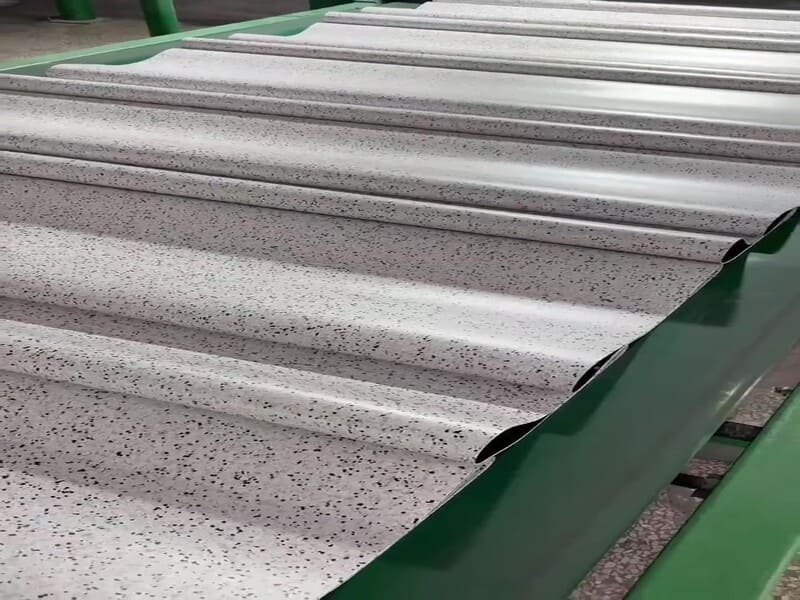
A non-porous surface structure is the baseline requirement, since it keeps liquids on top of the floor instead of letting them soak in and weaken the material from underneath. But "chemical resistant" on its own is not a specification. Concentration and contact time change everything. A floor rated for brief exposure to 1% hydrochloric acid behaves very differently under prolonged exposure to a 37% concentration, and a quick acetone drip is not the same test as a soaked spill left overnight.
Ask for Data, Not a Claim
Instead of accepting a general chemical resistance claim, ask the manufacturer for a chemical resistance chart that covers the exact reagents, concentrations, exposure durations, and disinfectants used in your lab. This is standard practice in serious B2B procurement, and any manufacturer with real lab-grade product should be able to provide it. The standard I reference most for this testing is ASTM F925, which evaluates resistance to chemicals under controlled conditions.
Chemical resistance protects the surface chemistry of the floor. Hygiene protects what happens on top of that surface day to day, which is where seams and cleaning protocols come in.
How Does Vinyl Flooring Support Hygiene and Cleanability?
Vinyl flooring supports hygiene through a non-porous surface, sealed or hot-welded seams, and resistance to repeated disinfection. These factors, not surface additives, are what determine whether a floor stays truly cleanable over time.
Seams are one of the most overlooked risk points in lab flooring. Any gap becomes a place where moisture, dirt, and residue can collect and resist ordinary cleaning. I recommend hot-welded joints paired with coved bases, sometimes called flash coving, which curves the flooring up the wall instead of ending in a hard corner. That curve removes the tight angle where debris traditionally builds up and is hard to reach with a mop.
Cleanability Over Additives
It is worth being precise here. The performance that actually matters for lab hygiene is cleanability: a non-porous surface, properly sealed seams, and resistance to the disinfectants and cleaning protocols the lab actually uses. Some vinyl products include antimicrobial additives, but this is a secondary feature, not the core requirement most lab specifications are built around. What determines real-world hygiene outcomes is whether the floor can be fully cleaned and whether it holds up under heavy-duty disinfectants, steam, or UV sterilization without degrading.
Hygiene and cleanability address biological risk. A separate risk, relevant to some but not all labs, is static electricity around sensitive equipment.
Does Every Laboratory Need Static Control (ESD) Flooring?
No. Static control matters primarily for labs with sensitive electronics, flammable solvent processes, or specific risk assessments that call for it. General chemistry, biology, and teaching labs typically do not require conductive or dissipative flooring.
This is one of the most misunderstood areas of lab flooring, and I want to be direct about it: not every lab needs ESD flooring. Electronics assembly labs, semiconductor facilities, instrumentation rooms, and certain cleanrooms or flammable-process areas are the environments where static control is a real requirement. A general biology lab or a teaching lab usually is not.
Where ESD flooring is needed, there are two categories to understand. Conductive vinyl sits in the 10^4 to 10^6 ohm resistance range and moves charge to ground quickly, which suits electronics assembly. Static dissipative vinyl sits in the 10^6 to 10^9 ohm range and releases charge more slowly, which suits environments with flammable vapors where a very fast discharge carries its own ignition risk. Installation matters as much as the material: the flooring needs a continuous, correctly grounded connection to the building’s grounding system. I have seen ESD flooring specified correctly on paper but fail testing simply because the grounding path was not continuous. The standards to check are ANSI/ESD S20.20 and the IEC 61340 series.
Static control is a targeted requirement, not a universal one. Mechanical strength, on the other hand, is relevant to almost every lab that runs heavy or mobile equipment.
How Much Load Can Laboratory Vinyl Flooring Handle?
Lab vinyl flooring needs to resist permanent indentation and support both static equipment weight and dynamic rolling loads. The real determining factor is contact pressure at each equipment foot or castor, not total weight alone.
Heavy lab equipment, centrifuges, refrigerators, and rolling carts all place concentrated weight on small contact points. A floor with low residual indentation resistance develops permanent dents where equipment sits for months, which creates uneven surfaces and can trap moisture at the edges.
Why Total Weight Is Not the Full Picture
A common mistake in specification is looking only at total equipment weight. What actually determines pressure on the floor is weight divided by contact area. A 500 kg cabinet resting on four small feet puts far more concentrated pressure on the floor than the same 500 kg spread across one large base. The same logic applies to castors: a narrow, hard castor wheel concentrates more stress than a wide one, and repeated rolling traffic tests the floor differently than a stationary load does. When reviewing a spec sheet, ask for residual indentation data, static load resistance, and rolling or castor load resistance as three separate figures, matched against your actual equipment’s foot count and contact area. The standard I reference most here is ASTM F970 for static load limit.
Load resistance protects the floor’s structure. Slip resistance protects the people walking on it, and this is an area where more grip is not automatically better.
Why Is Slip Resistance Important, and Is a Higher Rating Always Better?
Slip resistance is important because spills and wet cleaning raise fall risk, but a higher R-rating is not automatically better. Rougher, high-grip surfaces are often harder to clean, which creates a direct trade-off with hygiene requirements.
Lab technicians spend long hours on their feet, moving between stations while carrying samples or equipment. A wet floor from cleaning or a spill raises fall risk quickly, which is why coefficient of friction, tested under both wet and dry conditions, belongs in every lab flooring spec.
The Cleanability Trade-Off
What often gets missed is that slip resistance should match the lab’s actual contamination and cleaning conditions, not simply chase the highest available R-rating. A dry research lab, a wet chemistry lab, a washdown room, and a cleanroom all have different needs. Rougher surface textures generally improve grip but can be harder to fully clean and disinfect, since more surface texture means more area for residue to settle into. A cleanroom, for example, usually prioritizes a smoother, highly cleanable surface over maximum grip, while a washdown room may accept more texture in exchange for slip safety. The standards I point clients toward are DIN 51130, which uses R-ratings such as R9 or R10, and ASTM C1028.
Slip resistance is about balancing safety and cleanability. Air quality, covered next, is about protecting the sensitive work happening in the room itself.
What Role Does Indoor Air Quality Play in Lab Flooring Selection?
Indoor air quality matters because vinyl flooring can outgas volatile organic compounds, which contaminate sensitive experiments or reduce air quality in sealed and pressurized lab environments. Certified low-VOC products remove this risk.
Cleanrooms and ISO-classified labs run on controlled air, so any material that outgasses VOCs introduces a variable that can interfere with sensitive experiments or affect air quality classification. Low VOC formulations should also be phthalate-free and low-odor, particularly in healthcare and R&D spaces where staff spend extended hours indoors.
Certifications give buyers a fast, independent way to confirm this instead of relying on a manufacturer’s own claim. The certifications worth checking are FloorScore, GREENGUARD Gold, and Eurofins Indoor Air Comfort Gold, each involving third-party emissions testing.
Air quality protects the integrity of the work in the room. With the core performance areas covered, the next practical question is which construction actually delivers them.
Homogeneous vs Heterogeneous Vinyl: How Should You Choose for a Lab?
Homogeneous sheet vinyl is commonly chosen for labs needing high durability, uniform chemical resistance, and welded seams, but the right construction depends on the lab’s chemical exposure, traffic, hygiene needs, and maintenance plan, not a fixed rule.
Homogeneous sheet vinyl is built as a single, uniform layer from top to bottom, so its chemical resistance and wear resistance stay consistent even as the surface wears down over years of use. This is why it is frequently selected for cleanrooms, chemical labs, and biosafety areas with high chemical exposure and heavy use.
| العامل | الفينيل المتجانس | الفينيل غير المتجانس |
|---|---|---|
| الإنشاءات | طبقة واحدة موحدة | Multiple layers |
| Wear Consistency | Uniform through full thickness | Limited to top wear layer |
| مقاومة المواد الكيميائية | الاتساق مع مرور الوقت | Concentrated in top layer |
| Design Flexibility | أقل | أعلى |
| الراحة الصوتية | أقل | أعلى |
| Common Fit | High-risk, high-traffic labs | Offices, corridors, light-use labs |
Heterogeneous vinyl, built from multiple layers, offers more design flexibility and better acoustic and underfoot comfort, which makes it a reasonable choice for administrative areas, corridors, and lighter-use labs. Neither construction is universally correct. The right decision should follow directly from the performance table earlier in this guide: your chemical exposure level, traffic pattern, hygiene requirements, and maintenance plan. Choosing the right construction is only half the outcome, though. Installation quality determines whether that construction performs as designed.
ما الذي يجب أن تعرفه عن التركيب والصيانة؟
Correct installation requires proper subfloor preparation, hot-welded seams, and integral flash coving. Ongoing maintenance depends on the surface treatment applied, which affects cleaning frequency and long-term wear resistance.
Subfloor preparation is where many lab flooring failures actually begin, well before the vinyl is unrolled. The subfloor needs a moisture barrier, proper leveling, and pH testing before installation starts. Skipping this step is a common cause of bubbling, adhesive failure, or premature wear that traces back to installation rather than the material itself.
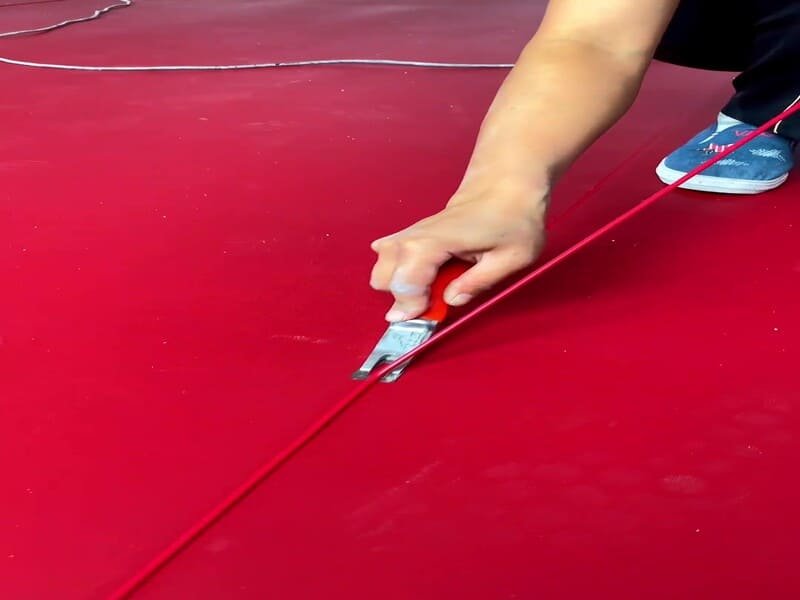
Hot welding with matching vinyl rods creates the seamless surface discussed earlier, and it should be paired with integral flash coving extending a minimum of 100 to 150 mm up the wall, closing off the hard corners where debris would otherwise collect. For long-term maintenance, ask about polyurethane surface treatment, often labeled PUR. This factory-applied finish reduces or removes the need for wax stripping and reapplication, which lowers labor cost and facility downtime during cleaning while extending resistance to daily wear from foot and cart traffic.
الخاتمة
Match flooring performance to your specific lab type, verify each requirement against real test data, and confirm it with your supplier before finalizing the spec.
نبذة عن الكاتب
I work as a production manager specializing in the manufacturing of laboratory vinyl flooring for custom and bulk orders across chemical labs, cleanrooms, healthcare facilities, electronics labs, and R&D centers. My background covers the full production process, from raw material selection and wear layer formulation to seam welding standards and quality testing. I regularly work with engineering and product development teams to solve design and specification challenges early, before drawings are finalized, so the flooring performs as intended once installed.
If you are working through a flooring specification for your lab and want technical guidance, a chemical resistance chart matched to your reagents, or sample swatches based on your exact use case, feel free to send me a message. I am happy to walk through your requirements and help you find the right construction for your project.