


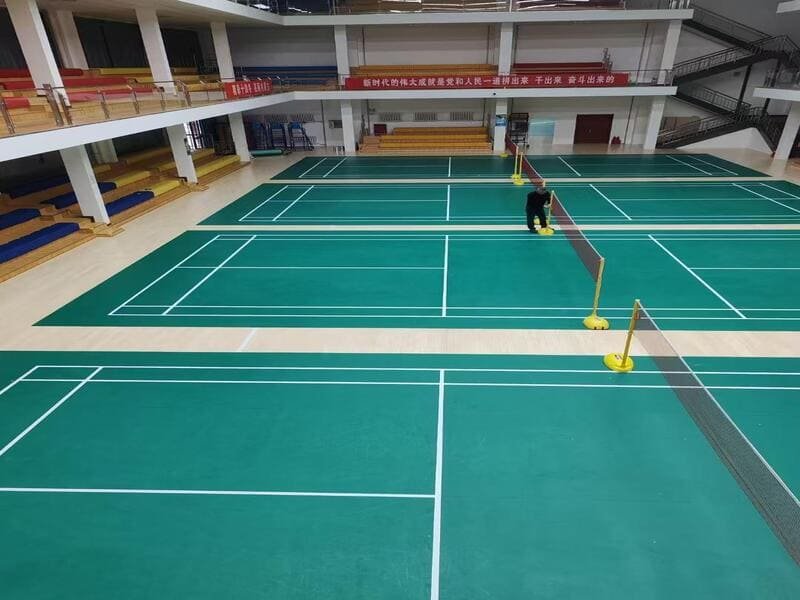
You can evaluate ball bounce performance on PVC sports flooring by measuring its vertical ball rebound percentage against official EN 12235 standards.
As a technical R&D engineer, I know that ball rebound is a critical factor for sports performance. Many facility managers and contractors select flooring based only on thickness, but this approach causes big problems. If you choose the wrong material, you will get dead spots and sluggish gameplay. This guide gives you a simple, step-by-step framework to test and choose the right PVC flooring with total confidence.
We need to look at the exact engineering factors that create a perfect surface, so let us move directly into the core technical details.
What is Ball Bounce Performance in Sports Flooring?
Ball bounce performance is the ratio of the ball rebound height on a sports floor compared to the rebound height on a concrete floor.
| متري | التعريف التقني | Key Importance |
|---|---|---|
| Rebound Ratio | (Height on PVC / Height on Concrete) x 100 | Measures energy return efficiency |
| Uniformity | Consistent bounce across all areas | Prevents unpredictable ball behavior |
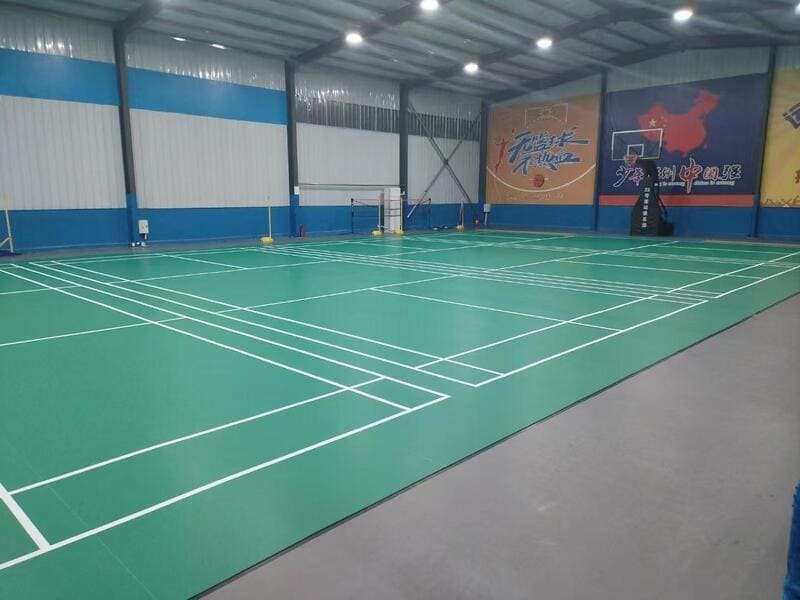
I see many buyers mix up shock absorption with ball rebound. In my laboratory work, I constantly balance these two elements. A thick wear layer and a loose foam backing will absorb impact well, but they will kill the ball bounce. For basketball, you need a quick energy return. For table tennis and badminton, the ball response must match the grip of the shoes. In futsal, the ball must roll true and keep a low, steady bounce. The wear layer, the fiberglass stabilization layer, and the high-density foam backing must work together to create the right rebound.
Now that you know how the layers work, we must look at the official numbers and standards that control this industry.
Which International Standards Govern Ball Rebound?
The EN 12235 standard is the primary European testing method that governs ball rebound performance for indoor sports halls.
| Governing Body | Standard/Requirement | التطبيق |
|---|---|---|
| CEN (Europe) | EN 12235 Standard | General Indoor Sports Halls |
| FIBA (Basketball) | Vertical Rebound $\ge 90\%$ | Professional Basketball Courts |
| BWF (Badminton) | Specific Floor Friction & Rebound | Professional Badminton Courts |
Understanding the Engineering Balance
- High Shock Absorption: Thick, low-density foam protects player joints but reduces the energy return of the ball.
- High Ball Rebound: High-density, closed-cell foam provides a solid bounce but offers less impact protection.
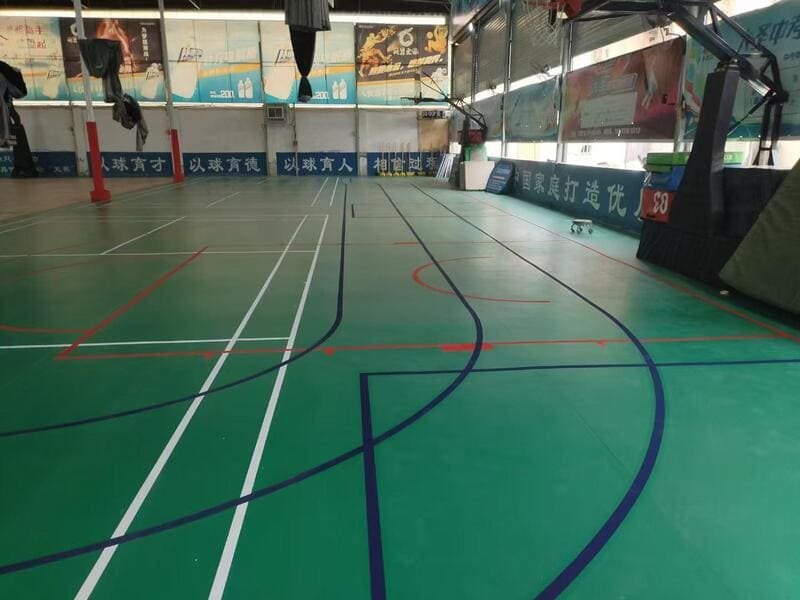
- The Optimal Zone: Engineering a multi-layer PVC sheet that achieves $\ge 90\%$ rebound while maintaining Class 1 shock absorption (25% to 35% force reduction).
You cannot guess these numbers by looking at the floor, so let us look at the actual testing methods we use.
How to Test Ball Rebound Performance Step-by-Step?
You can test ball rebound performance through professional laboratory drop tests, on-site acoustic inspections, or by verifying official manufacturer specification sheets.
| طريقة الاختبار | الأدوات المطلوبة | أفضل استخدام لـ |
|---|---|---|
| Method A: Lab Test | Standard basketball, 1.8m drop tube, sensors | Official certification and validation |
| Method B: Field Test | Regulation ball, acoustic checks, multi-zone map | On-site quality control and handover |
| Method C: Spec Check | Manufacturer data sheet, ISO/CE certificates | Initial product filtering and buying |
Technical Step-by-Step Breakdown
I always tell my clients to use a simple three-step validation process during the design phase. First, use a professional lab test where you drop a standard basketball from exactly 1.8 meters. The timing sensors measure the bounce height on concrete, then on the PVC. Second, do an on-site field test across the center, the edges, and the welded seams. You must listen to the sound of the bounce; a hollow sound means there is an issue. Third, read the spec sheet to verify the CE and FIBA badges.
Even with the best test results, external variables can change the performance, so we must look at the root causes of bad bounce.
What Factors Directly Damage Ball Bounce Performance?
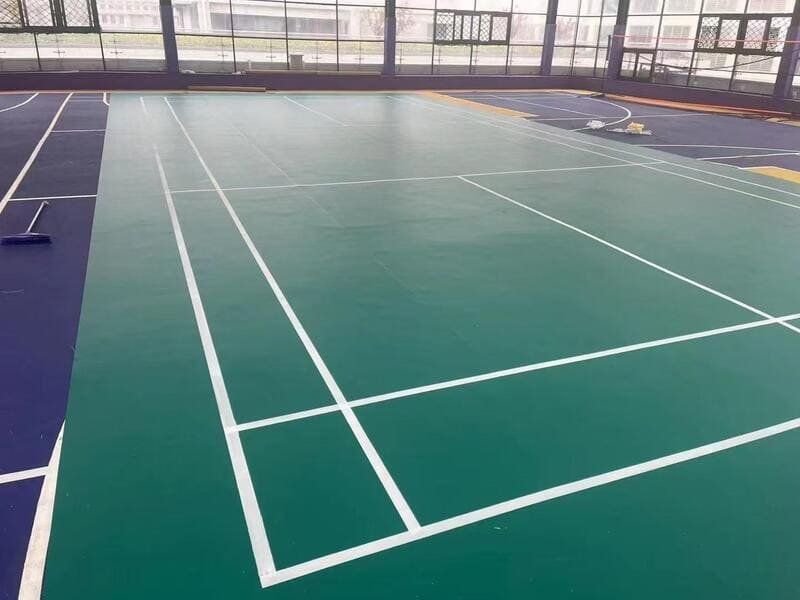
Foam backing density, poor subfloor preparation, bad installation quality, and extreme room temperatures directly damage ball bounce performance.
| العامل | التأثير التقني | Engineering Risk |
|---|---|---|
| Foam Density | Open-cell foam collapses under high impact | Severe drop in rebound over time |
| تسطيح الأرضية السفلية | Deviations create air gaps under the PVC sheet | Dead spots and uneven ball response |
| Adhesive Quality | Weak bonding causes the PVC to lift | Loose sheets that absorb ball energy |
| درجة الحرارة | Cold temperatures make the PVC polymer rigid | Altered elasticity and stiff performance |
The Impact of Subfloor Materials
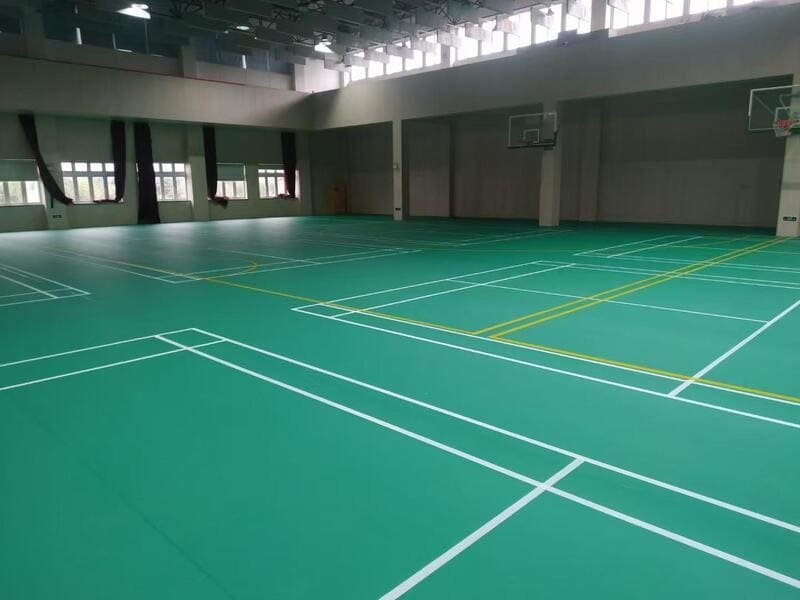
You can buy the most expensive PVC sports flooring, but a bad subfloor will ruin it. If the concrete underneath is uneven or holds moisture, the adhesive will fail. This failure creates small air bubbles. When a ball hits an air bubble, the energy is lost, and you get a dead spot. Also, low-density foam backing will degrade after two years of heavy use. We use high-density, closed-cell foam to make sure the floor maintains its rebound percentage for over ten years.
If you are already facing these problems on your court, let us look at the troubleshooting solutions.
How to Troubleshoot Common Ball Bounce Problems?
You can troubleshoot common ball bounce problems by fixing subfloor air bubbles, upgrading the foam density, or deep cleaning the surface texture.
| Symptoms/Pain Point | السبب الجذري | Solution/Fix |
|---|---|---|
| "Dead Spots" (Uneven bounce in certain areas) | Air bubbles underneath or uneven subfloor | Injecting adhesive or leveling the subfloor |
| Sluggish/Low Bounce | Foam backing is too soft/thick for the sport | Choose a multi-use or higher-density PVC |
| Inconsistent Ball Spin/Roll | Poor surface texture or accumulated dirt | Deep cleaning and choosing the right embossing |
Detailed Engineering Solutions
- Fixing Dead Spots: Locate the exact hollow area. Use a professional syringe to inject high-strength polyurethane adhesive under the PVC sheet, then place a heavy weight on top for 24 hours.
- Correcting Sluggish Rebound: If the floor is already installed and the foam is too soft, you cannot fix it without replacing the material. For future projects, ensure you specify a 4.5mm to 8.0mm thickness with a high-density stabilization layer.
- Restoring Ball Spin: Dirt fills the micro-textures of the wear layer. Use an alkaline cleaner with an automatic scrubbing machine to restore the original friction coefficient.
Let us look at a simple checklist to help you avoid these problems completely before your next purchase.
What is the Ultimate Buyer Checklist for High-Rebound PVC Flooring?
The ultimate buyer checklist requires defining the sport, testing physical samples, verifying EN 12235 reports, checking subfloor flatness, and confirming the warranty.
The Complete Technical Checklist
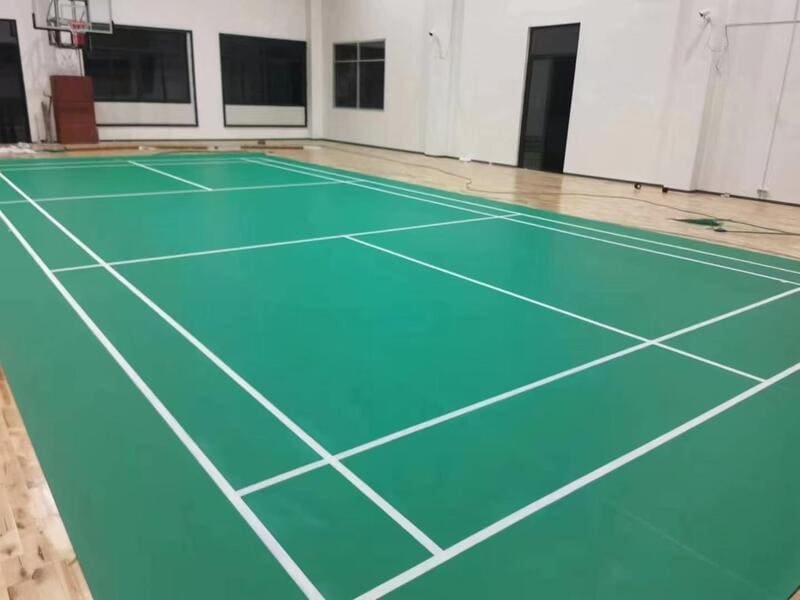
- Define the Primary Sport: Ensure the floor meets the specific rebound target (e.g., Basketball needs $\ge 90\%$; multi-sport requires $\ge 85\%$).
- اختبار العينات المادية: Always request a 30x30cm sample from the manufacturer and perform a manual ball drop test on a hard concrete surface.
- Verify EN 12235 Documentation: Ask the supplier for an independent third-party laboratory test report. Do not trust internal data sheets alone.
- Check Subfloor Flatness: Use a 2-meter straightedge to ensure the concrete subfloor has less than 3mm of deviation.
- Confirm Elasticity Warranty: Ensure the manufacturer contract guarantees that the floor will not deform or lose its rebound properties for at least 5 to 10 years.
Now we can bring all these engineering requirements together to help you make the best decision for your sports facility.
الخاتمة
Evaluating ball bounce is a combination of standards, backing material, and proper installation.
If you are planning a new sports facility project, looking for high-rebound PVC flooring solutions, or need technical engineering advice for your custom product development, feel free to send me a private message! Let us work together to optimize your court performance.