


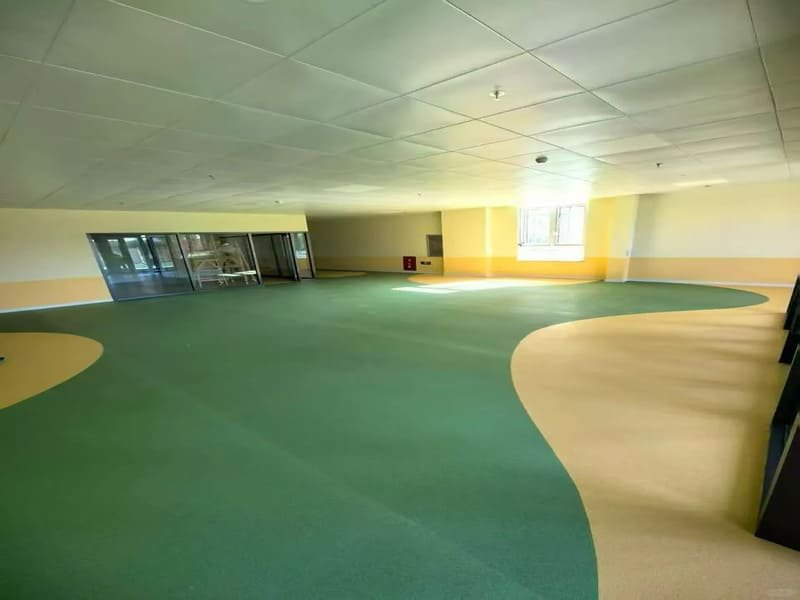
Yes. Commercial vinyl flooring — LVT, VCT, and sheet vinyl — can be delivered in phases. I manage this often on large, multi-stage, or occupied job sites. The key is to reserve the full project quantity from the same production lot or a compatible run, then release shipments on a schedule that matches the install plan.
I get this question from project managers staging a renovation across floors or wings. The short answer is yes, but the real answer is كيف. Limited on-site storage, tight cash flow, short install windows, and occupied buildings like hospitals or schools all push teams toward phased delivery. From my side of the production floor, the core issue is not whether we can split a shipment. We can. The issue is how the material behind that shipment was produced and stored, and whether every phase can still be traced back to the same lot, batch, or run. Splitting the deliveries should never mean splitting the quality control.
Once you understand that rule, the rest of phased delivery is logistics, labeling, and inspection. Let me walk through why teams choose this approach, what can go wrong, and how to run it so the floor looks like one continuous install, even if it took six months to deliver.
Why Should a Project Choose Phased Vinyl Delivery?
Phased delivery fits projects with limited jobsite storage, ongoing operations, or a rolling installation schedule. It keeps material off the floor until it is actually needed, which reduces damage and site clutter.
I break the reasons down into four buckets, based on what I hear from clients before every order.
| السبب | What It Solves |
|---|---|
| Limited jobsite storage | Keeps pallets and rolls out of the way of active construction traffic |
| Occupied building renovation | Lets hospitals, schools, hotels, or offices keep running floor by floor |
| Scheduling around milestones | Aligns each shipment with the contractor’s actual install sequence |
| Just-in-time install | Material shows up ready to lay, without sitting in an unstable site climate for weeks |
The occupied-building case is the one I see most often. A hospital cannot shut down five floors at once, so we ship enough vinyl for one wing, wait for the install crew to clear it, then release the next batch. This also protects the material itself. Vinyl left sitting on a construction site for months, exposed to dust, temperature swings, and foot traffic, is more likely to arrive at the installer damaged or out of tolerance by the time it is laid.
These benefits are real, but before you commit to a phased schedule, you need to understand one distinction that most buyers miss.
Is Phased Delivery the Same as Phased Production?
No. Phased delivery means the flooring is produced or reserved together but shipped in separate releases. Phased production means later quantities are manufactured in separate runs, which raises the risk of shade, gloss, texture, or dimensional variation.
This is the single most important thing to confirm before you place a phased order. What a buyer actually needs to know is not "can you ship this in three drops," but "did you make all of this in one run and hold it, or will you make part of it later when I need it." Those two paths carry very different risk.
| الطريقة | الإنتاج | التوصيل | Batch Risk |
|---|---|---|---|
| One production run, phased delivery | Single run, reserved and held | Multiple shipments | الأقل |
| Reserved inventory, phased release | Existing matching stock set aside | Multiple shipments | منخفضة |
| Separate production for each phase | Multiple runs over time | Multiple shipments | الأعلى |
For most projects, I recommend the first option: produce or reserve the full quantity up front, then release it against your schedule. If your project is large enough to exceed what one production run can supply, ask your supplier for an approved lot-management and shade-control plan rather than assuming a single lot is guaranteed. Some manufacturers, including several commercial LVT lines, do offer mergeable lot options for exactly this situation.
Once production is locked down, the next question is what can still go wrong between the warehouse and the jobsite.
What Are the Hidden Risks of Phased Vinyl Delivery?
The main risk is variation between production lots or runs. Other risks include higher freight costs, mid-project stock outages, and site-readiness gaps between phases.
I have seen phased projects go wrong for reasons that have nothing to do with the installer’s skill. Here is what to watch for.
- Lot or run variation: Vinyl is produced in batches, and color, texture, or sheen can shift slightly between runs. This is the largest risk in a phased order, which is why locking the full job to one production lot, or an approved lot-management plan, matters more than any other step.
- Freight cost: Multiple Less-Than-Truckload (LTL) shipments cost more per square foot than one Full-Truckload (FTL) delivery. Plan the budget for this difference up front.
- Stock outages: If a manufacturer runs low on a specific SKU mid-rollout, later phases can be delayed or substituted. Reserving the full order early avoids this.
- Site-readiness gaps: Each phase needs its own confirmation that the substrate, temperature, and installation conditions are ready. Assuming Phase 2 is ready because Phase 1 was is a common and costly mistake.
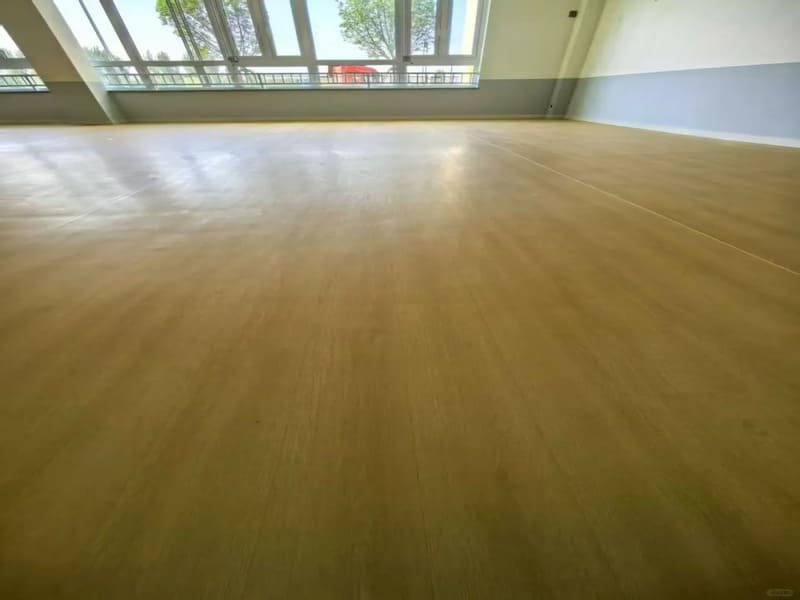
None of these risks are reasons to avoid phased delivery. They are reasons to plan it properly, which is what the next section covers.
How Do You Successfully Manage a Phased Vinyl Delivery?
Reserve the full project quantity early, confirm site conditions before every phase, and understand which costs are actually spread out and which are not.
This is the process I recommend to every client running a multi-phase job.
Reserve the Full Quantity, Ship in Batches
Procure the total square footage in a single purchase order, and reserve it from the same production lot or run wherever possible. Ask your distributor about warehousing the order at a local logistics hub so releases are fast once each phase is ready.
Condition Each Phase to the Manufacturer’s Instructions
Acclimatization requirements are not the same across every vinyl product. Some VCT systems call for roughly 48 hours of conditioning in a controlled space. Many LVT and LVP products, and some sheet vinyl products, require little or no conventional acclimation under normal conditions. Follow the specific manufacturer’s installation instructions for each product, and make sure every phase meets the same site temperature, substrate, adhesive, and environmental requirements before install, regardless of the exact conditioning time.
Understand What Actually Gets Spread Out
Phased delivery does not automatically mean phased payment. Depending on your supplier’s terms, staged releases may spread out freight, handling, and sometimes milestone payments across the project timeline. But if the full quantity is produced or reserved up front, the flooring itself may still need to be paid for at the time of production, even though it ships later. Confirm this in the contract before you plan your cash flow around it.
Order the Right Overage, Not a Flat Percentage
Skip the habit of adding a flat 10–15% and calling it done. Break the extra quantity into two separate line items: an installation waste allowance for cutting and pattern loss, and a maintenance or attic stock allowance held back for future repairs. Reserve the maintenance stock from the same production lot as the installed material, and label it clearly so it is not accidentally used during an earlier phase.
Managing the schedule and the paperwork is half the job. The other half is picking the right vinyl format for a phased rollout.
Which Vinyl Type Is Easiest to Deliver in Phases: LVT, VCT, or Sheet Vinyl?
LVT and VCT are generally easier to phase because they ship and store by pallet. Sheet vinyl can also be phased, but it needs tighter roll allocation planning.
The format you choose changes how much planning the phased schedule needs.
| نوع الأرضيات | Phased Delivery Difficulty | Critical Considerations |
|---|---|---|
| Luxury Vinyl Tile / Plank (LVT/LVP) | معتدل | Handles well by pallet; watch locking mechanism batches and production lots closely |
| Vinyl Composition Tile (VCT) | منخفضة إلى متوسطة | Heavy pallets; batch colors must match closely for a seamless grid pattern |
| Commercial Sheet Vinyl | أعلى | Roll allocation, batch numbers, and installation sequence must be planned before shipment |
From a production standpoint, LVT and VCT are the more forgiving formats for staged delivery. They come in discrete units, so a pallet from Phase 2 sits next to a pallet from Phase 1 without needing a perfect physical match, only a lot or shade match. Sheet vinyl needs a more detailed plan. Rolls should be reserved by batch or run number, roll number, laying direction, and pattern repeat, and assigned to a specific room or corridor before the first shipment leaves the warehouse. Some manufacturers require rolls to be installed in sequence for exactly this reason, to keep color and pattern consistent across a large area.
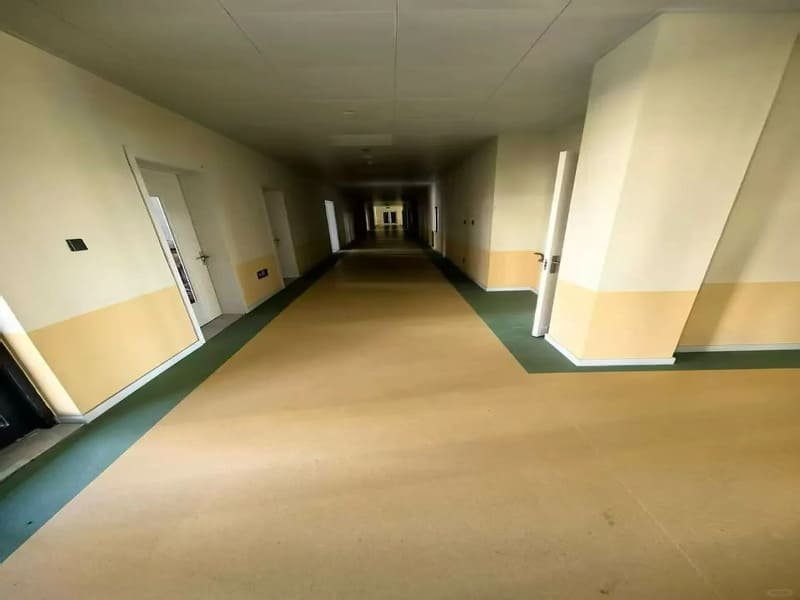
If your project uses sheet vinyl and needs phased delivery, loop in your manufacturer early. This is exactly the kind of planning conversation I like to have before an order is placed, not after.
How Should Flooring Be Packed and Labeled for Each Phase?
Every pallet, carton, or roll should be assigned to a specific building, floor, wing, or phase before it ships, so crews cannot install the wrong material in the wrong area.
On a large phased project, the biggest on-site risk is not a missing shipment, it is the wrong shipment going into the wrong area. I ask every project to define a labeling standard before the first truck leaves the warehouse.
| Label Field | مثال على ذلك |
|---|---|
| Project | Hospital Renovation |
| المرحلة | المرحلة 2 |
| المنطقة | East Wing, Level 3 |
| SKU | XYZ-204 |
| Lot / Run | 240615-B |
| Quantity | 420 m² |
| Pallet / Roll No. | P08 of P12 |
For sheet vinyl, I go a step further and map individual rolls to specific spaces before shipping, for example Roll 01 to Corridor A, Roll 02 to Ward A, Roll 03 to Corridor B. This keeps the crew from cutting a roll meant for one room to patch another, which is a fast way to create a visible seam mismatch later.
Labeling solves the identification problem before the truck arrives. The next step is confirming everything matches once it does.
What Should Be Checked When Each Phase Arrives?
Every phase should go through its own receiving inspection, checking SKU, lot or run number, quantity, and any visible shade or damage issues, before installation begins.
A phased project is not done with quality control once Phase 1 passes inspection. Each delivery needs the same check.
- Confirm the SKU, color, and size match the purchase order.
- Confirm the production lot, batch, or run number on the cartons or rolls.
- Count cartons, pallets, or rolls against the packing list.
- Inspect for transit damage before unloading is complete.
- Check for any visible shade or sheen difference against the previous phase’s material.
- Confirm labels match the intended phase and area.
The rule I give every site team is simple: do not install first and check the lot numbers later. If a visible shade difference shows up at receiving, stop and confirm with the supplier before the crew starts laying material. Catching a mismatch in the warehouse or the loading dock is a phone call. Catching it after installation is a floor replacement.
Good labeling and receiving inspection protect the install. The last piece is making sure your contract protects the project if the schedule shifts.
What Should You Ask Your Flooring Supplier Before Committing to Phased Delivery?
Ask how the order will be produced, how lots will be managed, and who is responsible for storage, damage, and delays if the project timeline shifts.
Before I sign off on a phased order, I make sure the client has clear answers on both production and contract terms.
Production and lot management
- Will the full order be produced in one run, or reserved from existing matching stock?
- If the project exceeds one production run, what lot-management and shade-control plan applies?
- How will each phase be labeled and traced back to its lot or run number?
Storage and contract terms
| Item to Confirm | ما أهمية ذلك |
|---|---|
| Maximum free storage period | How long material can sit before fees start |
| Storage fee after that period | What delays will cost |
| Notice required before release | How much lead time you need to give |
| Point of title transfer | When ownership, and risk, passes to you |
| Damage responsibility in storage | Who covers loss while material is warehoused |
| Maximum hold period | How long the supplier will hold unreleased phases |
| Cancellation terms | What happens if a later phase is dropped |
| Leftover stock handling | What happens to unused material at project close |
| Minimum shipment quantity | Smallest release size the supplier will process |
| Delivery access requirements | Liftgate, forklift, or appointment needs at the site |
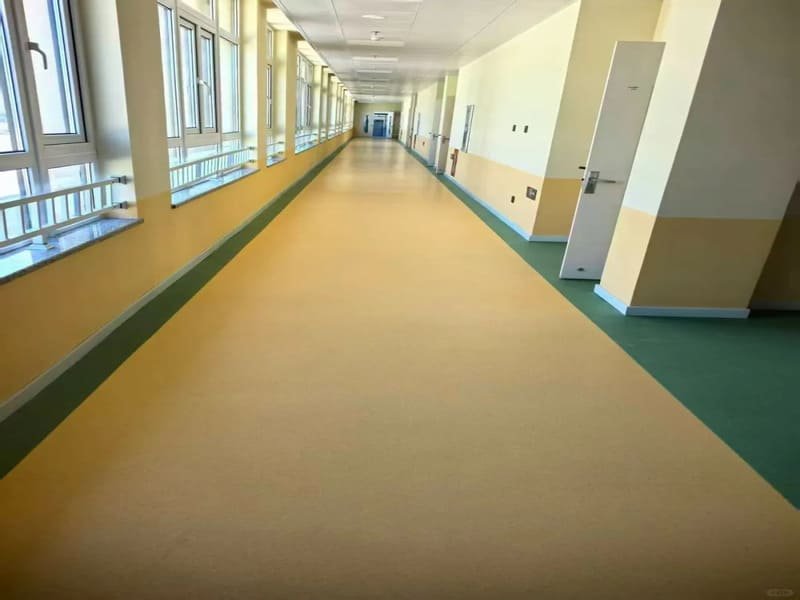
Getting clear answers to these questions up front avoids almost every dispute I have seen on phased projects. The last step is turning all of this into a simple checklist before you place the order.
الخاتمة
Commercial vinyl flooring can be delivered in phases, and it is often the right approach for large, occupied, or multi-stage projects. The safest method is to reserve the full quantity early, control production lots and roll or carton allocation, warehouse the material under confirmed conditions, and release each phase against a documented site schedule. Split the deliveries, not the quality control.
Pre-Order Checklist
- Total project quantity confirmed, broken into installed area, waste allowance, and maintenance stock
- Production method confirmed: single run, reserved stock, or approved multi-run lot-management plan
- Storage, title transfer, and damage responsibility terms confirmed in the contract
- Labeling standard set for every pallet, carton, or roll by phase and area
- Receiving inspection process confirmed for each incoming phase
- Site conditioning and readiness confirmed ahead of each delivery date
- Delivery dates aligned with the general contractor’s milestone schedule
دوري
I manage production for commercial vinyl flooring, working directly with mills, warehouses, and project teams to plan custom and bulk orders, including lot management, phased release schedules, and site coordination for multi-phase, occupied, and large-scale installations.
Get In Touch
If you are planning a phased vinyl flooring project and want a production partner who can manage your lot strategy, labeling, and staged releases while flagging site-readiness issues before they cause delays, send me a DM. I am glad to review your project timeline and put together a delivery plan that fits it.