


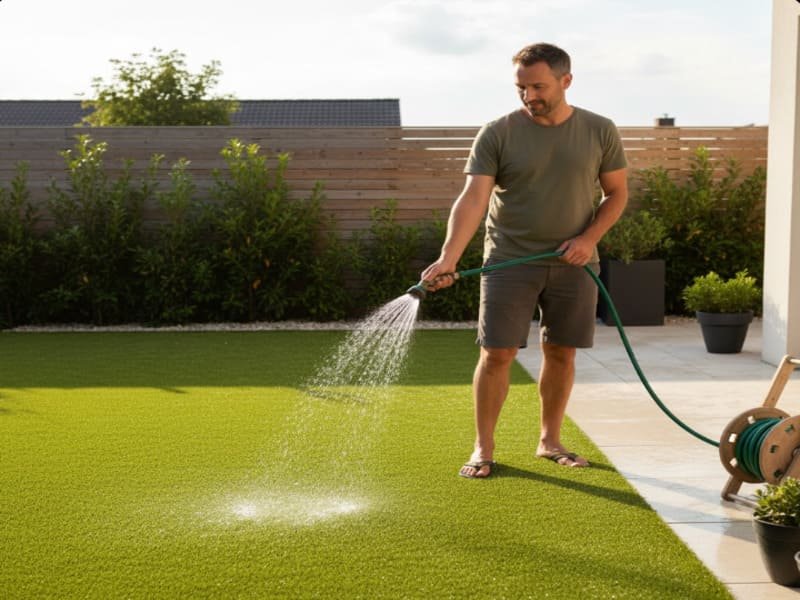
Artificial grass simplifies maintenance by eliminating labor-intensive tasks like mowing, watering, and fertilizing, reducing lawn care time by over 90%. It transforms your yard from a weekly chore into a permanent leisure space that stays green year-round with only minimal, occasional cleaning.
As a production manager who has overseen the manufacturing of miles of synthetic turf, I often tell clients that we are not just selling a floor covering; we are selling time. The traditional "Weekend Warrior" lifestyle involves waking up early on Saturdays to mow, edge, and weed. Natural grass is biologically needy—it demands a precise balance of water, sunlight, and chemicals. If you miss one week of care, it punishes you with brown patches or overgrowth.
Artificial grass changes this dynamic entirely. From a technical perspective, we engineer these fibers to maintain their structural integrity and color stability without biological inputs. The "maintenance" shifts from heavy labor to simple hygiene. You are no longer fighting nature to keep a plant alive; you are simply keeping a durable surface clean. This shift eliminates the physical fatigue and the mental load of scheduling your life around your lawn’s growth cycle.

Quick Summary: The 30-Second Comparison
For homeowners who want the bottom line immediately: Artificial grass requires zero biological care, saving you approximately 50+ hours of labor annually and eliminating ongoing chemical costs.
If you are looking for a direct answer to "How much easier is it?", this comparison table highlights the operational differences between natural soil systems and our engineered synthetic systems.
| الميزة | Natural Grass (High Maintenance) | Artificial Grass (Simplified Maintenance) |
|---|---|---|
| Mowing & Edging | Weekly. Requires gas/electric, physical labor, and waste disposal. | Never. Fibers are extruded to a permanent, perfect height. |
| الري | Frequent. Essential for survival; high water bills. | Rarely. Only for rinsing dust or cooling; zero survival water. |
| Weeding/Chemicals | Seasonal. Requires herbicides, fertilizers, and pesticides. | None. Engineered backing blocks growth; inert fibers need no food. |
| Mud & Mess | High. Soil turns to mud in rain; tracked into the house. | Zero. High-flow drainage backing keeps surface dry and clean. |
| تنظيف الحيوانات الأليفة | Difficult. Urine burns grass; waste hides in tall blades. | Easy. Urine drains through; waste sits on top for easy scoop. |
| Total Effort | Active Labor (Working on the yard). | Passive Enjoyment (Living في the yard). |
With the "big picture" clear, let’s look at exactly how this works in practice.
What Heavy Lifting Can You Forever Eliminate?
You can permanently eliminate mowing, edging, watering, and fertilizing. This removes the need for heavy equipment, reduces monthly utility bills, and stops the use of harmful chemicals, saving you significant physical effort and recurring costs.
The most immediate impact of installing artificial grass is the obsolescence of your heavy gardening tools. In the factory, we extrude polyethylene and polypropylene fibers to specific heights and densities. Once installed, that height is permanent. You no longer need to push a heavy mower or wrestle with a string trimmer to get clean edges. This eliminates noise pollution, exhaust fumes, and the hassle of disposing of grass clippings.
Beyond the physical labor, the resource savings are massive. From a manufacturing standpoint, we add UV stabilizers to the resin to ensure the green color holds without water. This means your lawn looks the same during a drought as it does after a storm, without you ever touching a sprinkler controller. You are trading a biological system that fights to die for a synthetic system engineered to survive.
While saving time is the main benefit, the solution to messy environmental problems is equally valuable.
Does It Solve Messy Problems Like Mud, Weeds, and Pests?
Yes, artificial grass solves these issues through engineering: drainage holes prevent mud, weed barriers block growth from below, and synthetic materials provide no food source for pests, keeping your yard clean and hygienic.
One of the biggest complaints I hear from customers regarding natural lawns is the "mud factor." When we manufacture the backing of artificial grass, we mechanically punch drainage holes throughout the roll. When installed over a proper crushed stone sub-base, this system allows rainwater to drain vertically at a high rate (often over 30 inches per hour). This means even after a heavy downpour, there is no mud for your dog or children to track into the house.
Regarding weeds and pests, the system works as a shield.
- Weed Control: A professional installation includes a geotextile weed barrier underneath the turf. While surface weeds can occasionally grow from windblown seeds, they cannot root deeply and are easily wiped away.
- Pest Reduction: Ticks, fleas, and ants thrive in the moist soil and decaying organic matter of natural grass. Synthetic turf is dry and inorganic. It offers no food and no habitat, naturally forcing these pests to migrate elsewhere. This creates a safer environment for your family without spraying insecticides.
You might be wondering, if I don’t mow or water, what exactly do I have to do?
What Does the "Simplified Maintenance" Routine Actually Look Like?
The simplified routine involves three main tasks: removing debris with a blower or broom, rinsing dust or spills with a hose, and occasionally cross-brushing the fibers to keep them standing upright and looking natural.
Let’s be honest: "Low maintenance" does not mean "zero maintenance." However, the tasks are much lighter.
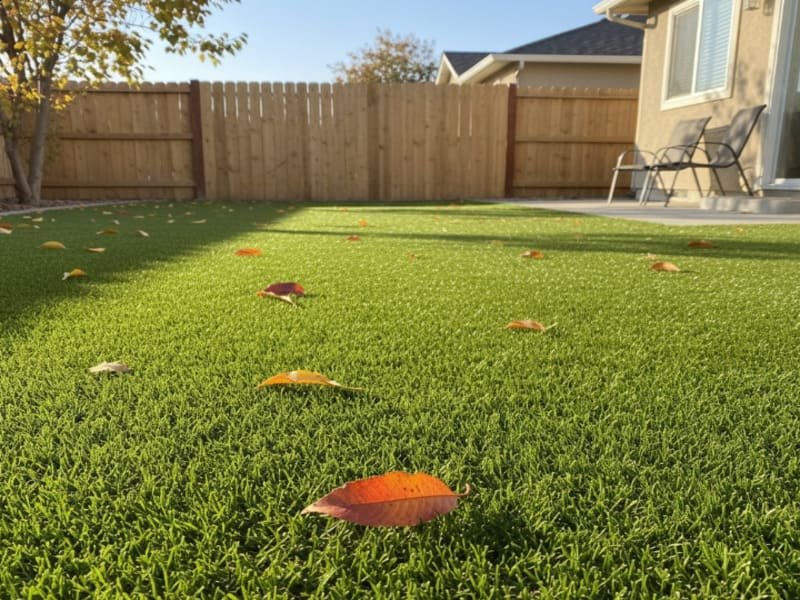
- Debris Removal: Leaves and twigs will still fall on your lawn. On natural grass, these get stuck in the mud or thatch. On artificial grass, they sit on top of the fibers. You can clear a large yard in minutes using a leaf blower or a plastic rake.
- الشطف: We recommend rinsing the lawn occasionally to remove dust, pollen, or sugary spills from parties. This isn’t about hydration; it’s about cleaning the surface.
- Cross-Brushing: This is a technique we emphasize in production. Grass blades are resilient, but heavy foot traffic can flatten them over time. "Cross-brushing" means brushing the fibers against the grain with a stiff broom. This action "wakes up" the memory of the fibers, making them stand tall again. Doing this every few months ensures your lawn looks brand new for years.
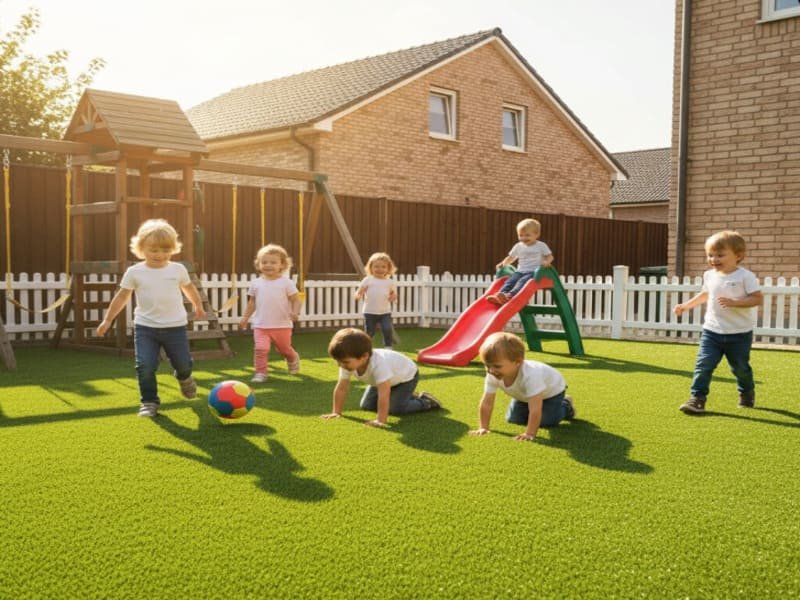
For many of our clients, the biggest concern isn’t the leaves, but their four-legged friends.
Are There Specific Solutions for Pet Owners?
Artificial grass is highly pet-friendly. Solid waste is easy to scoop from the surface, and liquid waste drains automatically. A simple rinse or enzyme cleaner neutralizes odors, preventing the yellow spots and mud common with natural grass.
Pet owners are a huge demographic for us, and we design specific turf products with them in mind. The biggest fear is smell.
- Liquid Waste: Because of the rapid drainage backing I mentioned earlier, urine passes through the turf and into the sub-base, where it dissipates. It doesn’t pool on the surface. To maintain freshness, especially in dry climates, a quick hose down or an application of a bio-enzyme cleaner breaks down the uric acid crystals that cause odors.
- Solid Waste: This is actually easier to manage than on natural grass. The waste sits on top of the fibers rather than hiding in tall grass. After scooping, a quick rinse cleans the fibers.
- المتانة: Dogs cannot dig through the heavy-duty backing we use. Also, the polyethylene fibers are chemically resistant to urine, meaning you will never again see those unsightly yellow "burn" patches on your lawn.
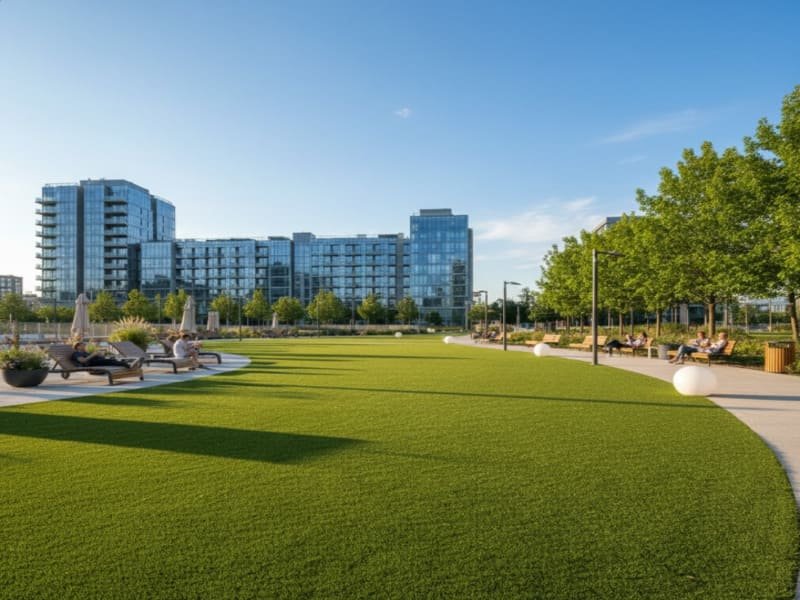
Once you understand the daily routine, it is worth looking at the financial and equipment changes.
What Equipment and Costs Do You No Longer Need?
You can sell or discard your lawnmower, trimmer, and fertilizers. While the upfront cost of artificial grass is higher, the near-zero ongoing expense for water, fuel, and chemicals typically results in a return on investment within 3 to 5 years.
Switching to artificial grass allows for a massive "shed clean-out." You no longer need to store, maintain, or repair mechanical equipment.
The Cost Equation:
- Natural Grass: The "hidden" costs add up. You pay for water (which is becoming more expensive), fuel for the mower, fertilizer, pest control treatments, and potentially a landscaping service. This is a recurring monthly bill that never ends.
- عشب صناعي: The cost is front-loaded in the materials and installation. Once installed, your ongoing costs drop to near zero—just the cost of water for rinsing and perhaps a bag of silica sand infill every few years to top up the system.
From a manufacturing quality standpoint, a well-made turf installed correctly can last 15 to 20 years. When you calculate the cumulative savings over that lifespan, the turf pays for itself several times over.
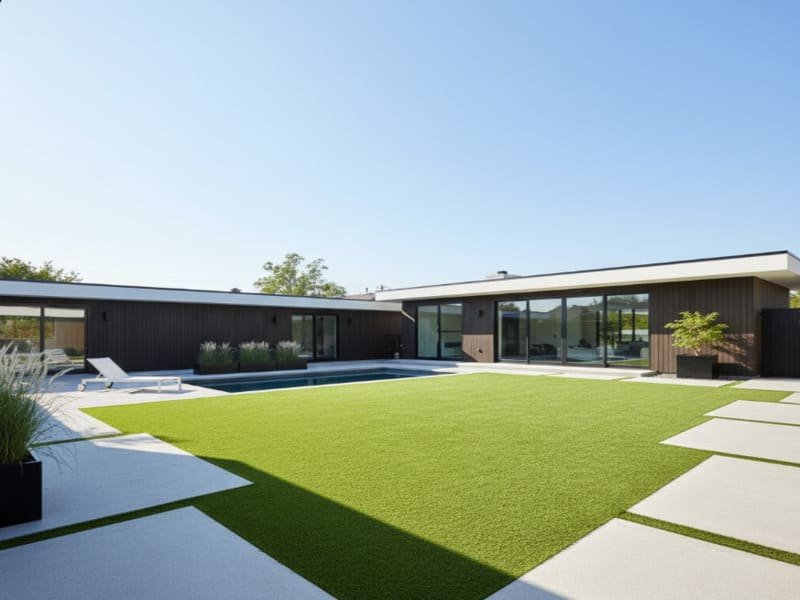
Before making a decision, let’s address a few technical questions I often receive from engineers and homeowners.
FAQ: Common Maintenance Doubts Answered
Here are concise answers to common concerns: Artificial grass can get hot but cools instantly with water; it lasts 15-20 years with proper care; and while pressure washing is possible, it must be done carefully to protect the infill.
Q: Does artificial grass get hot?
A: Yes, synthetic fibers hold heat more than natural grass. In direct summer sun, it can get warm. However, a quick spray with a hose utilizes evaporative cooling to drop the surface temperature instantly. We also develop specific fiber shapes (like W-shape or C-shape) that disperse heat better than flat fibers.
Q: How long does it last?
A: With the simple maintenance routine outlined above (brushing and keeping it clean), high-quality turf lasts 15 to 20 years. The UV inhibitors are mixed into the polymer melt during production, so protection doesn’t "wear off."
Q: Can I pressure wash it?
A: You can, but use caution. We recommend keeping the nozzle at least a foot away. High pressure can blast the sand infill out from between the fibers. The infill is crucial for weighing the turf down and supporting the blades, so you want to avoid displacing it.
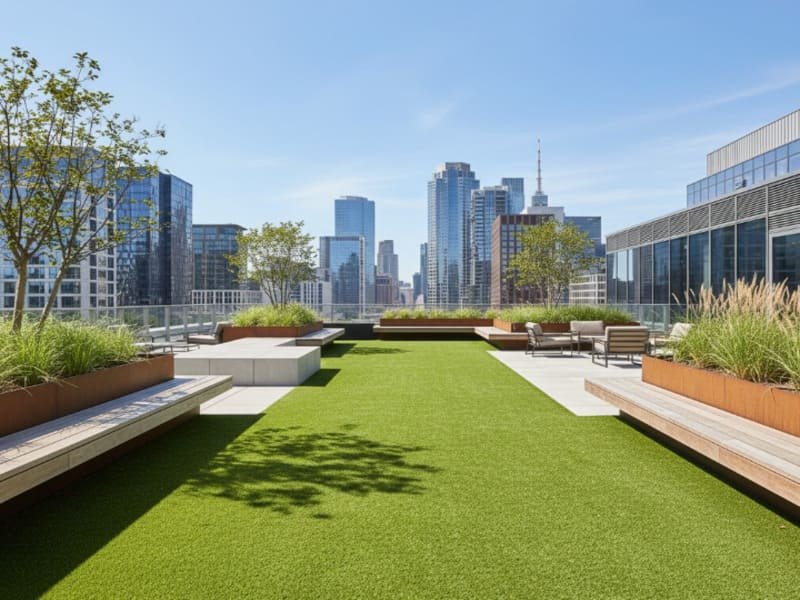
The shift to artificial grass is ultimately about valuing your free time over outdoor labor.
الخاتمة
Artificial grass transforms lawn care from a weekly burden to a monthly touch-up. It offers a consistently green, clean, and usable space, allowing you to reclaim your weekends for relaxation.
السيرة الذاتية للمؤلف
I am the Production Manager at طابق MF FLOR, specializing in the manufacturing and development of high-performance artificial grass and flooring solutions. With years of hands-on experience in polymer extrusion and turf design, I help clients navigate the technical specifications to find the perfect, long-lasting products for their specific needs, from residential lawns to commercial sports fields.
Interested in seeing how our turf handles drainage or looking for a specific fiber density? Contact our team today for a free sample kit or a custom quote tailored to your project.