


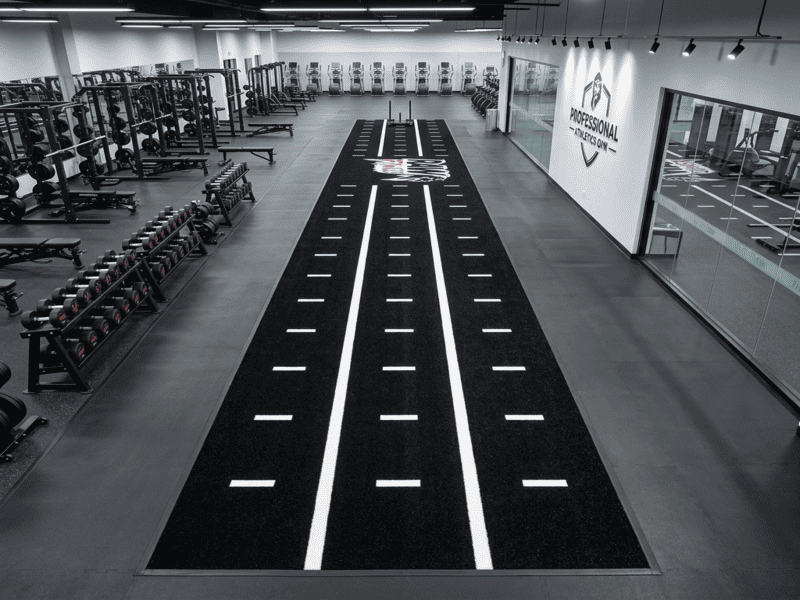
To choose the best turf for battle rope zones, prioritize high-density nylon or texturized polyethylene with a short pile height (12mm-15mm). These specifications prevent fiber melting from friction, ensure stability during high-intensity waves, and offer the durability needed to withstand constant heavy rope abrasion.
In my years of managing production and quality control for gym flooring, I have seen many facility owners make the mistake of choosing turf based on aesthetics alone. Battle rope zones are unique because they face a "sawing" mechanical stress that most turf is not designed to handle. When a heavy rope moves at high speeds, it creates intense heat through friction. If the material has a low melting point or the density is too low, the fibers will literally fuse together or snap off. As a manufacturer, I focus on the "Stitch Rate" and molecular stability of the yarn. A professional battle rope zone requires a surface that acts more like a performance fabric and less like a backyard lawn. By understanding the science of fiber resilience and heat resistance, you can avoid the common cycle of replacing "balded" turf every six months.
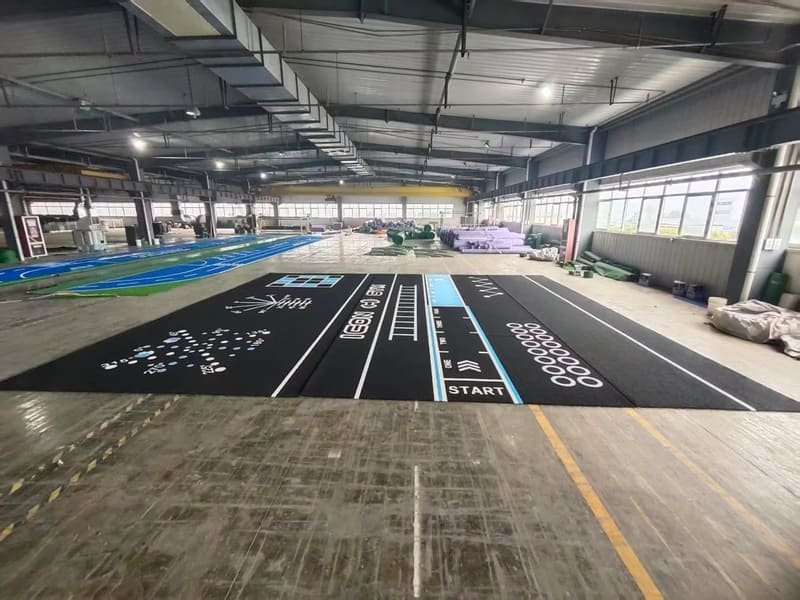
Selecting the right surface is about more than just buying a roll of green grass. I want to share the technical details that separate a professional-grade installation from a costly mistake.
Is Standard Turf the Silent Killer of Your Gym Floor?
Standard turf fails in battle rope zones because it cannot handle the localized heat and friction. Most budget options use long, straight fibers that snag under ropes, leading to "fiber shedding" or melting. This creates a messy "green dust" and leaves unsightly bald spots in high-traffic areas.
I once visited a gym where the owner had installed a beautiful 30mm landscape-style turf for their functional area. Within three months, the air filters were clogged with green plastic particles. This "green dust" is the result of fiber shedding. When a 30lb rope slams and drags across long fibers, it creates a leverage effect that pulls the fiber right out of the backing. Furthermore, the constant "sawing" motion generates enough thermal energy to reach the glass transition temperature of low-quality Polyethylene (PE). This causes the fibers to clump and melt. In our factory, we test for dimensional stability to ensure the turf does not "creep" or bunch up. If the turf moves, it creates a trip hazard. A professional zone must stay flat and stay intact, which is why standard turf is often a poor investment for high-intensity use.
| وضع الفشل | السبب | النتيجة |
|---|---|---|
| Melting | High-speed friction heat | Fused, hard plastic patches |
| Shedding | Long pile height/Low density | Plastic dust and bald spots |
| Creeping | Poor backing/No adhesive | Dangerous waves and ripples |
Understanding these failures is the first step toward a better solution. Now, let us look at the specific materials that can actually handle this level of abuse.
Why Is Material Science Critical for Your Battle Rope Turf?
Nylon is the gold standard for battle rope zones because it has a significantly higher melting point than Polyethylene. However, high-density texturized PE is a great budget-friendly alternative. These materials provide the necessary friction resistance and grip to ensure the turf survives years of daily rope slams.
From a manufacturing perspective, the choice between Nylon and Polyethylene (PE) comes down to heat and friction. Nylon is a harder, more resilient polymer. It does not soften easily under the heat of a moving rope. If your budget allows, Nylon is always my first recommendation for dedicated rope tracks. However, we also produce a specialized texturized PE. This involves "curling" the fibers so they support each other. This high-density structure prevents the rope from reaching the secondary backing, which protects the integrity of the entire roll. We measure performance using "Face Weight." For a battle rope zone, you want a face weight that ensures the rope stays on top of the pile. A short pile height of 12mm to 15mm is the "sweet spot." Anything longer causes the rope to snag, which slows down the athlete and wears out the turf faster.
Technical Specification Comparison
| المواد | مقاومة الحرارة | أفضل حالة استخدام |
|---|---|---|
| نايلون | الأعلى | 24/7 Commercial Gyms |
| Texturized PE | عالية | استوديوهات بوتيك |
| بولي بروبيلين | منخفضة | غير موصى به |
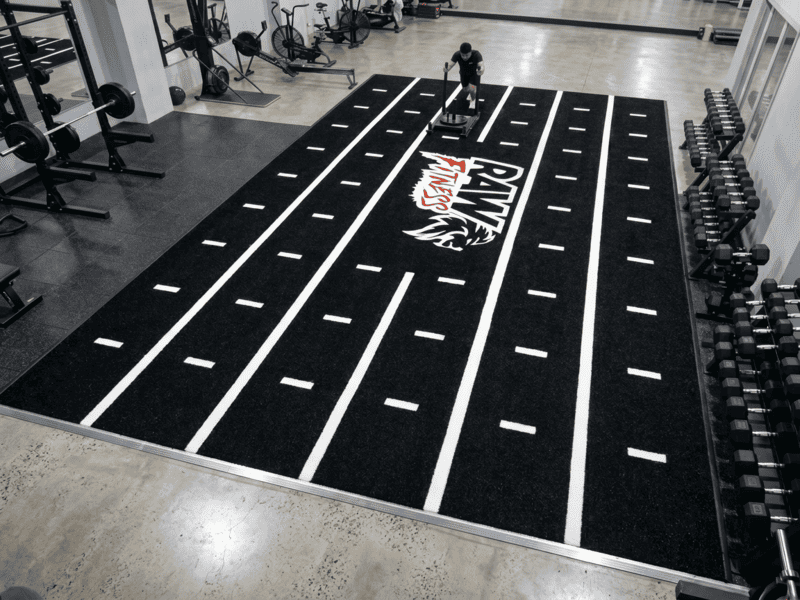
Material choice is the foundation, but even the best material will fail if the installation strategy is not handled with professional care.
Does Your Installation Strategy Prevent "The Creep"?
Full-spread glue-down adhesive is mandatory for battle rope zones to prevent the turf from moving. Using only double-sided tape or loose-laying the turf will result in "creeping" or waves. Proper subfloor preparation and seamless transitions to rubber flooring are essential for safety and longevity.
I have seen many installers try to save time by using tape on the edges of a turf track. In a battle rope zone, this is a mistake. The horizontal force of a person pulling or jumping, combined with the rope movement, creates "lateral stress." Only a full-spread adhesive can hold the turf backing firmly to the concrete subfloor. We also focus on "Seamless Transitions." Most gym rubber is 8mm or 10mm thick, while our performance turf is often 15mm. If you do not account for this height difference, you create a trip hazard. We recommend using a transition strip or leveling the subfloor to ensure the rope zone is flush with the rest of the gym. A level subfloor also prevents "waves" from forming. If the subfloor has dips, the turf will eventually stretch into those holes, causing the surface to become uneven and dangerous for high-speed footwork.
قائمة التحقق من التثبيت
- مادة لاصقة: Full-spread polyurethane glue.
- المرحلة الانتقالية: Flush mounting with adjacent rubber tiles.
- الطابق السفلي: Level, dry concrete with no debris.
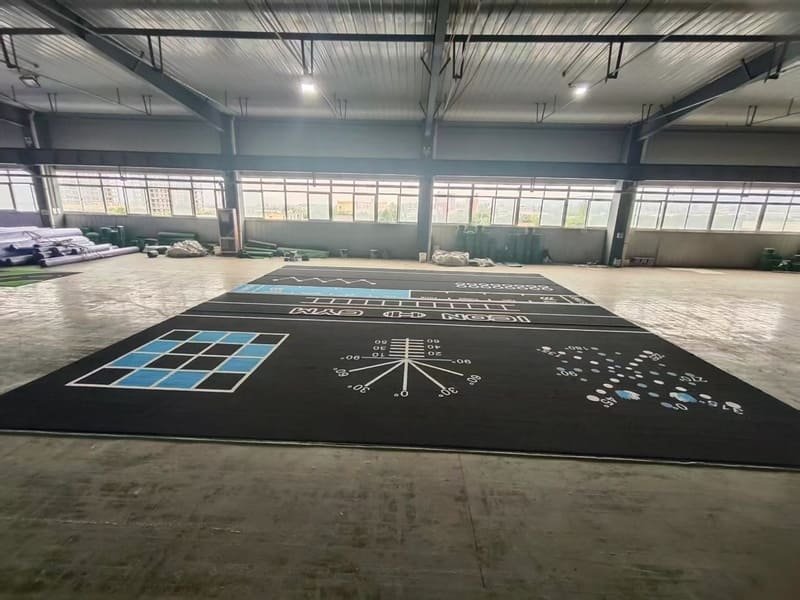
A great installation sets you up for success, but you still need to know how to maintain the surface to get the most value.
How Can You Extend the Life of Your Battle Rope Zone?
Regularly vacuuming the area to remove rope lint and checking for fiber wear can double the life of your turf. Choosing high-quality dacron or nylon ropes also reduces the "sandpaper" effect on the fibers. Rotating high-wear sections, if possible during the design phase, helps ensure even aging.
Maintenance for gym turf is often overlooked. Over time, ropes shed tiny fibers called "lint." If this lint stays in the turf, it acts like an abrasive, grinding down the turf fibers every time someone steps on them. A simple daily vacuuming makes a massive difference. Also, look at the ropes you are using. Cheap manila ropes are very rough and act like sandpaper on the turf. I always suggest my clients use dacron or nylon-covered ropes; they are smoother and much kinder to the flooring. As a manufacturer, I also suggest "Zonal Design." If you know one end of the track gets more use, try to design the track so that the turf can be professionally rotated after two years. This spreads the wear across the entire surface rather than destroying one small patch. These small adjustments in maintenance and equipment choice can save you thousands in early replacement costs.
جدول الصيانة
| التردد | المهمة | المزايا |
|---|---|---|
| يومياً | التنظيف بالمكنسة الكهربائية | Removes abrasive rope lint |
| أسبوعياً | التنظيف بالفرشاة | Keeps fibers upright and resilient |
| شهرياً | فحص التماس | تمنع مخاطر التعثر |
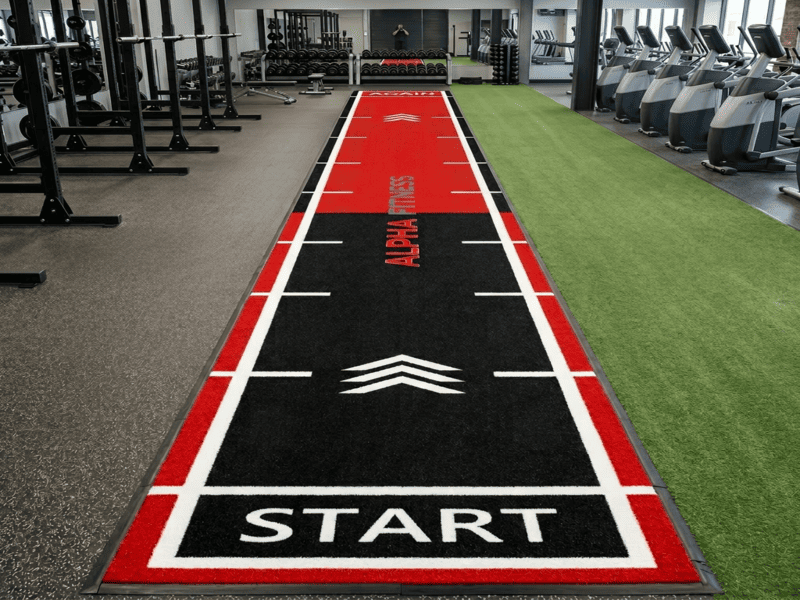
By following these steps, you ensure that your facility remains a safe and professional environment for every member who walks through the door.
الخاتمة
Choose high-density, short-pile turf with full-spread adhesive for maximum longevity.
As a manufacturer, my goal is to help you build a gym that lasts. Don’t let a "pretty" turf roll ruin your investment. If you are planning a new functional zone or need technical data for a bulk project, I can help you find the right specs for your specific traffic levels.
Contact me for a custom quote or a free sample kit to start your project today.